English
- All
- Product Name
- Product Keyword
- Product Model
- Product Summary
- Product Description
- Multi Field Search

Views: 0 Author: Site Editor Publish Time: 2025-12-18 Origin: Site
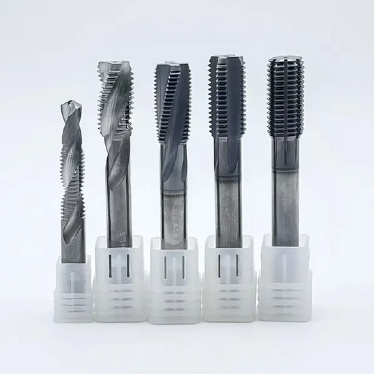
Manufacturing processes have evolved significantly over the years, and one of the fundamental operations that has remained crucial is holemaking. Creating holes in materials such as metal, wood, plastics, and composites is essential for a variety of applications, from assembling components to creating paths for wiring and fluid flow. The quality and precision of these holes directly affect the functionality and durability of the final product.
Holemaking tools are designed to create precise holes with a variety of features, shapes, and sizes. These tools are essential in industries such as automotive, aerospace, electronics, construction, and furniture manufacturing. The right holemaking tool ensures that the holes created are accurate, clean, and suitable for further operations, thus ensuring both the precision and efficiency of the manufacturing process.
In this article, we will explore how holemaking tools impact precision and efficiency in manufacturing. We will discuss the different types of holemaking tools, how they are used, and the importance of choosing the right tool for the job. By the end of this article, you will have a comprehensive understanding of how holemaking tools contribute to the success of manufacturing processes.
Holemaking tools are vital for a wide range of manufacturing applications. From simple drilled holes to more complex precision holes, these tools help achieve the required specifications for various products. The role of holemaking tools extends beyond just creating a hole—they also influence the tolerance, surface finish, and accuracy of the hole, all of which are critical for the performance and quality of the final product.
In manufacturing, the importance of precision cannot be overstated. A hole that is slightly off-center or the wrong size can lead to issues such as improper fits, poor assembly, or even mechanical failure. As manufacturing demands become increasingly complex, holemaking tools must be able to deliver both precision and efficiency to meet these high standards.
There are various types of holemaking tools used in manufacturing, and each has specific advantages depending on the task at hand. Some tools are designed for basic drilling, while others are specialized for more precise operations. Below are the most common holemaking tools and their uses.
Drills are the most basic and widely used holemaking tool. They are designed to create holes by rotating a cutting edge into the material. Drills are available in a variety of types, including:
Twist Drills: The most common type, ideal for general-purpose holemaking in metals, plastics, wood, and other materials.
Spade Drills: Used for drilling large holes in softer materials like wood and plastic.
Step Drills: Designed for drilling holes of varying diameters, often used in sheet metal applications.
Drills are versatile tools, and their application ranges from simple through-holes to complex, deep holes. They are generally used in the initial stages of holemaking, especially when the hole needs to be created quickly and at a consistent diameter.
Precision: Drills provide a reasonable level of precision, but they may need further refinement to meet the desired tolerances for specific applications.
Efficiency: Drills are efficient tools for creating holes quickly, especially in softer materials. However, for more precise holes, they might require additional operations such as reaming or tapping.
Reamers are used to enlarge and refine holes that have already been drilled. While drills create the basic hole, reamers improve the hole’s precision and surface finish. Reamers are typically used when high tolerance and a smooth finish are required.
Reamers come in various types, including hand reamers, machine reamers, and chuck reamers, which are used depending on the scale of the operation and the specific application.
Precision: Reamers are highly effective at improving the accuracy of hole diameter and finish, ensuring that holes meet specific tolerances.
Efficiency: Reaming is a slower process than drilling, but it is essential when precision is required. Reamers improve the overall efficiency of manufacturing by ensuring that holes can be used for precise components such as bushings, bearings, and dowels.
Taps are used to cut internal threads in a hole, allowing bolts or screws to be inserted into the material. Tapping is crucial when making threaded holes, and the tool’s design allows it to create threads of different sizes and pitches. Taps come in different forms, such as spiral point taps, spiral flute taps, and straight taps, each suited for different threading applications.
Precision: Tapping provides high precision when creating internal threads. A high-quality tap ensures that the threads are clean, accurate, and suitable for the desired fasteners.
Efficiency: Tapping is a relatively fast operation and allows for efficient creation of internal threads, making it ideal for mass production in manufacturing environments.
Boring tools are used to enlarge an existing hole to a more precise diameter. Unlike drilling, which creates a hole from scratch, boring enlarges and smooths out holes that were previously drilled. Boring is particularly useful for achieving high precision in deep holes, where tolerance and surface finish are critical.
Boring bars are commonly used in industrial machines like lathes and milling machines. They are often used for blind holes (holes that do not pass through the material) and can be adjusted for different hole sizes.
Precision: Boring provides the highest level of precision for enlarging holes. It is used when exact diameter control is required, such as in the automotive or aerospace industries.
Efficiency: Boring can be a slower process compared to drilling but provides the best results for achieving tight tolerances and smooth finishes.
Hole saws are used to cut larger holes in materials like wood, metal, and plastic. Unlike a drill, which uses a rotating cutting edge to remove material, a hole saw uses a toothed blade to cut a hole. Hole saws are ideal for creating larger diameter holes, such as for pipes, electrical conduit, or even light fixtures.
Precision: Hole saws provide reasonable precision for large holes, though they are less accurate than drills or reamers for smaller, more precise work.
Efficiency: Hole saws are highly efficient for cutting large holes, as they allow you to create holes faster than drilling with a large bit.
Precision is critical in manufacturing, as even the smallest deviation in hole size or shape can lead to problems in assembly, fitment, and functionality. Holemaking tools like drills, reamers, taps, and boring tools help achieve the desired hole specifications by removing material with a high degree of accuracy.
The precision of a hole depends on several factors, including:
Tool quality: Higher-quality tools tend to produce more accurate holes.
Tool wear: Over time, tools can wear down, which can affect their precision. Regular maintenance and replacement are necessary to ensure continued accuracy.
Machining setup: The accuracy of the machine setup and the workpiece alignment can also impact the precision of the hole. Proper calibration and fixturing are important to maintain consistency.
By using the appropriate holemaking tools, manufacturers can achieve the precise hole dimensions needed for components to fit together perfectly and perform as expected.
Efficiency in manufacturing refers to the speed at which high-quality parts are produced. The right holemaking tool can significantly improve the efficiency of a process, reducing the time and effort needed to create holes and enhancing the overall production rate.
Some ways holemaking tools impact efficiency include:
Speed: Tools like drills and hole saws can quickly create holes in a wide range of materials, allowing for faster production.
Tool life: High-quality tools last longer and require less frequent replacement, reducing downtime and maintenance costs.
Reduced need for secondary operations: Tools like reamers, taps, and boring tools improve the quality of the hole, reducing the need for additional operations like sanding, grinding, or additional finishing.
In manufacturing environments where time and cost are critical, using the right holemaking tools helps streamline operations and ensures that products are made faster and at a lower cost.
Holemaking tools play a vital role in ensuring that holes are accurately and efficiently made in a wide range of materials. From the simple drill to the more specialized reamer, tap, and boring tools, the correct tool for the job can significantly impact the precision, efficiency, and overall quality of the product being manufactured. Understanding the strengths and limitations of each holemaking tool helps manufacturers choose the best solution for their specific needs, improving both product quality and production efficiency.
As industries continue to demand higher precision and faster production rates, the role of advanced holemaking tools will only become more important. By selecting the appropriate tool for the task, manufacturers can ensure that their operations remain competitive and meet the ever-increasing demands for precision and efficiency.
Q: What is the difference between drilling and boring?
A: Drilling creates a hole from scratch, while boring is used to enlarge and refine an existing hole to a precise diameter. Boring is often used when high precision is required.
Q: Can tapping be used for all materials?
A: Tapping is typically used for metals, plastics, and other materials that can be threaded. It is not suitable for softer materials like wood.
Q: What tool should I use for precision holemaking?
A: For precision holemaking, tools like reamers, taps, and boring bars are ideal as they can achieve tight tolerances and smooth finishes.
Q: How can I ensure the accuracy of holes in manufacturing?
A: To ensure accuracy, use high-quality tools, regularly maintain them, and properly calibrate the machine setup. Proper fixturing and alignment also play a crucial role in achieving precise holes.


