- All
- Product Name
- Product Keyword
- Product Model
- Product Summary
- Product Description
- Multi Field Search

Views: 0 Author: Site Editor Publish Time: 2026-01-29 Origin: Site
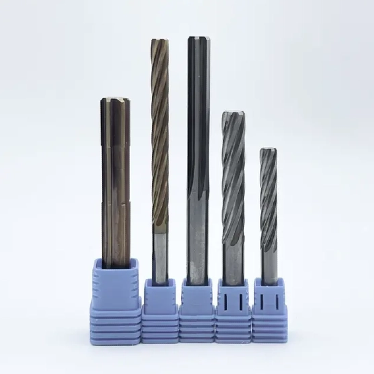
Holemaking tools are essential for creating precise holes in various materials, ensuring strong connections and reliable performance in projects.
Different types of holemaking tools, like drill bits, reamers, and broaches, serve specific purposes, so choose the right tool for your material and application.
Understanding the differences between drilling and boring helps you refine existing holes for better accuracy and surface finish.
Selecting the appropriate holemaking tool improves efficiency, quality, and safety in manufacturing and construction tasks.
Always consider material type, precision needs, and application requirements when choosing holemaking tools to achieve the best results.
You use holemaking tools to remove material and create holes in workpieces. These tools go beyond simple drilling. They include specialized devices that help you create, enlarge, finish, and shape holes with high accuracy. When you choose a hole making tool, you consider the material, the size and shape of the hole, and the finish you need. This process is essential in modern manufacturing because it lets you meet strict specifications for your projects.
Holemaking tools stand apart from other cutting tools because of their design and purpose. You rely on them for precision and efficiency in making holes. The table below shows how they differ from general cutting tools:
Feature | Holemaking Tools | Other Cutting Tools |
|---|---|---|
Design | Specialized for creating holes | General purpose cutting |
Application | Focused on precision and efficiency | Varies widely across tasks |
Pilot Systems | Not interchangeable | Often standardized |
Material Compatibility | Designed for specific materials | Can cut a broader range of materials |
You can see that hole making tools are not just for making holes. They also help you refine the precision and surface finish, which is important for the performance of the final product.
You find holemaking tools in many industries. In the automotive sector, you use them to create precise holes for assembly and to keep structures strong. In aerospace, you rely on counterbore holes to make sure fasteners sit flush, which improves both appearance and strength. Countersink holes help reduce drag on aircraft and make surfaces smoother in cars and furniture.
Here are some common uses for hole making tools:
Creating holes of different sizes and shapes in metals, plastics, and wood.
Refining the accuracy of holes to meet tight tolerances.
Ensuring a smooth surface finish for better product performance.
Saving time and effort in the manufacturing process.
You often use drilling as the first step, but you may need other tools to finish or enlarge the hole. By choosing the right tool, you make sure your project meets all requirements for quality and safety.
When you work with holemaking tools, you need to understand the main types and their unique functions. Each tool serves a specific purpose in creating, enlarging, or finishing holes. Below, you will find the most common types of hole making tools used in manufacturing, construction, and metalworking.
Drill bits are the most widely used cutting tool for creating holes. You use them to remove material quickly and efficiently. There are many types of drill bits, each designed for a specific material or application. For example, twist drill bits are common for general drilling tasks, while step drill bits allow you to create holes of different diameters with one tool. Masonry drill bits help you drill into concrete or stone. Hole saw bits are ideal for making large, circular holes in wood or metal.
Tip: Choosing the right drill bit material and coating can improve performance and extend tool life.
Here is a table showing the main types of drill bits and their functions:
Drill Bit Type | Function |
|---|---|
Hole Saw | Creates large, circular holes in materials like wood and metal, used for tasks like installing doorknobs. |
Combination Drill Bit | Multi-purpose tool that combines features of standard drill bits with countersinks and taps. |
Annular Cutter | Creates large, precise holes in metal, cutting only around the edge and leaving a solid core. |
Center and Spotting Bit | Creates a pilot hole to guide larger drill bits, preventing wandering during drilling. |
Ejector Drill Bit | Designed for deep hole drilling with continuous coolant flow, ideal for metal. |
Indexable Drill Bit | Uses replaceable cutting inserts, allowing for easy maintenance and extended use. |
Straight-Fluted Bit | Cuts material without rotating chips, ideal for shallow drilling in soft metals. |
Brad-Point Bit | Specifically for woodworking, minimizes wandering and creates clean holes. |
Spade Bit | Flat, wide bit for quickly drilling large holes in wood. |
Forstner Bit | Produces flat-bottomed holes, ideal for precise applications like installing hinges. |
Mortice Bit | Creates square or rectangular holes in wood for joinery. |
Masonry Bit | Designed for drilling into hard surfaces like concrete, often used with hammer drills. |
Coring Bit | Creates large cylindrical holes in rigid materials, ideal for installing pipes. |
Glass and Tile Bit | Drills into hard, brittle materials like tiles and glass with a spear-shaped tip. |
You can also choose from different materials and coatings for your drill bits. Common options include high-speed steel, cobalt, carbide, and diamond. Coatings like titanium nitride or black oxide help reduce friction and increase tool life.
Reamers are precision cutting tools that you use to refine the diameter and surface finish of a hole. After you drill a hole, reaming helps you achieve a more accurate size and a smoother finish. This process is essential when you need tight tolerances, such as for bearings or dowel pins.
You will find reamers in many industries:
Medical: Preparing bones for orthopedic implants.
Manufacturing: Smoothing holes in precision products.
Automotive: Perfecting holes in engine components.
Pumps: Ensuring precise hole sizes in impellers.
Aerospace: Forming exact fastener holes in wings and landing gear.
Bearings: Producing precise holes for smooth operation.
Note: Reaming is a key step when you need high accuracy and a fine surface finish.
Broaches are specialized cutting tools for machining both circular and non-circular holes. You use broaches when you need to create complex shapes, such as splines or keyways, in a single pass. Unlike drill bits or reamers, broaches have multiple teeth that cut deeper as the tool moves through the material.
Broaching offers several advantages:
High production efficiency for mass production.
Ability to process various shapes and difficult materials.
High precision and low surface roughness.
Simple operation with low skill requirements.
Long service life and reduced need for replacements.
You often choose broaches for high-volume production because they deliver consistent quality and accuracy.
Center drills help you start holes accurately. You use them to create a small, conical indentation in your workpiece. This guides larger drill bits and prevents them from wandering. Center drills are essential for applications that require tight tolerances and precise alignment.
You also use center drills to support turning operations on a lathe. They provide a stable center for long or slender workpieces, ensuring accurate and stable machining.
Tip: Always select the right center drill type for your specific application to achieve the best results.
Hole cutters, such as annular cutters and hole saws, are designed to create large holes efficiently. Unlike standard drilling tools, hole cutters remove material only along the edge of the hole, leaving a solid core. This makes them faster and more efficient for large-diameter holes.
Feature | Annular Cutters | Twist Drill Bits |
|---|---|---|
Cutting Mechanism | Cuts along the outer edge, leaving a slug | Removes all material within the hole |
Efficiency for Larger Holes | More efficient, especially for larger holes | Less efficient, requires multiple bits |
Cutting Teeth | Multiple teeth, stays sharper longer | Two cutting edges, wears out faster |
Time and Effort | Drills faster, less effort required | Takes more time and effort |
Size Range | Starts at 7/16" | Can drill smaller holes |
You often use hole cutters for installing pipes, electrical wiring, or making access holes in panels.
Counterbores create flat-bottomed recesses in holes. You use them to allow fastener heads, washers, or O-rings to sit flush with or below the surface. This is important for strong mechanical joints and for safety, as it prevents fastener heads from protruding.
Use Case | Description |
|---|---|
Washers | Used to distribute the load of a fastener. |
Bolts | Provides a recess for bolt heads to sit flush with the surface. |
Gaskets | Creates a space for gaskets to ensure a proper seal. |
O-rings | Accommodates O-rings for sealing applications. |
Socket head cap screws | Allows for a flush fit of socket head cap screws. |
Specialty counterbore screws | Designed for specific applications requiring a counterbore. |
Cosmetic purposes | Enhances aesthetics by preventing fastener heads from snagging. |
Safety purposes | Reduces the risk of injury from protruding fastener heads. |
You will find counterbores in machinery assembly, automotive parts, and aerospace components where precision and strength are critical.
Countersinks help you create a conical recess at the opening of a hole. You use them to allow screw heads to sit flush with or below the surface. This improves mechanical stability, safety, and appearance.
Mechanical stability and safety: Countersinks secure screw heads flush with the surface, preventing protrusion.
Space savings: They allow fasteners to be recessed, which is important in compact devices.
Improved aesthetics: Countersunk screws provide a smooth, flush surface.
Aerodynamics and clearances: Countersinks help maintain a smooth profile, reducing airflow disruption.
Mounting: They are essential for securely mounting components without interference.
You often use countersinks in electronics, automotive, aerospace, and furniture manufacturing.
Remember: Choosing the right types of hole making tools ensures you achieve the best results for your project. Each tool has a specific role, and understanding their differences helps you select the most effective solution.
You often need to make holes more precise after using drill bits. This is where types of boring tools come in. Boring tools help you enlarge or finish existing holes with high accuracy. Unlike other holemaking tools, boring tools do not create new holes. Instead, you use them to refine the size, shape, and surface finish of holes that already exist.
Here is a table to help you see the main differences between drilling and boring:
Feature | Drilling | Boring |
|---|---|---|
Tool Type | Multi-point cutting tools | Single-point tools |
Material Removal Method | Fast axial removal | Gradual radial removal |
Tolerance | ±0.05–0.10 mm | ±0.01 mm or better |
Surface Finish Quality | Ra 3.2–6.3 μm | Ra 1.6–3.2 μm |
Rigidity Requirement | Lower rigidity tolerance | Higher rigidity required |
Application | Initial hole creation | Precision refinement of existing holes |
Stability | Tolerates vibration | Requires high stability to avoid chatter |
You use boring bars to enlarge and finish holes with great precision. These tools are single-point cutting tools that you mount in machines like lathes or milling machines. You can choose from several types of boring bars, each designed for specific tasks:
Steel boring bars work well for general machining and shallow holes.
Heavy metal bars give you better rigidity and are good for longer holes.
Carbide boring bars offer maximum rigidity, especially for deep holes.
Damping bars help you reduce vibrations when boring very deep holes.
Type of Boring Bar | Max Depth (X Diameter) | Applications |
|---|---|---|
Steel Boring Bars | Up to 4 | General machining, suitable for shallow depths |
Heavy Metal Bars | Up to 6 | Better rigidity, used for longer bores |
Carbide Boring Bars | Up to 8 | Ideal for maximum rigidity in long bores |
Damping Bars | Over 10 | Best for deep boring with minimal vibrations |
You often see boring bars used in CNC machining. Choosing the right type of boring bar helps you achieve the best results and maintain quality in your work. This is one of the best practices for boring tool usage.
Boring heads let you adjust the diameter of the hole with high precision. You use them to fine-tune the size and finish of existing holes. Boring heads are essential when you need tight tolerances and a smooth surface. They allow you to remove small amounts of material in a controlled way.
You find boring heads in industries like aerospace and automotive. These sectors require holes with exact sizes and excellent surface finishes. Boring heads help you achieve micron-level accuracy and improve the quality of your parts.
Tip: Boring heads are a key part of industrial precision boring tools. They help you meet strict requirements for hole size and surface finish.
When you use types of boring tools like boring bars and boring heads, you can achieve results that standard holemaking tools cannot match. Always select the right tool for your application to ensure accuracy and efficiency.
When you select holemaking tools, you need to match the tool to your material, precision needs, and application. This approach helps you achieve the best results and avoid common problems in manufacturing.
You must consider the type and thickness of your material before choosing hole making tools. Hard materials like steel require cutting tools with high hardness and wear resistance. Softer materials such as aluminum allow you to use standard drill bits or drilling tools. Composites and sensitive materials benefit from waterjet or laser cutting, which reduce heat and deformation.
Cutting Method | Edge Quality | Min Hole Diameter | Typical Use |
|---|---|---|---|
CNC Punching | Medium | 1.2× thickness | High-speed hole arrays |
Laser Cutting | High | 0.5–1× thickness | Precision + complex profiles |
Plasma Cutting | Low | ~1.5× thickness | Thick, non-precision parts |
Waterjet | Very High | 1× thickness | Sensitive or heat-prone materials |
Tip: Always check the function of the hole, material thickness, and deformation control when selecting hole making tools.
You also need to look at the hardness of your workpiece. If you work with tough metals, your cutting tool should have at least 60 HRC hardness. Good heat resistance and thermal conductivity help your cutting tools last longer and perform better.
You must decide how precise and smooth you want your holes. Standard machining tolerances are ±0.025mm, but tight tolerance machining can reach ±0.005mm. Ultra-precision work needs even stricter control. Surface finish also matters. Most applications require a finish between 0.1 and 3.2 μm Ra.
Process Factor | Typical Capability | Key Considerations |
|---|---|---|
Standard machining tolerances | ±0.025mm (±0.001") | Part size and complexity dependent |
Tight tolerance machining | ±0.005mm (±0.0002") | Requires environmental controls |
Ultra-precision work | ±0.0025mm (±0.0001") | Specialized equipment needed |
Surface finish capability | 0.1-3.2 μm Ra | Process and tooling dependent |
You can use drilling for basic holes, boring for refining size, and reaming for the best finish. Each tool offers different levels of accuracy and surface quality.
You must match your hole making tools to your project requirements. Think about the diameter, depth, and quality of the hole. The shape and stability of your component also affect your choice. Machine capabilities like spindle speed and coolant supply play a role in effective drilling.
Hole characteristics: Diameter, depth, and quality.
Component material: Chip-breaking qualities, machinability, and hardness.
Component shape: Stability and symmetry around the hole.
Machine capabilities: Spindle speed, power, and coolant supply.
Tool holding requirements: Secure clamping and minimal run-out.
Note: Cost per hole, tool life, and production volume also influence your decision. Selecting the right boring tool improves efficiency and reduces downtime.
When you consider these factors, you can choose the best holemaking tools for your needs. This approach ensures high quality, precision, and efficiency in every project.
You now understand the main types of holemaking tools and their uses. Choosing the right tool—like Center Drills, Reamers, or Boring Tools—helps you avoid issues such as material drag or tool wear. Always match your holemaking tools to your material and application for the best results. If you want to learn more, check these helpful resources:
Tip: The right holemaking tool improves quality, efficiency, and safety in every project.
You use holemaking tools to create, enlarge, or finish holes in materials like metal, wood, or plastic. These tools help you achieve precise shapes and sizes for fasteners, assembly, or component fit.
You use Center Drills to start holes and guide larger drill bits. Pilot Drills help you create a small, accurate hole before using a larger tool. Both improve accuracy, but Center Drills focus on alignment, while Pilot Drills prepare for deeper drilling.
You choose Reamers when you need a smooth, precise hole with tight tolerances. Reamers work best after drilling. They remove small amounts of material to improve the hole’s size and finish.
You use BoringTools to enlarge and finish existing holes. These tools help you achieve high accuracy and a smooth surface. BoringTools are essential when you need to meet strict size or finish requirements.
You use Thread End Mills to cut threads inside holes after you create them with holemaking tools. Thread End Mills do not make the initial hole. They add threads for screws or bolts, making them important for assembly tasks.


