English
- All
- Product Name
- Product Keyword
- Product Model
- Product Summary
- Product Description
- Multi Field Search

Views: 0 Author: Site Editor Publish Time: 2025-12-23 Origin: Site
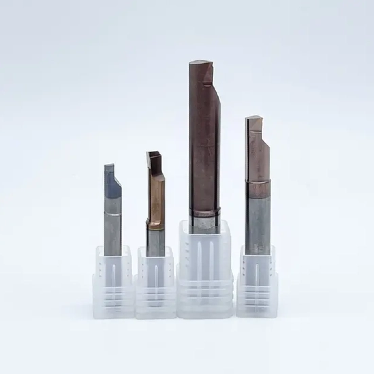
Holemaking is one of the most essential and widely used processes in manufacturing. From everyday products to complex machinery, holes are required for assembly, fastening, and fluid or gas flow. Over the years, holemaking tools have evolved from simple manual tools to highly advanced, automated systems, revolutionizing the way holes are created in various materials.
The journey from manual holemaking tools to the advanced CNC (Computer Numerical Control) machines we use today has been driven by the need for greater precision, efficiency, and productivity. In this article, we will explore the evolution of holemaking tools, from their humble beginnings to their modern-day, high-tech versions. We will discuss how these tools have advanced over time, the key technologies that have shaped their development, and how these advancements have impacted manufacturing processes.
In the early days of manufacturing, holemaking was done by hand. Craftsmen used rudimentary tools such as hand drills, augers, and chisels to create holes in materials like wood, stone, and metals. These tools were simple, mechanical devices that relied on the operator's skill and manual labor.
Hand Drills: Early hand drills were often operated by a rotating crank, which was turned by hand to drive a spiral bit into the material. These drills were effective for small holes in wood and soft materials but were limited in speed and precision.
Augers: Similar to drills but with a large, screw-like shaft, augers were used primarily for drilling holes in wood. The auger bit would be rotated by hand, often using a T-handle or brace, to penetrate the material.
Chisels and Punches: For creating holes in harder materials like metal and stone, early manufacturers relied on chisels and punches. These tools would be struck with a hammer to create holes of various sizes.
While these tools were effective, they were time-consuming and required significant human effort. Precision was also a challenge, especially for larger or more complex holes. As manufacturing processes grew more demanding, the limitations of manual holemaking tools became evident, and the need for more efficient and accurate solutions led to significant advancements in technology.
The next major leap in holemaking tools came with the introduction of electric drills in the early 20th century. The development of electric motors allowed for faster and more consistent drilling, reducing the reliance on manual labor.
Electric drills provided several advantages over hand-operated tools:
Speed: Electric drills could drill holes much faster than manual tools, improving productivity.
Consistency: Electric drills allowed for more consistent hole sizes and depths, improving overall quality.
Power: Electric drills could penetrate harder materials with ease, making them suitable for a wider range of applications.
The electric drill quickly became a staple in workshops and factories, revolutionizing the way holes were made. It was widely used in the manufacturing of consumer goods, automobiles, and construction materials.
As manufacturing processes became more industrialized, there was an increasing demand for even more powerful and efficient tools. This led to the development of pneumatic and hydraulic drills, which used air pressure and fluid to power the drilling operation. These tools were particularly useful in heavy-duty applications where high power was required, such as in the aerospace and automotive industries.
Pneumatic tools, powered by compressed air, became widely used in assembly lines and industrial settings. They were particularly effective for high-speed drilling operations and could operate for extended periods without overheating. Hydraulic tools, on the other hand, used fluid to generate force, allowing for even higher precision and power, especially in larger-scale manufacturing processes.
The development of CNC (Computer Numerical Control) machines in the 1940s and 1950s marked a revolutionary shift in the world of manufacturing and holemaking. CNC machines are automated tools that use a computer program to control the movements of the machine, replacing manual operation with precise, computer-driven commands.
CNC technology was first developed for the military to create complex parts for aircraft, but it quickly spread to other industries due to its many advantages. In the context of holemaking, CNC machines brought several key benefits:
Precision and Accuracy: CNC machines can produce holes with extremely tight tolerances, making them ideal for industries where precision is critical, such as aerospace and medical device manufacturing.
Repeatability: CNC machines can reproduce the same hole dimensions and locations with high consistency, reducing human error and improving the quality of the final product.
Flexibility: CNC machines can perform a wide variety of holemaking operations, including drilling, boring, tapping, and reaming, all controlled by the same computer program. This flexibility allows manufacturers to switch between different operations without needing to change tools manually.
The ability to program CNC machines to perform complex holemaking tasks opened up new possibilities for automation in manufacturing. With the introduction of CNC, holemaking became faster, more precise, and more efficient.
As CNC technology evolved, so did the holemaking capabilities of these machines. Early CNC machines were limited to simple drilling operations, but with time, they became capable of performing more complex tasks like multi-axis drilling, deep-hole drilling, and multi-tool operations.
One of the most significant advancements in CNC technology was the development of multi-axis CNC machines. While traditional CNC machines typically operate on three axes (X, Y, and Z), multi-axis machines can move on additional axes, allowing them to create more complex holes in various angles and orientations.
These machines are particularly useful for creating holes in parts that require multiple steps or angles, such as in aerospace or automotive components. Multi-axis drilling allows for greater flexibility in hole placement, making it easier to produce intricate designs and geometries.
Another major development was the introduction of high-speed drilling in CNC machines. High-speed drilling uses specialized tools and advanced computer control to increase drilling speeds without sacrificing precision. This is particularly useful in industries like electronics manufacturing, where small, intricate holes need to be drilled quickly and accurately.
The integration of CAD (Computer-Aided Design) and CAM (Computer-Aided Manufacturing) software with CNC machines further revolutionized the holemaking process. CAD software allows designers to create detailed digital models of parts, including the locations and specifications of holes. CAM software then translates these designs into machine code that CNC machines can understand, ensuring that holes are drilled precisely as specified.
The integration of CAD and CAM with CNC machines allows manufacturers to create complex parts with highly precise hole placements, reducing the need for manual intervention and ensuring that the holes meet exact specifications.
The most significant benefit of CNC holemaking tools is their precision. CNC machines can create holes with tolerances as tight as a few microns, ensuring that parts fit together perfectly. This level of accuracy is essential in industries where even a small error can lead to costly defects or failures, such as in aerospace or medical device manufacturing.
CNC holemaking tools are faster than manual methods, which leads to increased productivity. With automated control, CNC machines can perform continuous operations without the need for breaks or manual adjustments. Additionally, the ability to perform multiple holemaking operations (such as drilling, tapping, and reaming) with the same machine improves workflow efficiency and reduces downtime.
CNC machines can repeat operations with high consistency, producing identical holes for large production runs. This reduces the likelihood of human error and ensures that every part meets the same quality standards. This consistency is particularly important in mass production and industries where quality control is critical.
CNC machines reduce the need for manual labor in holemaking. Once the program is set up, the machine can operate autonomously, freeing up workers to focus on other tasks. This reduces labor costs and helps manufacturers allocate their workforce more effectively.
CNC machines offer greater flexibility compared to manual holemaking tools. Manufacturers can easily modify the program to create different hole sizes, patterns, or designs without changing the tools. This flexibility is particularly useful in industries where small batch production or custom designs are required.
As technology continues to advance, holemaking tools are becoming even more efficient and precise. Innovations in robotics, automation, and machine learning are allowing for further improvements in the accuracy, speed, and versatility of holemaking operations. Additionally, advancements in additive manufacturing (3D printing) may change the way holes are created in the future, offering new possibilities for customized hole designs.
The evolution of holemaking tools—from simple manual drills to advanced CNC machines—has transformed manufacturing, enabling higher levels of precision, efficiency, and productivity. As industries demand more complex, accurate, and customized parts, CNC holemaking tools are playing an increasingly important role in meeting these needs. By integrating technologies like CAD, CAM, and multi-axis CNC machines, manufacturers can ensure that their holemaking operations are both efficient and precise, driving quality and performance in the final product.
As holemaking technology continues to evolve, we can expect even more advancements in speed, precision, and automation, further shaping the future of manufacturing.
Q: What is the difference between a drill and a CNC machine for holemaking?
A: A drill is a manual or electric tool used for creating holes, while a CNC machine is an automated system controlled by a computer. CNC machines offer more precision, flexibility, and can perform multiple holemaking operations in one setup.
Q: Can CNC machines be used for all holemaking applications?
A: Yes, CNC machines can be used for a wide range of holemaking applications, from drilling and reaming to tapping and boring, making them versatile for various materials and industries.
Q: What industries benefit most from CNC holemaking tools?
A: Industries that require high precision and large-scale production, such as aerospace, automotive, medical devices, and electronics, benefit greatly from CNC holemaking tools.
Q: How does the integration of CAD and CAM improve holemaking processes?
A: CAD allows for detailed design of parts, including holes, while CAM translates these designs into machine code for CNC machines, ensuring that holes are created with the exact specifications, improving accuracy and reducing errors.
Q: Are CNC machines expensive to operate?
A: While the initial investment in CNC machines can be high, they are cost-effective in the long run due to their high precision, efficiency, and ability to automate operations, reducing labor costs and increasing productivity.


