- All
- Product Name
- Product Keyword
- Product Model
- Product Summary
- Product Description
- Multi Field Search


| Quantity: | |
|---|---|
Long Reach End Mills
Show Details

Specitications
| SIZES(D*fL*sD*L) | |||
| D0.3/R0.15*2/3/4*D4*50L | D1/R0.5*6/8/10/12/15/20*D4*50L | ||
| D0.4/R0.20*2/3/4*D4*50L | D1.5/R0.75*6/8/10/12/15/20*D4*50L | ||
| D0.5/R0.25*2/3/4/6/8*D4*50L | D2/R1*8/10/12/15/20*D4*50L | ||
| D0.6/R0.30*2/3/4/6/8*D4*50L | D2.5/R1.25*10/12/15/20*D4*50L | ||
| D0.7/R0.35*3/4/6/8/10*D4*50L | D3/R1.5*12/15/20*D4*50L | ||
| D0.8/R0.40*3/4/6/8/10*D4*50L | |||
| D0.9/R0.45*3/4/6/8/10*D4*50L | |||
Tame the deepest cavities and slenderest channels with SUPSTTED Long Reach End Mills. Engineered for challenges where standard tools falter, our extended-length cutters deliver uncompromising reach without sacrificing rigidity or finish. Experience the confidence to machine intricate features in deep pockets, narrow slots, and hard-to-access areas across aerospace components, complex molds, and critical medical parts.
SUPSTTED's advanced flute geometry and specialized core strengthening significantly reduce deflection and harmonic chatter at demanding depths, ensuring dimensional accuracy and superior surface quality even in hardened steels, titanium, and high-temperature alloys. Ultra-sharp, wear-resistant coatings maximize edge life and minimize built-up edge during prolonged operations. Rigorously balanced for high RPM stability, these tools excel in both aggressive roughing and fine finishing passes.
Ideal for deep rib machining, cavity profiling, and reaching into tall walls, SUPSTTED Long Reach End Mills provide the extended capability your complex projects demand. Achieve deeper access, tighter tolerances, and fewer tool changes. Conquer depth with unwavering precision. Explore the full range of reach options and diameters. SUPSTTED: Reach Further. Cut Smarter.
Key Differentiators Emphasized (Avoiding Common Tropes):
Focus on Deflection & Chatter Control: Explicitly links extended reach to reduced deflection/harmonics as the core innovation, not just length.
Core Strengthening: Highlights internal structural design for rigidity, a less common selling point than just flute design.
"Command Precision" / "Unwavering Precision": Uses stronger action verbs than generic "high precision".
Application Specificity: Names challenging scenarios ("deep rib machining," "tall walls," "slender channels," "hard-to-access areas") and industries (medical parts) beyond just "deep pockets."
"Conquer Depth": More evocative phrasing than "machine deep."
Avoided Generic Terms: Ditched overused phrases like "high-performance," "ultimate solution," "maximum efficiency," "superior performance," "heavy-duty," or mentioning specific coatings by name (like AlTiN) unless unique.
Benefit-Oriented Coating Description: Focuses on the result ("maximize edge life," "minimize built-up edge") rather than just naming the coating.
"Rigorously Balanced for High RPM Stability": Highlights a critical factor for long tools often glossed over.
"Extended Capability": More unique phrasing than "extended reach."
Clients Good Feedback

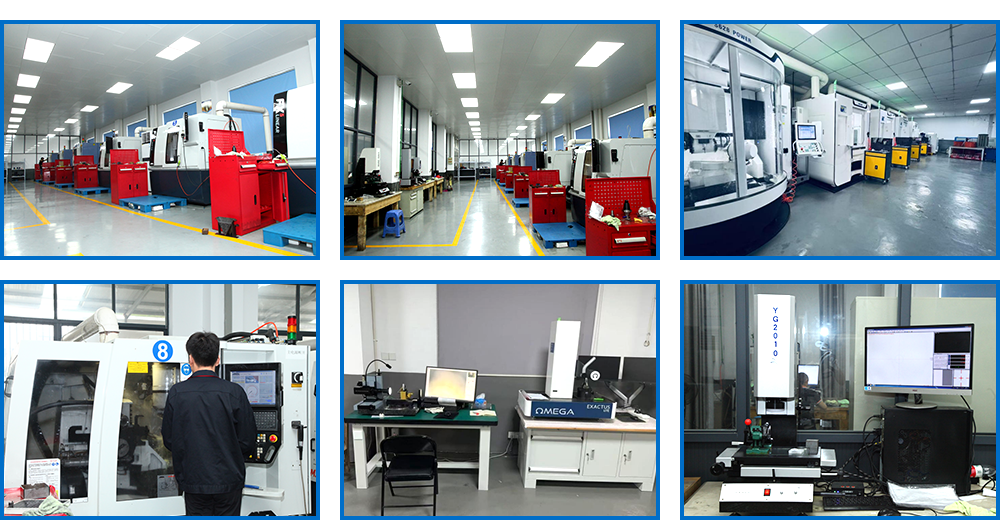
Factory
Service Introduction

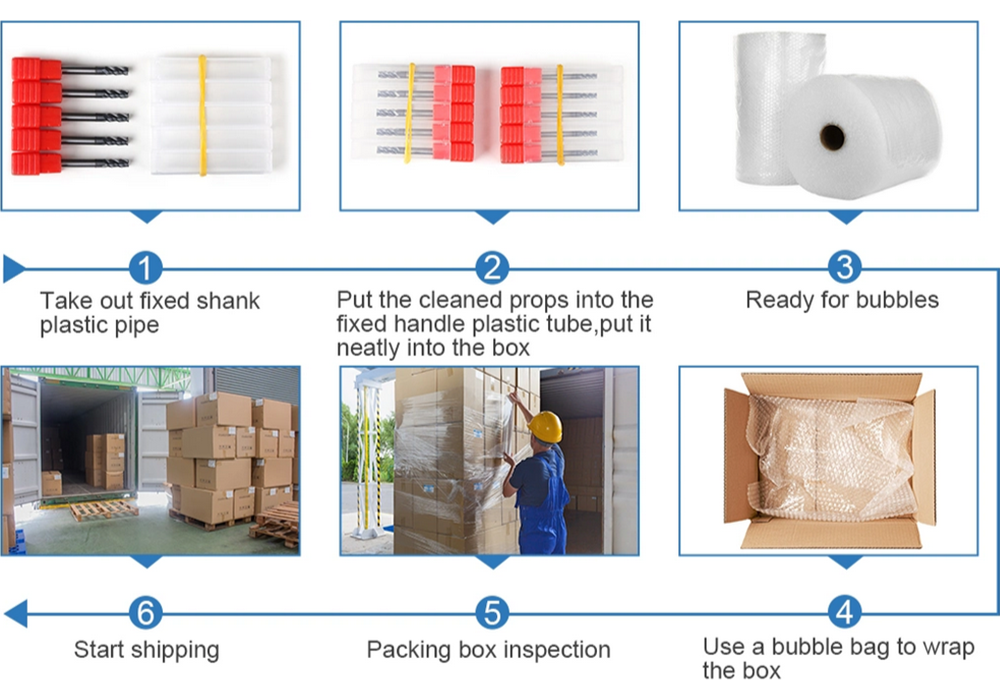
Logistics Package
FAQ
Q1: What exactly is a Long Reach End Mill?
A: A Long Reach End Mill is a cutting tool designed with an extended flute length (cutting edge) relative to its diameter. This allows it to machine deep cavities, pockets, walls, or features in parts where standard end mills cannot reach due to insufficient length. The extended reach comes at the expense of rigidity compared to shorter tools of the same diameter.
Q2: When should I use a Long Reach End Mill?
A: Use Long Reach End Mills when machining:**
Deep pockets or cavities (e.g., mold cores, enclosures).
Tall walls or ribs requiring significant side engagement depth.
Features in hard-to-reach areas (e.g., inside complex parts).
Applications demanding clearance over clamps, fixtures, or other part features.
Choose them only when the required depth exceeds the capability of standard-length end mills.
Q3: Are Long Reach End Mills made from special materials?
A: Long Reach End Mills are typically made from high-performance micro-grain carbide like standard end mills. The carbide grade is chosen for hardness, toughness, and heat resistance. Many feature advanced coatings (like AlTiN, TiAlN, or ZrN) to further enhance lubricity, reduce heat buildup, resist wear, and prevent built-up edge (BUE) – crucial for the demanding conditions encountered during deep cutting.
Q4: Why do Long Reach End Mills vibrate or chatter more easily?
A: The extended length significantly reduces rigidity compared to shorter tools. This makes them more prone to deflection (bending) and vibration (chatter) under cutting forces. Chatter causes poor surface finish, reduced tool life, potential part damage, and noise. Careful programming (reduced stepovers/depths of cut, optimal speeds/feeds) and secure workpiece/tool holding are critical to minimize this.
Q5: What should I look for when selecting a Long Reach End Mill?
A: Key selection factors include:**
Reach Needed: Choose the shortest flute length that reaches your deepest feature.
Diameter: Smaller diameters offer less rigidity.
Flute Count: 3 or 4 flutes are common; fewer flutes provide better chip evacuation in deep slots.
Core Design: Look for variable helix/pitch angles and uneven flute spacing – these features dramatically reduce chatter.
Coating: Select a coating optimized for your workpiece material (e.g., AlTiN for high temps in steels).
Shank Type: Solid carbide shanks offer maximum rigidity; reduced neck designs increase clearance but need careful programming.


