English
- All
- Product Name
- Product Keyword
- Product Model
- Product Summary
- Product Description
- Multi Field Search

Views: 0 Author: Site Editor Publish Time: 2026-08-15 Origin: Site

Tool life directly dictates shop profitability, cycle times, and scrap rates. End mill selection acts as a primary operational variable on the shop floor. Misaligning tool material with machine capabilities—such as spindle RPM limits or overall setup rigidity—leads to premature tool failure, excessive vibration, and rejected parts. When evaluating carbide vs hss end mills, you must look beyond baseline hardness. A realistic assessment factors in setup rigidity, thermal dynamics, material-specific wear rates, and surface finish requirements. We evaluate how these variables interact to determine the true cost-per-part over the tool's lifecycle. You need to match the right cutting tool to your specific machine setup, whether you are roughing tough steel alloys or clearing massive volumes of soft aluminum.
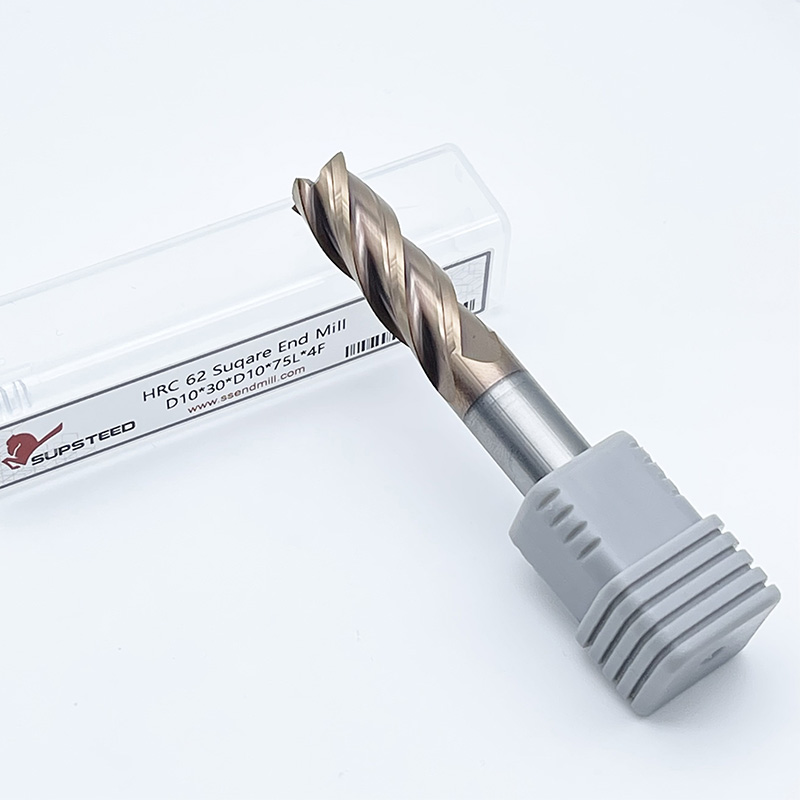
Solid carbide is a powder metallurgy product. Tool manufacturers create it by suspending microscopic tungsten carbide particles within a metallic cobalt binder. The tungsten carbide provides extreme hardness and wear resistance, while the cobalt holds the matrix together. Adjusting the cobalt percentage changes the tool's physical characteristics. Higher cobalt content (around 10% to 12%) increases toughness slightly, allowing the tool to absorb minor vibrations. Lower cobalt content maximizes hardness for cutting highly abrasive materials like cast iron or high-silicon aluminum.
This material boasts an exceptionally high modulus of elasticity. It is roughly three times stiffer than standard tool steel. This stiffness prevents the end mill from deflecting under heavy radial loads. Zero deflection keeps your cuts dimensionally accurate and eliminates chatter marks on the workpiece. However, this extreme rigidity introduces a primary trade-off. Solid carbide is highly brittle. It possesses zero tolerance for shock, vibration, or sudden impacts. If a setup lacks rigidity, the tool will snap rather than bend. Micro-grain and sub-micron grain structures have improved the baseline toughness of modern carbide, but it still requires a highly stable machining environment.
Tool geometry also plays a massive role in how carbide performs. Manufacturers grind variable helix angles and unequal flute spacing into solid carbide end mills to break up harmonics. This prevents chatter during heavy roughing passes. Because the material is so stiff, these geometric enhancements translate directly to the workpiece, leaving a mirror-like finish when run at the correct feeds and speeds.
High speed steel relies on a complex blend of alloying elements. Manufacturers add tungsten, molybdenum, chromium, and vanadium to a carbon steel base. Tungsten and molybdenum increase hot hardness, allowing the tool to maintain its edge at elevated temperatures compared to basic high-carbon steel. Vanadium provides severe abrasion resistance, and chromium increases the depth of hardening during the heat treatment process. Common shop grades include M2 for general purpose work and M42, which contains 8% cobalt for superior heat resistance.
The defining characteristic of HSS is its high transverse rupture strength. It exhibits remarkable toughness. When subjected to lateral forces or vibrations, an HSS tool will flex slightly and return to its original shape without snapping. This forgiveness makes it ideal for less rigid setups, such as manual knee mills or flimsy workpiece fixturing. You can push an HSS tool through an interrupted cut, and the cutting edge will absorb the impact rather than fracturing.
The primary limitation is heat degradation. The cutting edge softens rapidly when pushed beyond its thermal limits. Once the tool reaches its critical temperature, the hardness drops off a cliff, and the cutting edge rolls over or burns up. This restricts these tools to significantly lower cutting speed ranges compared to carbide. Operators must rely on heavy flood coolant to keep the tool matrix stable during prolonged cutting cycles.
Milling steel alloys generates intense heat directly at the shear zone. Success requires managing this heat generation effectively. You must prevent the workpiece material from work-hardening ahead of the cut. Materials like 304 or 316 stainless steel are notorious for work-hardening if the tool rubs instead of shearing. Maintaining the tool's edge geometry is mandatory for holding tight dimensional tolerances over long production runs. Abrasive alloys will quickly degrade a weak cutting edge, leading to dimensional drift, increased spindle load, and poor surface quality.
Different steel alloys demand different approaches. Cutting 1018 cold-rolled steel is relatively straightforward and forgiving. However, machining 4140 pre-hardened steel or tool steels like D2 requires a cutting tool that can withstand immense mechanical pressure and thermal stress. The tool material must resist plastic deformation under these extreme loads.
Carbide maintains its sharp cutting edge at the extreme temperatures generated by steel and stainless alloys. Modern machining strategies rely heavily on this heat resistance. High-Speed Machining (HSM) toolpaths utilize light radial engagement (often 5% to 10% of the tool diameter) and exceptionally high feed rates. This strategy forces the heat into the chip rather than the tool or the workpiece. Carbide thrives in these continuous cutting environments, allowing shops to clear massive amounts of material in a fraction of the time it would take with traditional roughing methods.
The inherent rigidity of carbide prevents tool deflection during these aggressive cuts. When the tool stays perfectly vertical, the cutting flutes shear the material cleanly. This results in exceptional surface finishes straight off the machine. Shops often eliminate secondary grinding or polishing operations entirely when utilizing high-quality carbide tooling on rigid CNC mills. Advanced coatings like Titanium Aluminum Nitride (TiAlN) further enhance performance. TiAlN forms a protective aluminum oxide layer when exposed to high heat, shielding the carbide substrate and allowing for dry machining in certain steel applications.
Certain environments render carbide useless. Interrupted cuts create severe shock loads every time the flute enters and exits the material. Heavy mill scale on hot-rolled steel presents an abrasive, uneven surface that acts like an anvil against the cutting edge. Manual milling operations inherently introduce inconsistent feed rates, backlash, and vibration.
Under these conditions, high speed steel end mills outperform carbide in overall tool life. The toughness of the HSS matrix absorbs the shock of interrupted cuts. It handles the vibration of manual feeds without instantly chipping a flute. While you must run the spindle slower, the tool will survive the operation where a brittle carbide equivalent would shatter immediately. HSS is also highly effective for deep slotting operations on older machines where chip evacuation is poor and recutting chips is inevitable.
Aluminum presents a unique set of machining challenges. Raw hardness is rarely the issue, even with aerospace grades like 7075-T6. The primary problem is chip welding, commonly referred to as galling or Built-Up Edge (BUE). Aluminum is soft and gummy. Under the heat and pressure of cutting, the material melts slightly and fuses to the cutting flutes. Once aluminum packs into the flutes, the tool stops cutting and starts rubbing. This spikes the spindle load and inevitably leads to catastrophic tool breakage. Rapid chip evacuation is mandatory to survive aluminum milling.
High-volume aluminum production demands maximum material removal rates. You must utilize high RPMs and extreme feed rates to achieve optimal chip loads. Solid carbide handles these aggressive parameters flawlessly. Tool manufacturers design specific aluminum-cutting carbide end mills with highly polished flutes. This mirror finish prevents the gummy aluminum from adhering to the tool surface, allowing chips to slide out of the gullet without friction.
These tools typically feature two or three flutes. The reduced flute count provides massive gullets for rapid chip evacuation. When paired with high spindle speeds, polished carbide ejects aluminum chips fast enough to carry the heat away from the cutting zone. This prevents galling and maximizes production throughput. Coatings like Zirconium Nitride (ZrN) or Titanium Diboride (TiB2) are often applied to aluminum-specific carbide tools. These coatings provide extreme lubricity, further reducing the chance of chip welding during high-speed roughing.
Not every shop operates modern CNCs with 12,000 RPM spindles. Many older knee mills cap out at 3,000 RPM or lower. At these restricted speeds, carbide cannot generate the necessary surface footage to cut efficiently. It tends to rub, causing poor finishes and built-up edges. Running a 1/2-inch carbide end mill at 3,000 RPM in aluminum is highly inefficient and wastes the tool's potential.
This is where HSS proves highly effective. The natural sharpness of an uncoated HSS edge shears soft aluminum cleanly at low speeds. You do not need extreme surface footage to make the tool efficient. For low-RPM machines, HSS provides reliable, clean cuts without the risk of the tool rubbing or fracturing due to inadequate speed. A sharp, 2-flute HSS end mill running at 2,500 RPM with a heavy chip load will clear aluminum effectively on a manual Bridgeport without the constant fear of shattering.
Table 1: Tool Material Properties Comparison
| Attribute | Solid Carbide | High Speed Steel (HSS) |
|---|---|---|
| Hardness & Wear Resistance | Extremely high; ideal for abrasive materials and long runs. | Moderate; degrades faster in tough alloys. |
| Toughness (Shock Resistance) | Low; highly brittle and prone to chipping under vibration. | High; absorbs vibration and survives interrupted cuts. |
| Heat Tolerance | Excellent; thrives at high operating temperatures. | Limited; cutting edge softens under extreme heat. |
| Required Setup Rigidity | Strictly requires rigid CNC machines and tight fixturing. | Forgiving; suitable for manual mills and loose setups. |
| Operating Speed (SFM) | Requires high surface speeds to cut efficiently. | Operates efficiently at lower surface speeds. |
Spindle runout tolerances dictate tool survival. Runout is the measure of how far the tool wobbles off its true axis of rotation. Total Indicator Reading (TIR) should be measured at the tool shank. Even a minor runout of 0.001 inches causes severe problems for solid carbide. It forces one flute to take a heavier chip load than the others. This uneven pressure causes micro-fracturing along the brittle cutting edge, leading to rapid failure. HSS tools absorb this variance. Their inherent flexibility allows them to survive minor spindle runout without chipping, making them the default choice for older machines with worn spindle bearings.
You must calculate Surface Feet per Minute (SFM) to determine the correct tool material. SFM measures the speed at which the cutting edge moves past the workpiece. The formula for RPM is (SFM x 3.82) / Tool Diameter. Running carbide below its minimum SFM threshold is detrimental. The tool rubs against the material rather than shearing it. This friction accelerates wear, generates excessive heat, and leaves a terrible surface finish. If your machine cannot reach the required RPM to maintain proper SFM for a specific diameter, HSS is the necessary choice.
Table 2: Baseline SFM Recommendations by Workpiece Material
| Workpiece Material | Solid Carbide SFM | HSS SFM |
|---|---|---|
| Aluminum (6061-T6) | 800 - 1500+ | 250 - 400 |
| Low Carbon Steel (1018) | 300 - 500 | 80 - 120 |
| Alloy Steel (4140 Pre-Hard) | 200 - 350 | 50 - 80 |
| Stainless Steel (304) | 150 - 250 | 40 - 70 |
Thermal dynamics play a massive role in tool life. Carbide is highly susceptible to thermal shock. If you run a tool hot and hit it with inconsistent blasts of cold coolant, the rapid temperature fluctuation causes micro-cracking in the carbide matrix. These cracks propagate quickly, resulting in shattered tools. When machining steel with carbide, operators often use high-pressure air blasts to clear chips rather than flood coolant to avoid this thermal shock. HSS is far more forgiving of temperature fluctuations. It handles intermittent flood coolant or manual misting without cracking, making it robust for less controlled environments.
Evaluating the financial impact requires looking past the initial purchase cost. High speed steel end mills require a significantly lower upfront investment. This makes them highly attractive for smaller shops managing strict budget constraints, maintenance departments, or handling short-run prototyping jobs. If you only need to cut a few parts out of mild steel, the lower initial cost makes sense. You will not run the machine long enough to realize the speed benefits of carbide.
However, production environments demand a different calculation. You must evaluate the cost-per-part. Solid carbide often delivers a vastly superior ROI in high-volume production. Calculate your return based on machine time saved through faster feed rates, the reduction in tool changeover frequency, and the decrease in scrapped parts due to better dimensional stability. The extended tool life and increased material removal rates quickly offset the higher initial investment. A carbide tool that costs three times as much but lasts ten times as long and cuts twice as fast is the clear economic winner.
Tool recovery strategies change the economic equation. Resharpening large-diameter HSS tools is a standard practice that extends their lifecycle and maximizes value. As tool diameters increase beyond 3/4 inch, the cost of solid carbide becomes prohibitive for many operations. A 1-inch solid carbide end mill represents a massive upfront cost.
Indexable end mills serve as the ultimate hybrid solution for larger diameters. These tools utilize a tough steel body equipped with replaceable solid carbide inserts. This configuration offers the extreme cutting speeds and heat resistance of carbide combined with the shock absorption of a steel core. When an edge dulls, you simply rotate or replace the small insert, drastically lowering replacement costs while maintaining high production rates. This eliminates the need to send large solid tools out for regrinding and recoating.
The primary risk when deploying solid carbide is catastrophic tool breakage. Chipping ruins the tool and often destroys the workpiece if the broken flutes embed in the material. Mitigation starts at the spindle. You must utilize high-precision tool holders. Standard drill chucks or worn R8 collets lack the necessary runout tolerances and gripping force.
The main risks for HSS tooling involve rapid edge dulling, thermal degradation, and chatter marks on the workpiece. Heat is the enemy. Mitigation requires aggressive cooling strategies. Ensure constant, heavy flood coolant is directed precisely at the cutting zone. This flushes chips away before they can be recut and keeps the tool's temperature below its softening point.
Surface treatments significantly enhance performance. Utilizing appropriate Physical Vapor Deposition (PVD) coatings increases surface hardness and lubricity. Titanium Nitride (TiN) or Titanium Carbonitride (TiCN) coatings provide a thermal barrier and reduce friction. These coatings allow you to push HSS tools slightly faster while protecting the underlying steel matrix from abrasive wear. When slotting with HSS, utilize a pecker milling routine to break chips and allow coolant to reach the bottom of the cut.
A: Running carbide in a manual knee mill carries high risk. Manual mills typically lack the structural rigidity required, and their spindles often max out around 3,000 RPM. The inherent vibration, inconsistent manual feed rates, backlash, and low speeds usually cause brittle carbide flutes to chip prematurely. HSS is generally preferred for these machines.
A: Chipping is usually caused by a lack of rigidity or thermal shock. Excessive spindle runout, loose workpiece fixturing, or interrupted cuts create vibration that shatters the brittle edge. Additionally, applying inconsistent coolant to a hot tool causes thermal cracking. Ensure rigid setups, use constant chip loads, and consider air blasts instead of coolant.
A: Yes. The transverse rupture strength of HSS allows it to flex slightly and absorb the heavy impact forces generated during interrupted cuts. Solid carbide is extremely stiff and brittle, making it highly susceptible to shattering when repeatedly entering and exiting the material.
A: Aluminum is soft and does not cause rapid abrasive wear on HSS. However, aluminum tends to melt and weld to the cutting flutes, causing galling. Carbide is preferred in production because it allows for significantly faster material removal rates and utilizes polished flutes to prevent chip welding.
A: Carbide generally leaves a vastly superior surface finish. Its extreme stiffness prevents the tool from deflecting under cutting pressure. As long as the machine is rigid enough to prevent chatter, the tool stays perfectly vertical, shearing the material cleanly without leaving dimensional variations or rough marks.
A: As a general rule, carbide runs significantly faster than HSS. Depending on the specific material and coating, carbide typically operates at 2.5 to 4 times the Surface Feet per Minute (SFM) of HSS. This translates directly to much higher required spindle RPMs for the same tool diameter.
A: Absolutely. Many shops utilize HSS tools for heavy roughing operations or deep hole drilling on older machines where shock absorption is necessary. They then switch to solid carbide end mills for high-speed finishing passes to achieve tight tolerances and superior surface finishes.