- All
- Product Name
- Product Keyword
- Product Model
- Product Summary
- Product Description
- Multi Field Search

Views: 0 Author: Site Editor Publish Time: 2026-08-19 Origin: Site

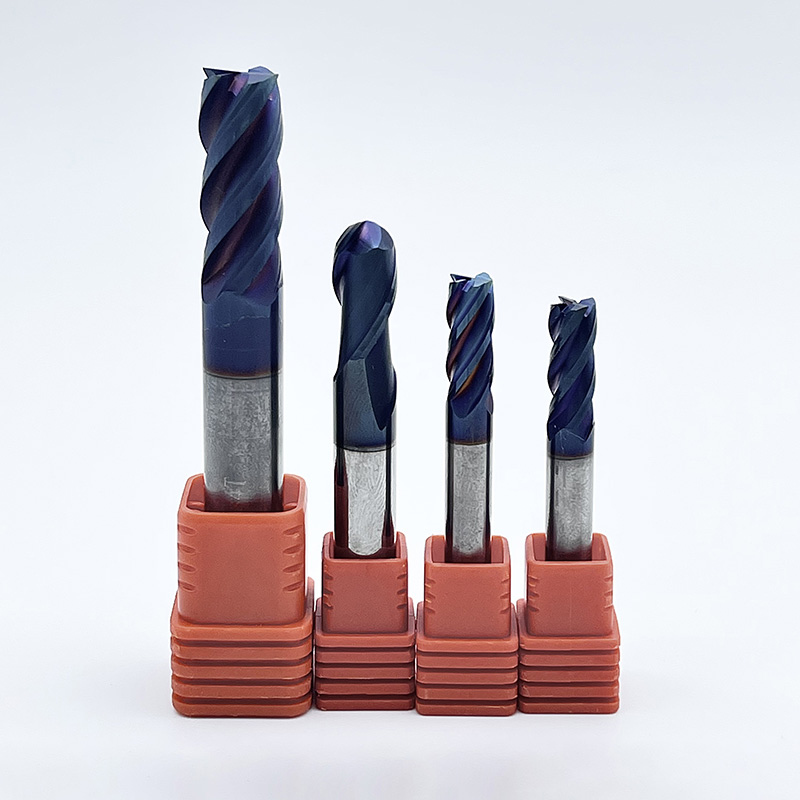
In precision machining, dimensional tolerances often come down to tenths of a thousandth of an inch. When you introduce any variable to the cutting edge—like a protective coating—you fundamentally alter the tool's geometry. Shop managers and machinists constantly balance the extreme tool life benefits of coatings against the potential loss of edge sharpness and dimensional accuracy. A coating that goes on too thick causes rubbing, spikes cutting forces, and pushes parts out of tolerance. On the flip side, a coating that is too thin fails prematurely under high thermal loads, destroying the tool. Evaluating the exact impact of coating thickness on a carbide end mill requires analyzing edge rounding, deposition methods, substrate grades, and material-specific application requirements. We need to look at the physical mechanics of the cut to make an evidence-based tooling selection that maximizes shop floor efficiency.
Micron-Level Geometry Shifts: Standard coatings add 2 to 5 microns of thickness, which can increase the cutting edge radius and slightly alter the true outer diameter of the tool.
Edge Prep Necessity: Substrates must be honed before coating to ensure adhesion, meaning a coated tool will never be as razor-sharp as a polished, uncoated tool.
The Tool Life Trade-Off: While thick coatings can increase tool life by 3x to 5x and allow for 20% to 70% faster speeds through reduced friction, they risk inducing unacceptable cutting pressures in micro-machining or finishing passes.
Application Matching: Hard milling requires robust, heat-resistant coatings, whereas machining gummy materials (like aluminum or titanium) often demands ultra-thin coatings or uncoated edges to prevent material adhesion and work hardening.
Cost-to-Performance Justification: The premium price of a coated carbide end mill is offset by extended tool life and higher material removal rates, provided the coating thickness is correctly matched to the application.
When you apply a thin film coating to a cutting tool, it does not lay down perfectly flat. During the deposition process, coating buildup naturally concentrates on the sharpest corners of the tool geometry. We call this the dog-bone effect. Because coatings adhere poorly to the microscopic, jagged edges left behind by the grinding wheel, toolmakers must perform edge preparation before coating. They use nylon brushes impregnated with diamond paste or drag-finishing machines to create a controlled radius. We are usually talking about a hone radius between 0.0005 inches and 0.002 inches depending on the application.
By intentionally dulling the edge, the substrate provides a stable foundation. This stops the hard coating from flaking off under heavy cutting pressure. However, this necessary edge prep, combined with the physical thickness of the coating, degrades the absolute sharpness of the tool. You hit a strict threshold where edge rounding stops shearing the workpiece material and starts plowing or rubbing against it. When rubbing happens, cutting forces spike. Heat generation accelerates rapidly, and the tool pushes away from the part. This deflection leads directly to severe dimensional inaccuracies on the machine table.
Standard physical vapor deposition (PVD) coatings usually range from 2 to 5 microns thick. That sounds negligible, but the mathematical impact on a rotating cutting tool is massive. A uniform 3-micron coating applied to all flutes effectively adds 6 microns to the total cutting diameter. Imagine you are interpolating a bearing bore with a tolerance of +0.0002 inches / -0.0000 inches. If your end mill is 0.0003 inches oversized because the manufacturer did not compensate for the PVD layer, you will scrap that part on the first pass.
To hold precision, premium tool manufacturers compensate for this added volume during the initial grinding phase. They intentionally grind the bare solid carbide end mill undersized. Once they apply the coating, the final outer diameter falls precisely within the stated tolerance band. You must understand this compensation when programming toolpaths. If you assume a perfectly nominal diameter on a non-compensated coated tool, you will cut undersized slots and oversized bosses every time.
The performance of any coating relies heavily on the structural integrity of the underlying carbide grade. Standard carbide might have a 10% cobalt binder with larger tungsten grains. These large grains can crumble at the microscopic level when subjected to aggressive edge honing. This creates an unstable, fractured surface that ruins coating adhesion.
Micro-grain and ultra-micro-grain solid carbide substrates give you a vastly superior foundation. They use sub-micron tungsten powder, pushing the transverse rupture strength (TRS) much higher. The fine grain structure allows for a much smaller, more precise hone while keeping the edge strong. This synergy lets manufacturers apply thinner, highly adherent coatings that resist flaking. You get a tool that retains a sharper cutting edge for longer periods. It bridges the gap between extreme wear resistance and high-precision shearing capability on the mill.
Physical Vapor Deposition remains the undisputed industry standard for manufacturing a coated carbide end mill. PVD processes operate at relatively low temperatures, typically between 400°C and 600°C. This lower thermal threshold matters because it preserves the toughness of the carbide substrate. It stops the cobalt binder from leaching out or degrading during manufacturing. Within PVD, methods like cathodic arc deposition or magnetron sputtering allow for precise control over the film's architecture.
PVD allows for exceptionally thin and uniform layers. It generally keeps the added thickness between 2 and 5 microns. This thin application maintains the structural geometry of the cutting edge. The tool still performs precise shearing actions without inducing excessive cutting pressure. The compressive residual stresses introduced during the PVD process also help stop micro-cracking along the cutting edge during interrupted milling operations.
Chemical Vapor Deposition produces much thicker coatings. These often range from 5 to 15 microns. CVD works great for turning inserts that endure continuous, high-heat cutting, but we rarely use it for solid carbide rotary tools. The main limitation is the deposition temperature, which frequently exceeds 900°C.
Subjecting a solid carbide end mill to that much heat alters the metallurgy of the substrate. It causes embrittlement. On top of that, the sheer volume of a 15-micron CVD coating drastically blunts the cutting edge. This level of edge rounding destroys the tool's ability to hold tight dimensional tolerances. It generates massive tool deflection. CVD simply does not work for precision milling applications where sharpness and accurate tool geometry dictate part quality.
When you mill hardened steels exceeding 45 HRC, the cutting dynamics shift completely. Your primary enemy is no longer material adhesion. Instead, you fight extreme thermal degradation and abrasive wear. In these applications, you need a thicker, highly thermally stable coating like Aluminum Titanium Nitride (AlTiN) or Titanium Aluminum Nitride (TiAlN). These coatings form a protective aluminum oxide layer when exposed to high cutting temperatures. This shields the carbide substrate from the heat.
For a hardened steel carbide end mill, slight edge rounding from a thicker coating is not a bad thing. It acts as a structural requirement. A razor-sharp edge would instantly chip under the massive impact forces of hard milling. The heavily honed, thickly coated edge provides the blunt-force strength needed to withstand aggressive toolpaths in hardened tool steels. When you run a thickly coated tool in D2 tool steel at 55 HRC, you want to see dark blue or purple chips. That color tells you the heat is evacuating through the chip, not transferring into the workpiece or melting the carbide. You prioritize edge integrity and thermal protection over sheer cutting sharpness.
Titanium alloys present the exact opposite challenge. Titanium has notoriously low thermal conductivity. Heat does not evacuate through the chip. Instead, it transfers directly into the cutting tool. Titanium also has a low modulus of elasticity, meaning it tends to spring back away from the cutting edge. If you use a thick coating, the resulting edge rounding causes the tool to rub rather than shear. The titanium springs away, rubs against the flank of the tool, and work-hardens instantly. This destroys both the tool and the part.
Successful titanium machining requires a delicate balance. A titanium carbide end mill must utilize ultra-thin coatings (such as TiB2) or remain entirely uncoated and highly polished. An ultra-thin coating prevents chemical affinity and galling without sacrificing the razor-sharp edge needed to shear the material cleanly. This sharp shearing action minimizes friction, controls heat generation, and stops the catastrophic work-hardening of the titanium substrate.
The required coating thickness dictates the specific phase of your machining operation. During heavy roughing, your primary objective is maximizing material removal rates (MRR). Dimensional accuracy takes a back seat. You prioritize thicker coatings here because they offer maximum thermal protection and wear resistance. They let you push feeds and speeds to their absolute limits without catastrophic tool failure.
High-precision finishing passes demand strict dimensional accuracy and superior surface finishes. You need thin coatings, or entirely uncoated polished tools, for finishing. A sharp, thinly coated edge reduces tool pressure. It minimizes deflection and prevents the surface tearing associated with dull, heavily coated roughing tools. Separating your tooling strategies based on roughing and finishing ensures maximum efficiency and pristine final part dimensions.
Optimizing coating thickness yields massive gains in machining efficiency. Shop data consistently shows that applying the correct coating thickness increases tool life by 3x to 5x compared to bare carbide. The lubricity of advanced coatings reduces the coefficient of friction. This lets you increase cutting speeds and feeds by 20% to 70%.
This friction reduction directly translates to lower cutting temperatures at the shear zone. The coating acts as a thermal barrier. It stops heat from penetrating the carbide matrix and softening the vital cobalt binder. At temperatures exceeding 800°C at the shear zone, bare carbide will undergo plastic deformation. By maintaining the substrate's hardness at elevated temperatures, the tool resists plastic deformation. The cutting edge remains intact and accurate over long production runs.
Tracking tool wear accurately keeps your part tolerances in check. In precision manufacturing, we enforce strict standardized failure metrics. A common benchmark declares tool failure if edge chipping exceeds 0.005 inches on either leg of the cutting geometry. Quality control engineers measure the hypotenuse distance of the chipped tooth to track wear progression accurately.
Overly thick coatings frequently fail these strict criteria prematurely. When a coating goes on too heavily, residual stresses build up within the film. This severely reduces its adhesion to the carbide substrate. You get micro-chipping along the cutting edge. Even if the underlying carbide remains intact, a micro-chipped coating creates an irregular cutting profile. It instantly degrades part accuracy, causes chatter, and ruins surface finishes.
Coated end mills command a premium price over their uncoated counterparts. The complex edge preparation and vacuum deposition processes add manufacturing time. However, evaluating tooling strictly on initial purchase price is a flawed strategy. The true metric of success on the shop floor is the cost-per-part.
In high-volume production or when machining difficult alloys, the extended tool life and increased material removal rates easily justify the higher upfront cost. Consider a shop running 4140 pre-hardened steel. An uncoated tool might last 20 minutes in the cut before the edge degrades. A properly coated tool might run for 120 minutes. You save five tool changes, reduce machine downtime, and keep the spindle turning. For short-run jobs in soft materials like plastics or standard aluminum, the extended wear resistance may never be realized. In those cases, an uncoated, razor-sharp tool remains the more economical and accurate choice.
Coating Thickness Application Guide
Machining Application | Material Type | Recommended Coating Thickness | Primary Tooling Objective |
|---|---|---|---|
Heavy Roughing | Alloy Steels, Cast Iron | Thick (3-5 microns) | Thermal protection, maximum MRR |
Hard Milling | Tool Steels (45+ HRC) | Thick (3-5 microns) | Edge strength, heat deflection |
Titanium Machining | Ti-6Al-4V, Inconel | Ultra-Thin (1-2 microns) | Prevent work-hardening, shear cleanly |
Precision Finishing | All Metals | Ultra-Thin or Uncoated | Dimensional accuracy, surface finish |
Non-Ferrous Machining | Aluminum, Brass, Plastics | Uncoated (Polished) | Prevent material adhesion, razor sharpness |
Selecting the optimal end mill requires a holistic approach. You must evaluate tooling vendors based on their transparency regarding coating processes, carbide grades, and edge preparation standards. A high-performance tool requires the coating thickness to perfectly match the specific helix angle and flute count.
High-helix tools designed for aluminum require deep, polished flutes for chip evacuation. Applying a thick, rough coating to these flutes causes chip packing and tool breakage. Vendors must demonstrate that their coating application does not interfere with the tool's core geometry. Understanding the synergy between the micro-grain substrate, the exact hone radius, and the final PVD layer dictates your machining results.
The primary risk of implementing thickly coated tools is increased tool deflection. Because the edge is inherently rounder, cutting forces push the tool away from the workpiece rather than shearing cleanly through it. This deflection leads to tapered walls, undersized pockets, and severe dimensional inaccuracies. If you experience chatter, you need to drop your depth of cut or increase your feed per tooth to force the tool to bite into the material rather than rub.
To mitigate this risk, you must adjust your parameters. Optimize speeds, feeds, and depth of cut to account for the increased cutting pressure. Utilizing highly rigid tool holding systems—such as shrink-fit holders or hydraulic chucks—is mandatory. These systems provide the necessary clamping force and concentricity to resist deflection. They ensure the coated tool tracks perfectly along the programmed toolpath. Climb milling is also mandatory when running heavily honed, coated tools. Conventional milling causes the cutting edge to rub against the workpiece before it finally bites into the material, generating massive heat and destroying the coating.
Audit your current tool failure modes to determine if your shop suffers primarily from micro-chipping or thermal wear.
Consult with tooling manufacturers to verify exact coating specifications, edge prep radiuses, and carbide grades before purchasing.
Run controlled test cuts on scrap material to measure actual part deviation and tool deflection.
Standardize ultra-thin PVD coatings or uncoated polished tools for non-ferrous materials and tight-tolerance finishing operations.
Implement rigid tool holding systems like shrink-fit or hydraulic chucks to compensate for the increased cutting pressure of thickly coated roughing tools.
A: Yes, typically by 4 to 10 microns overall, depending on the coating process. Premium manufacturers grind the bare solid carbide tool slightly undersized to compensate for this added volume. This ensures the final coated dimension remains within the stated tolerance band for accurate programming.
A: Uncoated tools do not require the mandatory edge honing needed for coating adhesion. This allows for a razor-sharp cutting edge that shears material cleanly with significantly less tool pressure. It minimizes deflection and maintains tighter dimensional accuracy during finishing passes.
A: Most physical vapor deposition (PVD) coatings applied to solid carbide rotary tools range from 2 to 5 microns in thickness. This provides an optimal balance of thermal protection without excessively blunting the cutting edge.
A: Yes. If a coating is applied too thickly, residual stresses build up within the film, reducing its adhesion to the substrate. This causes the coating—and frequently the underlying carbide edge—to micro-chip under cutting pressure, instantly degrading part accuracy.
A: Choose uncoated or ultra-thin coated tools for finishing passes to prevent rubbing and work-hardening. Use specialized, thin PVD coatings designed to resist chemical affinity and manage heat during aggressive roughing operations.
A: Yes, particularly for long production runs and difficult-to-machine alloys. The reduced friction and thermal protection can extend tool life by 3x to 5x. This significantly lowers the overall cost-per-part and reduces machine downtime despite the higher initial purchase price.