English
- All
- Product Name
- Product Keyword
- Product Model
- Product Summary
- Product Description
- Multi Field Search

Views: 0 Author: Site Editor Publish Time: 2026-06-26 Origin: Site

Inaccurate holemaking acts as a primary driver of scrapped parts in modern manufacturing. It consistently wastes valuable spindle time across your shop floor. It also delays critical assemblies in high-precision aerospace and medical production lines. A rigid CNC machine provides a solid foundation for any metalworking operation. We know machine stability prevents basic vibration issues. However, final dimensional accuracy ultimately relies on the tooling deployed at the spindle. Positional tolerance and internal surface finish directly depend on these specific tool choices.
This guide serves as a comprehensive technical evaluation framework. Engineering and procurement teams can use it to make better decisions. You will learn how to assess and justify critical tooling investments. We will help you confidently shortlist high-performance solutions for your exact machining needs. Our approach focuses on measurable performance metrics. You can stop guessing and start optimizing your production setup today.
Accuracy Hierarchy: Achieving true precision requires a staged approach—drilling for stock removal, boring for true position, and reaming for final dimension and surface finish.
Tool Geometry Matters: Advanced point geometries and asymmetric flute designs actively reduce spindle deflection and mitigate chatter.
Total Cost of Quality: Investing in high-end holemaking tools reduces cost-per-hole by minimizing secondary operations and eliminating hidden defects.
System Dependence: Even the best precision drilling tools cannot overcome a weak workholding setup or degraded spindle bearings; holistically evaluate the machining environment.
We must analyze the hidden costs of poor holemaking. Poor holemaking cascades rapidly into failed QA checks. Defective components often show bell-mouthing, tool wander, or severe out-of-roundness. These defects force operators to rework parts immediately. Sometimes they scrap them entirely. Upgrading machinery costs hundreds of thousands of dollars. Upgrading cutting tools costs a tiny fraction of this amount. Premium Holemaking Tools deliver immediate results. High-end tooling eliminates the high cost of scrapping components. Imagine scrapping a costly medical implant at the final stage. The upfront premium of specialized tooling pays for itself instantly here. You save raw material costs and preserve invested machine hours.
Cycle time reduction also drives profitability. Coolant-through solid carbide tools run at massive feed rates. They eliminate the need for slow peck drilling cycles entirely. Continuous chip evacuation means your spindle keeps moving without interruption. Consider these specific business benefits:
Reduced machine downtime from fewer tool changes.
Higher throughput on bottlenecked CNC equipment.
Elimination of secondary benchwork and manual deburring.
Lower overall scrap rates leading to higher material yield.
Faster cycles directly impact machine profitability. They speed up part delivery and improve customer satisfaction. Upgrading your tools offers the quickest path to better margins.
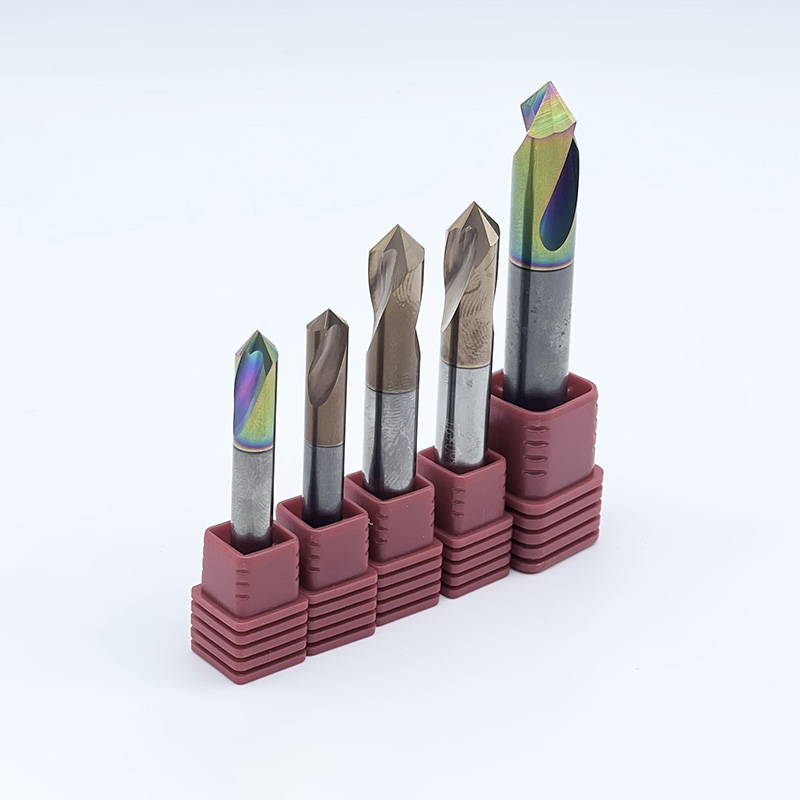
Rapid material removal starts with Precision Drilling Tools. They establish the initial hole placement quickly and efficiently. Modern shops rely on them for aggressive stock removal in tough alloys. When evaluating these options, look for self-centering point geometries. A 140-degree split point prevents the tool from walking on curved surfaces. This eliminates the need for a separate spot drilling operation. You save an entire tool change and reduce cycle time. You also reduce the chance of tolerance stacking errors.
Even great drills experience minor core drift during deep penetration. Boring tools correct this drift effectively. They establish true positional accuracy and perfect straightness. You must assess modular boring bars carefully for high-RPM applications. Look for systems you can dynamically balance with adjustable counterweights. Imbalanced boring heads introduce vibration and destroy positional tolerance. They also wear out your expensive spindle bearings prematurely.
Reamers handle the final critical pass in high-precision parts. They achieve extremely tight diametrical tolerances like H7 or better. They also produce superior surface finishes (Ra) matching ground surfaces. You should compare solid carbide and cermet reamers closely. Solid carbide works well for abrasive materials and general use. Cermet offers superior wear resistance for high production volumes. Cermet often leaves a mirror-like finish on low-carbon steel parts.
| Tool Category | Primary Function | Typical Tolerance Capability | Surface Finish (Ra) |
|---|---|---|---|
| Standard Carbide Drill | Rapid stock removal | IT9 - IT10 | 3.2 - 6.3 µm |
| High-Performance Drill | Precision drilling & sizing | IT8 - IT9 | 1.6 - 3.2 µm |
| Boring Bar | Correcting true position | IT6 - IT7 | 0.8 - 1.6 µm |
| Cermet Reamer | Final sizing & finishing | IT5 - IT7 | 0.4 - 0.8 µm |
Engineers design these tools to fight physical forces actively. Tool deflection ruins hole accuracy and destroys tool life. Understanding the engineering helps you choose better solutions.
Unevenly spaced flutes break up damaging harmonics effectively. Symmetrical flutes often vibrate at resonant frequencies during cutting. This chatter creates out-of-round holes and poor finishes. Asymmetric spacing disrupts this harmonic cycle entirely. The tool cuts smoothly and leaves a perfectly round cylinder. You hear a quiet cutting sound instead of a loud squeal.
Deep-hole applications require exceptional straightness. Drills exceeding 5xD depth benefit massively from double-margin designs. A standard single margin leaves room for lateral movement. Double-margin drills stabilize the tool inside the hole. The secondary margin acts like a built-in guide bush. It maintains strict straightness as the drill pushes deeper into the block. This prevents the tip from wandering off-axis.
Friction generates intense heat at the cutting edge. Specialized PVD and CVD coatings manage this heat transfer. Coatings like TiAlN form a protective thermal barrier over the carbide. This prevents thermal expansion from altering the tool diameter. Hole dimensions remain consistent throughout a long production run. Substrate toughness also prevents micro-chipping under high feed rates. You get predictable tool wear instead of sudden catastrophic failure.
Through-tool coolant is mandatory for precision applications. It evacuates chips cleanly from the cutting zone. Traditional flood coolant rarely reaches the bottom of deep holes. Trapped chips get re-cut by the tool edges. Chip re-cutting scores the internal hole surface instantly. High-pressure internal coolant blasts chips up the flutes. This prevents surface damage and extends tool life significantly.
Even experienced machinists encounter baffling hole defects. Identifying the root cause is half the battle. Let us examine three common hidden defects and their tooling solutions.
A chisel edge walking on entry causes wandering. Inadequate machine rigidity exacerbates this initial movement. The hole begins off-center and continues to drift deeper. You must upgrade to tools featuring optimized web thinning. A thinner web reduces thrust force on entry. Alternatively, utilize a strict pilot drill methodology. A short pilot hole provides a perfect guide for longer drills. It locks the drill tip on the true centerline immediately.
Bell-mouthing occurs when the hole opening cuts too large. Excessive Total Indicator Reading (TIR) usually causes this. Unstable tool entry also creates this tapered effect. Implement high-precision tool holders to fix this. Hydraulic chucks or shrink-fit tool holders offer superior runout control. Pair them with premium double-margin drills. This combination stops entry wobble completely. You achieve straight walls right from the surface.
Workpiece material often welds directly to the cutting edge. This built-up edge occurs frequently in aluminum and titanium. The welded material acts as a secondary cutting edge. It tears and scores the internal hole wall. Select tools featuring highly polished flutes. Use specific low-friction tool coatings like TiB2 or DLC. Polished surfaces prevent chips from sticking to the carbide. The chips slide out smoothly without damaging the bore.
| Defect Type | Primary Root Cause | Recommended Tooling Solution |
|---|---|---|
| Wandering | Chisel edge walking; poor machine rigidity | Web-thinned drills; strict pilot drill methodology |
| Bell-Mouthing | Excessive TIR runout; unstable entry dynamics | Hydraulic chucks; double-margin drills |
| Built-Up Edge | Material welding to the cutting edge | Polished flutes; low-friction DLC/TiB2 coatings |
You need a systematic approach to shortlist new tooling. Do not buy tools based on catalog promises alone. Evaluate your specific shop environment first.
Assess your existing spindle RPM limits carefully. High-performance micro-drills require massive RPM to function properly. A 1mm drill might need 20,000 RPM for optimal cutting speed. Check your coolant pressure capabilities (PSI). High-feed drills often need at least 1,000 PSI to break chips. Low pressure causes chip packing and catastrophic tool failure. Finally, count your available tool magazine space. Modular tools might save slots compared to dedicated boring bars.
Solid carbide works best for absolute precision. It dominates micro-machining and small diameter applications. It provides unmatched rigidity and edge sharpness. Solid carbide handles tight tolerances effortlessly.
Indexable tools excel in large diameter applications. They offer favorable cost-per-hole metrics for high-volume roughing. Use indexable drills for less-critical tolerance operations. You simply rotate the insert when it wears out. This reduces inventory costs and simplifies tool management.
Choose manufacturers who provide proven cutting data. Reliable speeds and feeds eliminate dangerous guesswork. Emphasize the importance of local application support. Complex setups demand expert troubleshooting on the floor. Live tooling on lathes often introduces weird harmonic vibrations. A good tooling engineer helps you solve these specific challenges quickly. They ensure you get the most out of your tooling investment.
Achieving flawless holes requires a calculated approach. Accuracy is a strictly controllable variable. You dictate precision by matching tool geometry, material, and machining strategy correctly. Implement these critical next steps to improve your process:
Audit your current production lines for high-scrap components.
Calculate your true cost-per-hole, factoring in machine downtime and scrapped parts.
Evaluate your high-pressure coolant capabilities before purchasing advanced drills.
Consult with an application engineer to pilot a high-performance reaming solution.
Take these steps to transform your holemaking process. Precision tooling will drastically increase your overall manufacturing profitability.
A: Excessive runout, or Total Indicator Reading (TIR), causes the tool to spin off-center. This makes the tool cut a diameter larger than its actual size. It leads directly to oversized holes and rejected parts. Runout also forces one cutting edge to do all the heavy work. This results in accelerated, uneven tool wear and unpredictable tool life.
A: Reamers simply follow the existing hole. If your drilled hole is misaligned or angled, the reamer will follow that bad path. A reamer cannot fix positional errors or straighten a crooked hole. Boring is absolutely required to establish true straightness and positional accuracy first. Once bored straight, the reamer finishes the diameter perfectly.
A: Premium three-flute or double-margin drills perform incredibly well. They routinely achieve impressive H8 or H9 diametrical tolerances right off the spindle. However, true H7 or tighter tolerances remain highly challenging. Consistent H7 precision typically demands a secondary reaming or boring pass. This secondary step guarantees process reliability across large production batches.
A: Mills rotate the tool, while lathes rotate the part. This introduces entirely different harmonic dynamics. On a lathe, the stationary tool must align perfectly with the spindle centerline. Any deviation above or below centerline causes rubbing, oversized holes, and premature tool breakage. Absolute centerline alignment is the most critical factor in lathe holemaking.


