- All
- Product Name
- Product Keyword
- Product Model
- Product Summary
- Product Description
- Multi Field Search

Views: 0 Author: Site Editor Publish Time: 2026-06-23 Origin: Site

Holemaking stands as one of the most critical and expensive machining operations you will encounter. It often occurs late in the manufacturing process where part scrappage carries the highest financial penalty. Many machine shops fixate purely on basic tool identification rather than strategic performance evaluation. Premature tool wear, poor surface finish, and suboptimal cycle times rarely stem from a single defect. Instead, these issues arise from a severe misalignment of mechanical and environmental variables.
Our goal is to provide a systematic framework for evaluating the variables dictating tool performance. You will learn how to balance substrate choices, geometric designs, and machine conditions effectively. We will help you implement controlled testing parameters. Ultimately, this ensures confident, data-backed procurement decisions moving forward.
Tool performance is a multiplier of substrate, geometry, coating, and machine environment—optimizing one while ignoring the others leads to failure.
Upfront tool cost is a poor metric for evaluation; high-performance solid carbide drills often yield a significantly lower Cost Per Hole (CPH) in production environments.
Machine rigidity and coolant delivery mechanisms dictate whether premium tooling will achieve its rated lifespan.
Standardized pilot testing and baseline data collection are mandatory for validating new tooling investments.
Poor tool performance introduces massive operational and financial risks into your workflow. You face unplanned machine downtime, bottlenecked cycle times, and highly inflated scrap rates. Machining a complex aerospace component often takes hours. Scrapping that near-finished part during a final drilling cycle destroys profit margins instantly.
Optimal performance relies entirely on process reliability. You must prioritize dimensional accuracy and predictable tool life over everything else. Strict adherence to USCTI or ISO tolerances matters far more than simply maximizing material removal rates (MRR). High removal rates mean nothing if the hole fails inspection.
Evaluating Holemaking Tools requires a distinct mindset shift for buyers. You must step away from direct unit-cost comparisons. True performance evaluation focuses on the Cost Per Hole (CPH) metric. A cheaper drill failing twice as fast costs you exponentially more. You lose money on excessive tool changeouts, machine idling, and rejected materials.
Modern holemaking relies on specific core materials to achieve desired results. Each substrate fits a distinct commercial application. Selecting the wrong base material guarantees premature failure.
High-Speed Steel (HSS) and Cobalt offer high toughness ratings. They tolerate lower heat limits but handle unstable setups beautifully. You should use them for low-volume runs, older machines, or manual drill presses. Their inherent flexibility prevents catastrophic snapping when spindle rigidity is questionable.
In contrast, Solid Carbide Drills serve as the absolute industry standard for high-production environments. They provide exceptional wear resistance and incredible thermal stability. However, this comes at a strict trade-off. Solid carbide possesses much lower toughness. It remains highly susceptible to micro-chipping in non-rigid setups.
You must match the substrate directly to your workpiece material. Abrasive aerospace alloys like Inconel require sub-micron grain carbide. Standard mild steels might run perfectly well on micro-grain carbide. Aligning the grain structure to the material hardness prevents rapid abrasive wear.
| Substrate Material | Inherent Toughness | Wear Resistance | Ideal Application Setup |
|---|---|---|---|
| High-Speed Steel (HSS) | High | Low | Manual machines, low-volume runs |
| Cobalt (HSCO) | Medium-High | Medium | Harder steels, unstable setups |
| Micro-Grain Solid Carbide | Low | High | Rigid CNC, high-production volume |
Common Mistake: Applying ultra-hard sub-micron carbide in a worn machine spindle. The resulting chatter and vibration will shatter the rigid tool almost instantly.
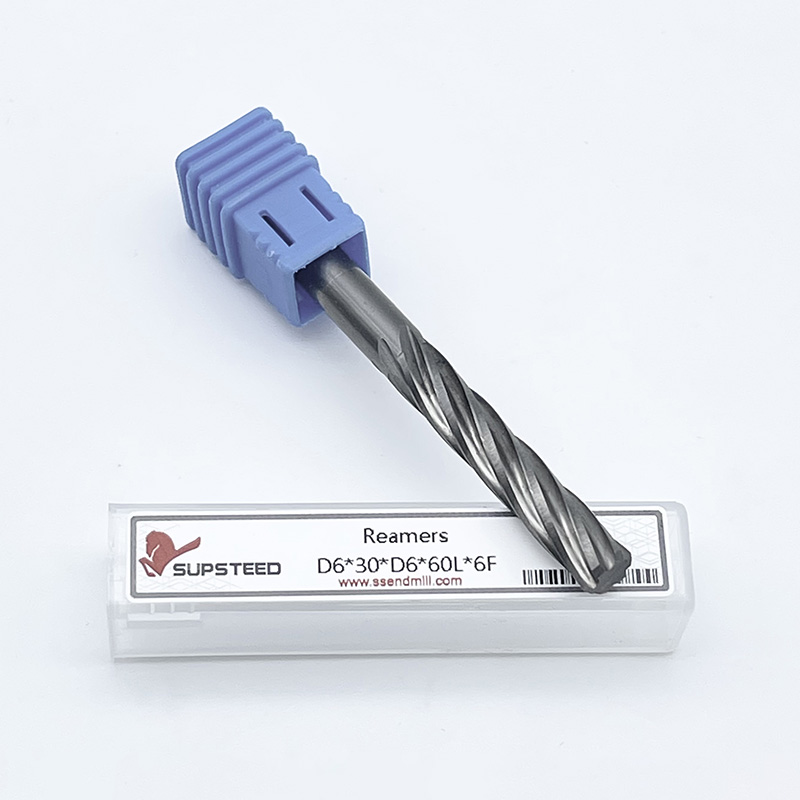
The physical architecture of a drill dictates its cutting action. You must evaluate specific geometric dimensions to ensure proper chip formation.
Point angles and chisel edges play a major role in performance. A standard 118-degree point angle works well for softer materials like aluminum. It produces a longer cutting lip. However, harder materials demand a 135-degree or 140-degree split point. These flatter angles reduce the required thrust force. They also provide self-centering capabilities, eliminating the need for a spot drill.
Flute design directly dictates chip evacuation. Standard flutes push chips up slowly. Parabolic flutes feature a wider, deeper profile. This design enhances chip extraction immensely. Poor chip evacuation remains the primary cause of catastrophic tool failure in deep-hole applications.
Coatings alter performance by acting as severe thermal barriers. Advanced PVD and CVD coatings reduce friction significantly.
TiN (Titanium Nitride): A basic, general-purpose coating offering moderate heat resistance.
TiAlN (Titanium Aluminum Nitride): Forms a protective aluminum oxide layer under high heat. Excellent for dry machining.
AlTiN (Aluminum Titanium Nitride): Handles even higher temperatures. Perfect for abrasive superalloys.
Diamond Coatings: Strictly used for highly abrasive non-ferrous materials like composites or high-silicon aluminum.
Maintain a skeptical lens during procurement. Premium coatings cannot magically compensate for incorrect geometry. They also will not fix a poor substrate selection. They merely enhance an already optimized tool architecture.
High-end tooling frequently falls victim to poor environmental variables. External constraints routinely sabotage premium investments.
You must respect manufacturer-recommended speed and feed rates. Deviating from the specified surface footage (SFM) or chip load carries heavy consequences. Running a tool too slow often causes a built-up edge (BUE). Material welds to the cutting lip, destroying the surface finish. Conversely, running a tool too fast causes rapid thermal degradation. The cutting edge melts or deforms.
Spindle runout and rigidity define your actual tool life limits. Premium tools require exceptionally rigid setups. Excessive runout causes one cutting edge to take a heavier chip load than the other. This imbalance creates uneven edge wear. It inevitably leads to micro-chipping along the primary cutting margin.
Coolant delivery systems represent another critical constraint. Flood coolant sprays fluid at the tool exterior. It works fine for shallow holes. However, deep holemaking requires something much more robust. For depths greater than 3xD (three times the diameter), through-tool coolant becomes a functional necessity. High-pressure through-coolant blasts chips out of the hole aggressively. It also manages thermal expansion at the cutting zone. This is not a luxury; it is a mandatory requirement for process reliability.
Best Practice: Always use high-quality hydraulic or shrink-fit chucks for rigid setups. Standard collets often introduce unacceptable runout margins for high-end drills.
Procurement and engineering teams need a systematic shortlisting logic. Guesswork wastes money. Follow this step-by-step framework to identify the correct solution.
You must define the exact parameters of the job. Identify the workpiece material and its specific hardness rating. Calculate the hole depth to determine the required L/D (Length-to-Diameter) ratio. Document the precise tolerance requirements. Finally, audit your machine capabilities. Note the maximum RPM limits and verify the through-coolant PSI capacity.
Narrow the tooling field based on your technical audit. Select the proper point angle for the material hardness. Choose parabolic flutes if the L/D ratio exceeds 5xD. Ensure the substrate matches the rigidity of your spindle. Only consider premium coatings if your operating temperatures justify the extra cost.
Never buy tooling in bulk without validation. Outline strict parameters for a valid tool trial. You must control all external variables. Use identical toolpaths and identical material batches. Measure flank wear under a microscope at set intervals (e.g., every 50 holes). Document the precise point of failure.
You must justify the adoption of higher-tier tooling mathematically. Cost Per Hole (CPH) provides the only reliable metric. A tool costing three times more might drill five times as many holes at twice the speed. You must also include regrinding and reconditioning viability in your final financial calculations. Many high-quality drills can undergo multiple regrinds, vastly extending their economic lifespan.
| Variable Name | Description | Impact on Formula |
|---|---|---|
| Initial Tool Cost | The purchase price of the drill. | Divided by total holes drilled. |
| Machine Rate | Hourly cost to run the CNC machine. | Multiplied by cycle time per hole. |
| Cycle Time | Minutes taken to drill one hole. | Faster cycle times lower the CPH drastically. |
| Tool Life | Total holes drilled before failure. | Higher tool life dilutes the initial tool cost. |
Holemaking performance remains a delicate balance of tool architecture and environmental rigidity. You cannot ignore one variable without compromising the others. Precision geometry, advanced coatings, and robust substrates must work in harmony with your machine's capabilities.
The best tool available is rarely the one boasting the highest catalog specifications. Instead, the best tool offers the highest predictability and the lowest Cost Per Hole for your specific setup. It runs reliably unattended, maintains strict tolerances, and evacuates chips flawlessly.
Your next step should be proactive. Request a targeted tool trial from a reputable manufacturer. Consult with application engineers to audit your current holemaking process objectively. Gather baseline data today to make profitable, data-backed tooling decisions tomorrow.
A: You must calculate the Cost Per Hole (CPH). Carbide offers extended tool life and runs at significantly faster cycle times than HSS. If your production volume is high enough, the reduction in machine time and tool changeovers quickly outpaces the initial purchase price.
A: Poor chip evacuation remains the leading culprit. Chips pack into the flutes, causing a massive heat spike and tool snapping. Excessive spindle runout serves as the second major cause, inducing vibration that micro-chips the cutting edges.
A: No. While advanced PVD and CVD coatings effectively resist extreme heat, they do not physically evacuate chips. Pushing chips out of a deep hole relies entirely on high-pressure through-coolant delivery. Coatings cannot replace mechanical chip extraction.
A: The decision usually depends on tool diameter. Micro-drills under a certain size cost more to regrind than replace. Larger drills offer excellent regrind economics. However, you must monitor the risk of dimensional loss or performance degradation post-recoating.


