English
- All
- Product Name
- Product Keyword
- Product Model
- Product Summary
- Product Description
- Multi Field Search

Views: 0 Author: Site Editor Publish Time: 2025-12-16 Origin: Site
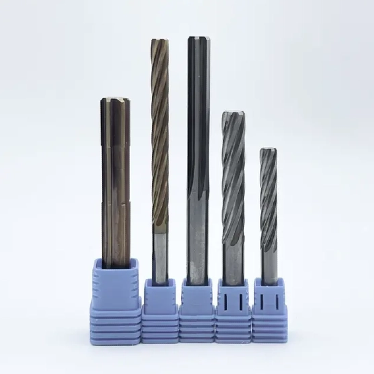
Holemaking is a fundamental process in various industries, from construction and automotive to aerospace and woodworking. Whether you’re working with wood, metal, plastic, or any other material, having the right tools for creating holes can significantly affect the quality and efficiency of your work. Holemaking tools come in various types, each designed to meet different needs based on the material being worked on, the size and depth of the hole, and the desired precision.
In this comprehensive guide, we will explore the different types of holemaking tools, their uses, and the benefits they provide. By the end, you’ll understand the best tools for your specific tasks, ensuring that your holemaking operations are efficient, precise, and cost-effective.
Holemaking tools are devices used to create holes in materials by removing material from the workpiece. These tools can vary widely, from simple drills to more complex machines like reamers and taps. The purpose of holemaking is to create a cavity in a material with a specific diameter and depth, which can serve a wide range of functions, from housing screws and bolts to allowing for the passage of liquids or gases. These tools are essential in numerous industries, including automotive, construction, manufacturing, and furniture production.
The choice of holemaking tool depends on several factors, including the material being worked with, the size of the hole, the precision required, and the speed at which the job needs to be completed.
There is a wide variety of holemaking tools, each suited for different tasks. Below, we will cover the most commonly used holemaking tools and explain when and how to use them.
Drills are arguably the most commonly used holemaking tool. A drill is a cylindrical tool used to create round holes in various materials such as wood, metal, plastic, and composites. The drill consists of a pointed tip with two spiral flutes that remove material as it rotates.
The most common type of drill is the twist drill, which is versatile and can be used in many applications. There are also specialized drills, such as spade drills for wood, core drills for larger holes, and step drills for drilling holes of various diameters.
Drills are used to create holes for screws, bolts, and dowels, as well as to prepare workpieces for additional processing, such as tapping or reaming. They are one of the most straightforward and essential tools for holemaking.
Reamers are tools used to enlarge and finish holes that have already been drilled. While drills create holes, reamers are designed to improve the quality of the hole, making it smoother, more precise, and within the exact tolerance required. A reamer removes only a small amount of material from the sides of a hole to provide a higher degree of accuracy in terms of diameter and surface finish.
Reamers are commonly used in applications where precision is critical, such as in automotive and aerospace manufacturing. For instance, a machine reamer is typically used for large-scale production to provide uniform and accurate hole sizes, while hand reamers are used for smaller, more delicate tasks.
Tapping is the process of creating internal threads inside a hole, allowing a bolt or screw to be inserted securely. A tap is a tool that cuts threads into the walls of a hole, creating a strong connection for threaded fasteners. Tapping is essential in many industries, particularly in mechanical and automotive work, where threaded holes are needed to secure parts together.
There are several types of taps, including spiral point taps, which are ideal for through holes, and bottoming taps, used for blind holes. Taps come in various sizes and thread configurations, allowing for customized threading based on the application.
Tapping is often used in conjunction with drilling, and a tap’s cutting edges help create a clean, precise thread to accommodate bolts, screws, or studs.
Boring tools are used to enlarge and refine existing holes. Unlike drilling, which creates a hole from scratch, boring tools are designed to increase the diameter of a hole and improve its roundness, making it more precise. Boring tools are essential when high precision is required, and they are typically used for deeper or larger holes where accuracy is paramount.
Boring tools are commonly used in machining operations, particularly when working with metals and other hard materials. A boring bar, for example, is a long bar with a cutting tool at the end, often used to enlarge holes in large workpieces. Boring is frequently used in conjunction with drills for high-precision tasks.
Hole saws are specialized tools used to create larger holes in materials like wood, metal, and plastic. A hole saw consists of a cylindrical saw blade with teeth on the edge that cuts through the material. Unlike traditional drills, which are limited to creating small, round holes, hole saws are capable of cutting larger, more irregular holes.
Hole saws are particularly useful in construction and plumbing, where large holes are needed for pipes, conduits, or other fittings. They are available in various sizes and can be used with a drill to create holes for a variety of applications, such as installing electrical outlets, HVAC systems, or even cutting holes for light fixtures.
Punches are used to create small, precise holes in materials like metal, leather, or plastic. A punch works by applying force to the material, creating a hole without the need for rotational cutting, like a drill. Punches are commonly used in sheet metal fabrication and leatherworking, where quick, clean holes are needed without excessive force.
There are different types of punches, including center punches, which are used to mark the center of a hole before drilling, and drive punches, which are used to make clean holes in thinner materials. Punches are particularly useful when creating holes in materials that are too thin to be drilled effectively.
Selecting the right holemaking tool depends on a few key factors:
Material: Different materials require different tools. For example, wood is easily drilled with spade drills, while metal often requires twist drills or reamers for more precise holes.
Hole Size and Depth: Consider the size and depth of the hole you need to create. For larger holes, hole saws are typically the best option, while smaller holes may be best suited for drills.
Precision: If the hole needs to be highly accurate or has specific tolerances, tools like reamers, taps, and boring bars are more suitable.
Speed and Efficiency: If you need to complete the task quickly, tools designed for high-speed use, such as machine taps or CNC boring tools, can help you achieve your goal.
Using the appropriate holemaking tool offers several benefits, including:
Increased Precision: The right tool ensures that the hole is the correct size, shape, and finish. For example, a reamer will ensure that the hole created by a drill is smooth and meets the required tolerance.
Efficiency: Using the right tool for the job minimizes errors and reduces the need for additional operations, speeding up the process.
Better Surface Finish: Certain tools, such as reamers, improve the surface quality of the hole, making it suitable for further operations like threading or inserting components.
Cost Savings: Choosing the right tool can save you time and money by reducing waste, improving the quality of your work, and extending tool life.
Holemaking tools are essential for creating accurate, functional holes in a wide range of materials. From simple drills to precision reamers and taps, each tool serves a specific purpose and plays a key role in ensuring that your project is completed with accuracy and efficiency. By understanding the types of holemaking tools available and their specific uses, you can make informed decisions about which tool is best for your job.
Whether you’re working on a small DIY project, a large-scale industrial operation, or something in between, selecting the right holemaking tool is crucial to achieving the desired outcome. Proper tool selection ensures that your holes are the right size, shape, and finish, which is vital for ensuring the functionality and longevity of your workpieces.
Q: What is the difference between a drill and a reamer?
A: A drill is used to create a hole, while a reamer is used to refine and enlarge an existing hole to improve its precision and finish.
Q: Can taps be used on all materials?
A: Taps are primarily used to create internal threads in metals and plastics. They are not typically used on softer materials like wood.
Q: What is the purpose of a boring tool?
A: A boring tool is used to enlarge and finish a hole that has already been drilled. It is typically used for high-precision work where exact hole dimensions are required.
Q: How do I choose the right drill bit size?
A: The right drill bit size depends on the diameter of the hole you need to create. Check the specifications of the fastener or material you are working with to determine the correct size.


