English
- All
- Product Name
- Product Keyword
- Product Model
- Product Summary
- Product Description
- Multi Field Search

Views: 0 Author: Site Editor Publish Time: 2026-08-23 Origin: Site

Machining nickel-based superalloys presents a volatile combination of extreme heat generation and rapid work hardening. The high pressures produced during conventional machining cause an immediate hardening effect that slows further machining, leading to unpredictable tool failure and high scrap rates in high-stakes manufacturing. Traditional milling strategies subject tooling to severe spikes in mechanical and thermal loads. When cutting Inconel, these spikes cause premature edge chipping, catastrophic tool breakage, and compromised surface integrity on high-value parts.
Mitigating these forces requires a systemic approach. By pairing a specialized Inconel end mill with dynamic, constant-engagement toolpaths, manufacturers can control chip loads, distribute heat effectively, prevent shock to the workpiece, and shift tool wear from catastrophic failure to predictable degradation. Mastering this relationship between toolpath generation and cutting tool geometry forms the foundation of profitable superalloy machining.
Constant Contact Angle is Critical: Utilizing toolpaths that maintain a consistent radial depth of cut and constant contact angle prevents the sudden spikes in tool load that destroy cutting edges in nickel alloys.
Heat Management Dictates Tool Life: Dynamic toolpaths (like High-Efficiency Milling) transfer heat into the chip rather than the workpiece or the tool, preserving the structural integrity of both.
Tool and Path are Inseparable: Even the most advanced CAM strategies will fail if not paired with a rigid, variable-pitch carbide end mill for Inconel designed to dampen harmonics.
System Rigidity is a Prerequisite: Successfully implementing reduced-load toolpaths requires evaluating the entire machining setup, including spindle capabilities, workholding, and CAM software processing power.
Establishing baseline metrics for successful superalloy machining requires a strict focus on process stability. Predictable tool life matters far more than peak material removal rates. Adherence to tight dimensional tolerances remains non-negotiable. The complete absence of surface work hardening defines a successful operation. Achieving these metrics demands a deep understanding of how cutting forces interact with high-temperature alloys on a metallurgical level.
Nickel alloys possess a low shear angle during the cutting process. This physical characteristic means that instead of heat flowing into the chip and evacuating the cutting zone, the thermal energy transfers directly into the cutting tool and the workpiece. Localized high pressure causes the material to strain-harden instantly. If a cutting edge rubs against the material rather than shearing it cleanly, the surface hardness can jump from a baseline of 35 HRc to over 50 HRc in a fraction of a second. This creates a severe cascading failure effect. The hardened layer destroys the cutting edge on subsequent passes. Heat concentrates at the cutting zone, and this thermal shock degrades the carbide substrate rapidly.
Analyzing why conventional offset toolpaths fail exposes the root cause of most tool breakages. Traditional paths maintain a constant stepover distance but ignore the actual engagement angle of the tool. When a tool running a standard offset path enters an internal corner, the engagement angle spikes dramatically. A tool cutting at a 20-degree engagement angle on a straight wall might suddenly face a 90-degree or even 180-degree engagement in a tight corner.
This sudden spike causes several immediate problems:
The cutting forces quadruple instantly, overloading the spindle and deflecting the tool.
The chip thickness increases rapidly, trapping heat against the cutting edge.
The sudden mechanical shock fractures the micro-geometry of the carbide flutes.
The tool stalls momentarily, rubbing the material and causing severe localized work hardening.
Conventional milling simply cannot adapt to the dynamic load requirements of nickel-based superalloys. The physics of the cut demand a strategy that prioritizes constant tool pressure over simple geometric offsets.
High-Efficiency Milling (HEM) principles fundamentally change how machinists approach superalloy removal. HEM utilizes a very low radial depth of cut (RDOC)—typically between 5% and 10% of the tool diameter—paired with a high axial depth of cut (ADOC) that can reach up to twice the tool diameter. This strategy utilizes the entire flute length of the tool. It reduces localized tool engagement at the tip, which is the weakest point of the cutter. Wear distributes evenly across a large section of the cutting edge. By keeping the RDOC low, the tool spends less time in the cut per revolution. This micro-interruption allows the cutting edge to cool briefly before re-engaging the material.
Trochoidal milling offers an exceptional solution for slotting and pocketing operations where tool engagement traditionally spikes. This technique combines circular interpolation with linear forward motion. The tool moves in continuous spiral loops, maintaining a strictly constant contact angle throughout the cut. This provides consistent chip loads regardless of part geometry. It prevents mechanical shock to both the cutting tool and the workpiece. The tool gains time to cool during the non-cutting phase of the micro-cycle. Heat transfers efficiently into the chip rather than building up in the tool or the part.
Climb milling is absolutely mandatory when processing heat-resistant alloys. Climb milling ensures the cutting edge bites into the material at the maximum chip thickness and exits at zero thickness. This thick-to-thin chip formation reduces the severe rubbing and friction that occur at the beginning of a conventional milling cut. Friction exacerbates work hardening. By forming a thick chip immediately, climb milling forces the heat into the chip. The chip then carries the heat away from the cutting zone as it evacuates.
Managing entry, exit, and roll-in strategies dictates the survival of the tool during the most vulnerable phases of machining. Direct plunging causes immediate work hardening and destroys the bottom center-cutting teeth of the end mill instantly. Helical ramping provides a safe entry method. Ramping at a shallow angle of 1 to 2 degrees gradually introduces the tool to the material, distributing the axial load. Arcing into the cut and utilizing roll-in techniques prevent the initial shock that typically fractures the cutting edge on the first pass. A roll-in move blends the tool into the toolpath via a radial arc, allowing the cutting forces to build up smoothly.
Comparison of Milling Strategies in Nickel Alloys
Strategy Parameter | Conventional Offset Milling | Dynamic / HEM Toolpaths |
|---|---|---|
Radial Depth of Cut (RDOC) | High (50% - 100%) | Low (5% - 15%) |
Axial Depth of Cut (ADOC) | Low (10% - 25%) | High (100% - 200%) |
Tool Engagement Angle | Highly Variable (Spikes in corners) | Strictly Constant |
Heat Distribution | Concentrated at tool tip | Spread across entire flute length |
Work Hardening Risk | Severe | Minimal |
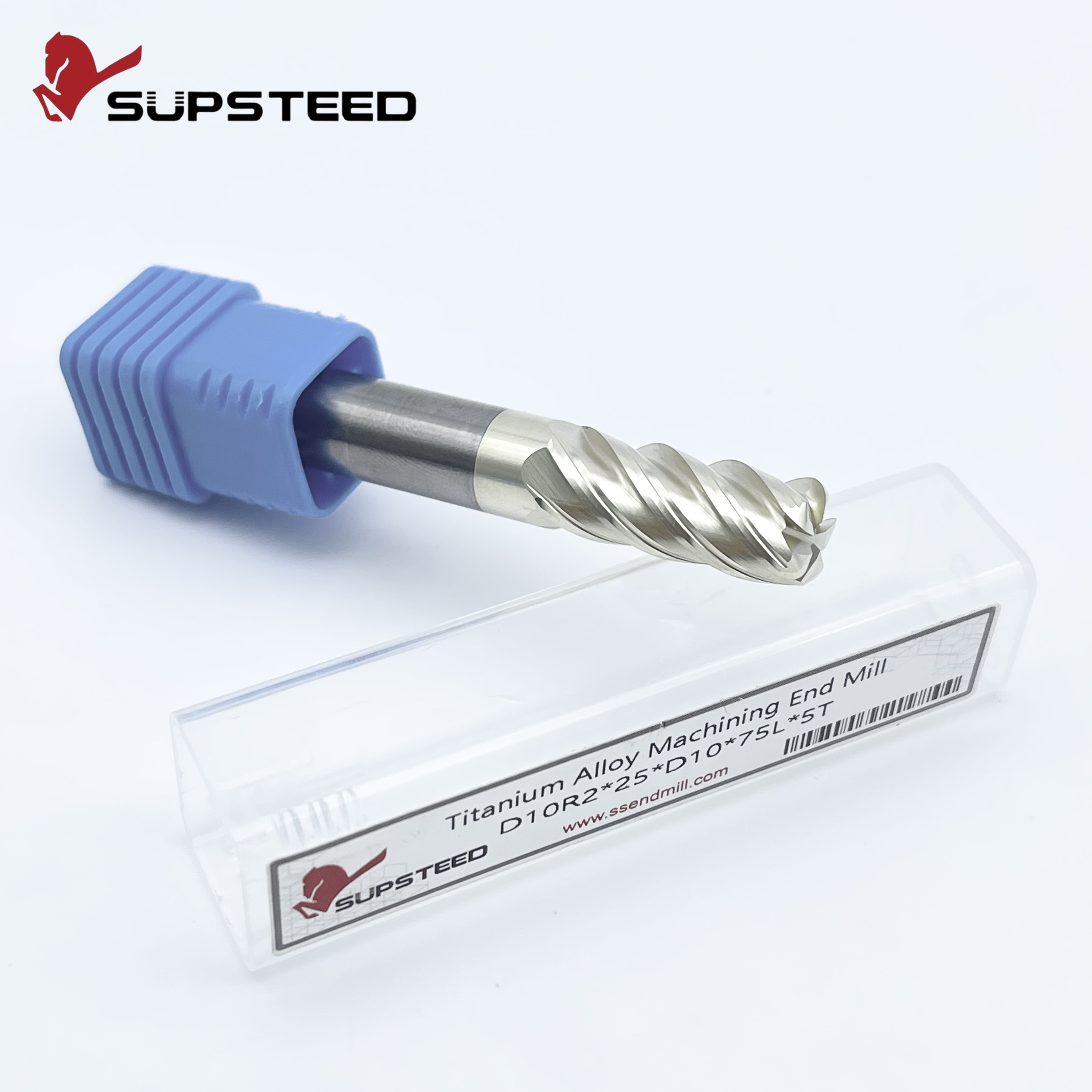
Selecting the correct flute count depends heavily on the chosen toolpath. For dynamic milling in superalloys, 5 to 7 flutes represent the standard range. Higher flute counts allow for higher feed rates in HEM applications because there are more cutting edges engaging the material per revolution. More importantly, a higher flute count increases the core diameter of the tool. A thick core adds massive rigidity, preventing the tool from deflecting under heavy axial loads. However, high flute counts leave smaller gullets for chip evacuation. If chips pack into the flutes, the tool will recut them, leading to instant failure.
Variable pitch and helix designs separate high-performance tools from standard cutters. In a standard end mill, the flutes are spaced evenly (e.g., exactly 90 degrees apart on a 4-flute tool). This creates a rhythmic pounding against the workpiece, generating harmonic frequencies that cause chatter. Chatter leads directly to micro-chipping on the cutting edge. A specialized carbide end mill for Inconel utilizes unequal spacing between the flutes (e.g., 88 degrees, 92 degrees, 89 degrees, 91 degrees). This variable geometry disrupts the harmonics, maintaining stability under extreme cutting forces.
Advanced coating technologies define the thermal limits of a heat resistant alloy milling cutter. Coatings like AlTiN (Aluminum Titanium Nitride) maintain high hardness at elevated temperatures. They provide a vital thermal barrier for the carbide substrate. When machining Inconel, temperatures at the cutting edge can exceed 800°C. At these temperatures, the high aluminum content in the coating oxidizes, forming a protective aluminum oxide layer that shields the tool from thermal degradation.
Edge preparation plays a massive role in tool survival. A razor-sharp edge will fracture immediately when it hits a work-hardened layer of nickel alloy. Edge hones or T-lands strengthen the cutting edge against high shear forces. A microscopic hone (typically 0.0005 to 0.001 inches) removes the fragile microscopic burr left from the grinding process. This controlled dulling of the edge prevents micro-fractures and ensures the tool can withstand the immense pressure required to shear the material.
Constant contact angle toolpaths produce uniform flank wear rather than catastrophic chipping. Predictable wear allows a high-value tool to be successfully reconditioned and reground. Regrinding significantly improves lifecycle return on investment. Machinists can plan tool changes based on time-in-cut rather than reacting to sudden breakages, keeping production schedules intact.
Assessing CAM software capabilities reveals a common bottleneck in modern machine shops. CAM packages must be capable of calculating and generating true dynamic, constant-engagement toolpaths. Older or basic software often approximates these paths, leading to micro-spikes in engagement. Furthermore, the software must generate clean code. Dynamic toolpaths require thousands of lines of G-code to execute complex trochoidal loops. The CNC controller must have a high block processing speed (look-ahead capability). If the controller cannot process the code fast enough, it starves the machine, causing it to stutter. Stuttering introduces dwell marks and immediate work hardening.
Machine tool rigidity and spindle dynamics dictate the success of advanced toolpaths. High dynamic stiffness is an absolute necessity. Dynamic toolpaths require rapid acceleration and deceleration as the tool moves through complex loops. A lack of rigidity in the machine casting or linear guides introduces vibration into the system. Vibration negates the benefits of the toolpath, causing the tool to chip and the surface finish to degrade.
Coolant and lubrication strategies require careful consideration. High-pressure through-spindle coolant (1000 PSI or higher) excels at chip evacuation. It blasts chips out of deep pockets, preventing recutting. However, coolant introduces the risk of thermal shock. If the coolant flow is blocked by a fixture or a deep wall for even a second, the tool heats up rapidly. When the coolant hits the tool again, the rapid temperature drop causes thermal cracking in the carbide substrate. Air blast or minimum quantity lubrication (MQL) can mitigate thermal shock but requires excellent chip evacuation geometry on the tool to prevent chip packing.
Workholding and runout mitigation represent the final physical barriers to success. Minimizing Total Indicator Runout (TIR) to less than 0.0002 inches is critical. Standard ER collets often fail to meet this standard under heavy side loads. Excessive runout concentrates the entire cutting load on a single flute. This causes rapid, premature failure of a nickel alloy end mill regardless of how perfect the toolpath might be. Rigid shrink-fit holders or high-precision hydraulic chucks are mandatory for superalloy machining to ensure concentricity and maximum gripping force.
Framing the conceptual trade-off between cycle time and process reliability changes how engineers approach superalloys. Pushing for maximum material removal rates (MRR) often leads to erratic tool life and scrapped parts. Establishing a stable, lights-out capable process yields far better long-term results. Consistency allows for accurate quoting, predictable spindle uptime, and reliable delivery schedules. A broken tool inside a $10,000 Inconel forging costs far more than the few minutes saved by pushing feed rates past their stable limits.
Analyzing tooling return on investment highlights the value of specialized cutters. The higher initial cost of an aerospace superalloy end mill is quickly offset by the reduction in scrapped high-value components. Decreased machine downtime for unexpected tool changes further improves the financial equation. Cheap, general-purpose tools fail unpredictably in nickel alloys, costing exponentially more in ruined parts, broken extractors, and lost production hours.
Contextualizing when to transition from carbide to ceramic tooling requires understanding the limits of both materials. SiAlON ceramic tools excel at roughing superalloys at extreme speeds, often exceeding 3000 SFM. They use friction to plasticize and melt the material ahead of the cut. However, a strict toolpath rule applies to ceramics. Always leave 0.04 to 0.25 inches of material, including the final wall thickness. Ceramic roughing causes surface anomalies, micro-cracking, and severe heat-affected zones. Machinists must finish these damaged surfaces with a specialized carbide tool to restore structural integrity and meet aerospace dimensional tolerances.
Successful nickel alloy machining requires controlling the engagement angle and preventing workpiece shock through advanced toolpaths and specialized tooling. Traditional methods fail because they ignore the metallurgical realities of work hardening and thermal shock. Dynamic milling strategies solve these physical problems at the source by distributing heat and maintaining constant cutting forces.
Selecting the right tool requires a strict shortlisting logic. Prioritize variable geometry to eliminate chatter. Select appropriate heat-resistant coatings to protect the substrate from oxidation. Ensure the core diameter is robust enough to handle high axial loads without deflecting. Verify the tool's suitability for future reconditioning to maximize your investment.
Take the following actionable steps to improve your superalloy milling process:
Audit your current CAM capabilities to ensure they generate true constant contact angle toolpaths without starving the machine control.
Measure baseline spindle runout using a precision dial indicator and upgrade to shrink-fit or hydraulic holders if TIR exceeds 0.0002 inches.
Conduct a controlled trial cut using a dynamic toolpath paired with a dedicated superalloy cutter to establish a stable baseline for tool wear.
Implement strict tool-life management protocols based on time-in-cut rather than waiting for visible edge degradation.
A: High-Efficiency Milling (HEM) and trochoidal paths are the best choices. They maintain a constant radial engagement and contact angle. This prevents sudden spikes in cutting forces, eliminates mechanical shock, and prevents the rapid work hardening that destroys standard tools.
A: Traditional offset milling causes the tool engagement angle to spike dramatically when entering internal corners. This sudden increase in engagement causes severe thermal overload and massive mechanical shock. The cutting edge cannot handle the instant pressure and chips immediately.
A: Keeping RDOC low—typically 5% to 15% of the tool diameter—allows for much higher axial depths. This distributes wear evenly across the entire flute length. It also minimizes the time the cutting edge spends in the material, managing heat buildup effectively.
A: Using standard geometry tooling carries high risks. Standard tools lack variable pitch and helix designs, leading to severe chatter. They also lack the specialized high-temperature coatings required to prevent thermal degradation, resulting in rapid, unpredictable tool failure.
A: Coolant application requires caution. High-pressure coolant clears chips and prevents recutting. However, the flow must be continuous and perfectly aimed. Interrupted coolant flow causes rapid heating and cooling, which thermally shocks and cracks the carbide substrate.
A: Superalloy tools feature a tougher carbide substrate, specific edge preparation like hones or T-lands, and eccentric relief to withstand immense shear forces. They utilize advanced thermal barrier coatings and variable geometries designed specifically to combat chatter in high-pressure cutting environments.