- All
- Product Name
- Product Keyword
- Product Model
- Product Summary
- Product Description
- Multi Field Search

Views: 0 Author: Site Editor Publish Time: 2026-06-24 Origin: Site

Machining success relies heavily on the quality of your cutting equipment. The true cost of Holemaking Tools is never just their upfront purchase price. It represents the real cost per hole calculated across the entire tooling lifecycle. Many shops mistakenly treat tool maintenance as an optional housekeeping task. You must reframe this mindset immediately. Treat maintenance as a critical operational protocol instead.
Overlooking this basic requirement quickly increases scrap rates and forces expensive spindle downtime. Reliable upkeep ultimately justifies your heavy tooling investments. This guide outlines verifiable, baseline protocols for maintaining both indexable and solid carbide tools. You will discover exactly how to establish proactive routines and troubleshoot common wear patterns. By following these established steps, operators will achieve highly predictable performance and protect valuable workpieces from catastrophic damage.
Consistent maintenance protocols extend the viable life of holemaking tools, directly lowering cost-per-part.
Proactive inspection for wear patterns (like margin wear or chipping) prevents catastrophic tool failure and protects expensive workpieces.
Proper handling and environmental control (rust prevention, secure storage) are as critical to performance as correct machining parameters.
Establishing clear thresholds for regrinding vs. replacement is essential for optimizing CNC machining profitability.
Unpredictable tool life actively destroys production schedules. When operators cannot trust their cutting equipment, they slow down feed rates. Unmaintained tools inevitably lead to poor surface finishes and severe dimensional inaccuracy. A dull drill requires more thrust force to penetrate the material. This excess force increases machine wear and places unnecessary stress on spindle bearings.
Furthermore, dull cutting edges generate excessive heat. This heat often work-hardens the surrounding material. If you drill a hole using a worn tool, the next operation suffers. Taps or reamers entering a work-hardened hole will chip or break. The financial impact cascades quickly throughout the entire manufacturing cell.
A successful maintenance protocol creates ultimate predictability. Operators should know exactly how many holes a tool can produce before requiring inspection or swap-out. Establishing a baseline requires diligent tracking and consistent care. You achieve success when tool changes become scheduled events rather than emergency reactions.
Predictability eliminates the guesswork from lights-out manufacturing. When you maintain tools properly, you can confidently let machines run unstaffed. Reliable cutting edges produce consistent chips, preventing chip evacuation jams. Predictable performance is the cornerstone of a highly profitable machining business.
Many machinists claim they lack the time for rigorous preventative measures. You must contrast the cost of ten minutes of preventative maintenance against a catastrophic failure. Consider the financial disaster of a broken drill lodged deep inside a high-value aerospace component.
Extracting a broken carbide drill from a titanium engine casing requires expensive EDM (Electrical Discharge Machining) work. Sometimes, the part is entirely unsalvageable. You lose the raw material cost. You lose all the machining hours invested up to that point. A brief visual inspection and regular cleaning eliminate these massive financial risks.
Standard procedures dictate immediate cleaning once an operation concludes. You must remove all residual chips and cutting fluid from the tool body. Coolant residue often dries into a sticky film. This film attracts abrasive dust and leads to localized corrosion.
Proper cleaning prevents Built-Up Edge (BUE). When machining materials like aluminum or low-carbon steel, the material often cold-welds to the cutting edge. Operators must remove this built-up material chemically or ultrasonically. Never scrape the cutting edge using a hard steel wire brush. Abrasive scraping will micro-fracture the delicate carbide cutting lips.
Modern CNC Drilling Tools frequently feature internal through-coolant channels. You must ensure these channels remain completely clear of debris. Fine metal chips occasionally bypass machine filtration systems and lodge inside the tool.
Blocked channels lead to immediate thermal shock. If one coolant hole clogs, fluid delivery becomes entirely asymmetric. The tool heats up rapidly on one side. When the trapped coolant finally breaks through, it hits superheated carbide. The resulting thermal shock shatters the drill instantly. Operators should flush these channels using targeted pressure or ultrasonic baths during routine maintenance.
You cannot effectively judge tool wear using the naked eye alone. Machinists must utilize jeweler's loupes or digital microscopes to evaluate cutting edges. Inspect the tool before restocking it or loading it into the next carousel. Early detection of wear prevents unexpected failures during production runs.
Check the Chisel Edge: Look for smearing or micro-chipping at the dead center.
Examine the Flank Wear: Measure the wear land width along the primary cutting edge.
Inspect the Margins: Look for abrasive wear on the outer diameter guiding margins.
Evaluate the Coating: Identify any areas where the titanium aluminum nitride (TiAlN) coating has rubbed away.
Documenting these microscopic indicators helps you establish accurate tool life management schedules.
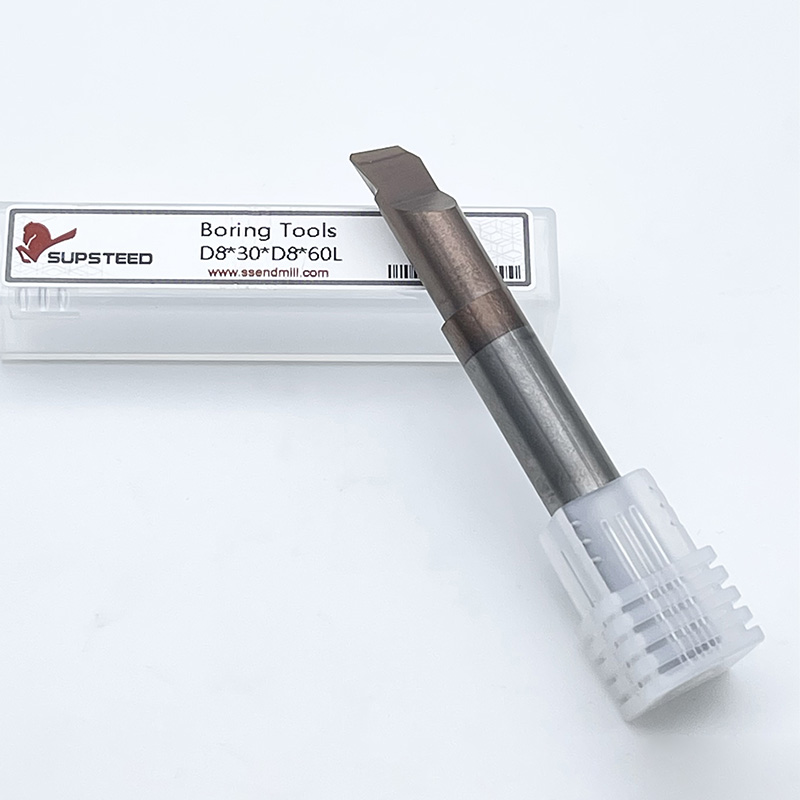
Solid carbide possesses exceptional hardness. This hardness allows it to shear through tough alloys effortlessly. However, extreme hardness inherently causes brittleness. Carbide will easily snap or chip upon impact. You must outline strict handling rules to prevent edge chipping from tool-to-tool contact.
Operators commonly throw multiple tools into a single plastic bin. They rattle together during transport. This "drawer of death" mentality destroys highly engineered cutting edges before they ever touch a workpiece. You must treat precision cutting equipment like fragile glass. Never set them directly on hard metal workbenches or machine tables without protective mats.
Humid manufacturing environments pose a serious threat to tool holders and steel shanks. Rust degrades the critical mating surfaces. If the shank develops rust, it will not seat concentrically inside the collet or shrink-fit holder. This introduces runout, which exponentially accelerates tool wear.
You must apply proper rust inhibitors before long-term storage. Consider specialized Volatile Corrosion Inhibitor (VCI) paper or dipping waxes. Protect the cutting edges using hot-dip peelable plastic coatings. These specialized coatings seal out ambient moisture and provide an excellent physical buffer against accidental drops.
Evaluate your current storage solutions thoroughly. Standardizing your organizational infrastructure prevents accidental damage during transit. It also dramatically reduces setup times. Machinists should never waste twenty minutes hunting for the correct drill size.
Plastic Sleeves: Retain the original OEM packaging for individual storage.
Dedicated Tool Carts: Use carts featuring custom-molded inserts to transport assemblies safely.
Modular Cabinets: Organize tools by diameter and material application in lined cabinet drawers.
Labeling Systems: Clearly mark used tools versus brand-new ones to prevent accidental deployment.
Built-up edge occurs when the workpiece material pressure-welds directly onto the cutting edge. It effectively changes the tool's geometry. The tool stops cutting efficiently and begins tearing the material. This results in horrific surface finishes and oversized holes.
You solve BUE by evaluating your coolant concentration and your machining parameters. Often, you simply need more lubricity. Increase your coolant concentration percentage. Alternatively, adjust your speeds and feeds. Increasing the surface footage (SFM) often generates enough heat to prevent the material from welding to the edge.
You must learn to distinguish between natural abrasive wear and abnormal chipping. Normal wear appears as a uniform, smooth rubbing pattern along the flank. It develops slowly and predictably over hundreds of cutting cycles. This is expected and manageable.
Chipping, conversely, presents as jagged, irregular missing chunks of carbide. Chipping indicates a mechanical problem in your setup. It usually stems from poor part rigidity, worn collets, or excessive spindle runout. If you observe chipping, do not simply replace the drill. You must track down the underlying rigidity issue first.
Thermal cracking manifests as fine, hairline fractures running perpendicular to the cutting edge. It results directly from severe thermal shock. Inconsistent coolant application causes extreme temperature fluctuations. The carbide rapidly expands and contracts, eventually cracking under the stress.
This is a critical factor when evaluating fluid delivery systems. If your machine cannot deliver high-pressure coolant consistently, you might need to reconsider your tooling strategy. Sometimes, running completely dry using an air blast is safer than suffering through intermittent, sputtering coolant delivery.
Use the following diagnostic framework to standardize your troubleshooting efforts on the shop floor.
| Wear Type | Visual Indicators | Primary Root Causes | Corrective Action |
|---|---|---|---|
| Built-Up Edge (BUE) | Material welded over the cutting lip | Low cutting speed; poor coolant lubricity | Increase SFM; increase coolant concentration |
| Flank Wear | Smooth, uniform wear land on the clearance face | Natural abrasive action; excessive cutting speeds | Standard tool replacement; lower SFM slightly |
| Edge Chipping | Irregular, jagged breakage along the edge | High runout; poor setup rigidity; interrupted cuts | Check collet concentricity; improve fixturing |
| Thermal Cracking | Hairline cracks perpendicular to the cutting lip | Intermittent coolant supply; extreme heat cycling | Ensure constant high-pressure coolant or switch to air blast |
When an item reaches the end of its initial life, you face a critical choice. You must determine if it qualifies as a candidate for reconditioning. Not every worn item should go to the regrind bin.
You must focus on the remaining flute length and overall core integrity. If the tool exhibits deep thermal cracks penetrating the core, regrinding will fail. The grinder would have to remove too much material to find solid carbide. Similarly, if the margins show heavy wear tapering down the body, the tool will no longer cut a dimensionally accurate hole. Only save tools demonstrating predictable, localized edge wear.
Manufacturing facilities rely heavily on industry-standard math to guide purchasing choices. The universally accepted threshold sits around fifty to sixty percent. If the combined costs of shipping, regrinding, and recoating exceed 60% of the price of a brand-new equivalent, replacement is typically recommended.
For example, if a large high-performance drill costs three hundred dollars, spending one hundred dollars to regrind it makes excellent financial sense. However, attempting to regrind a twenty-dollar micro-drill rarely pays off. The labor and coating minimums quickly outpace the replacement cost. Establish a firm minimum diameter rule for your shop to streamline this decision process.
Your tooling supplier plays a massive role in your maintenance success. Evaluating a tooling partner's in-house or certified regrind programs should be a primary factor in the initial procurement decision. Third-party local grinders often lack the proprietary geometry specifications needed to restore original performance.
Certified vendors utilize the exact CNC grinding programs used during original manufacturing. They apply identical edge preparations and proprietary PVD coatings. This ensures your reconditioned tool performs identically to a new one. A strong vendor relationship essentially creates a closed-loop recycling program for your cutting equipment.
Effective maintenance fundamentally bridges the gap between a tool's theoretical capabilities and its actual shop-floor ROI. Proper upkeep transforms chaotic, reactive manufacturing environments into highly predictable operations. You reduce unexpected breakages, optimize surface finishes, and heavily reduce expensive machine downtime.
Management must establish standardized, documented maintenance standard operating procedures (SOPs) for all operators. Do not leave cleaning and inspection habits up to individual preference. Create visual checklists at every machine terminal. When everyone follows identical protocols, performance variations disappear entirely.
Your immediate next-step action is simple. Encourage your lead operators to audit the current scrap bins. Identify recurring failure patterns across your discarded cutting equipment. If you notice excessive chipping or thermal cracking, consult directly with a tooling specialist to systematically refine your machining processes.
A: You should inspect tools based on usage metrics rather than a rigid calendar schedule. Track the specific number of holes drilled or monitor the machine for signs of spindle load increase. A sudden five percent jump in spindle load usually indicates imminent edge failure, requiring immediate visual inspection under a loupe.
A: Yes, compressed air is common and generally effective for light fluids. However, for stubborn chip packing or dried coolant residue, air is insufficient. You should utilize ultrasonic cleaning tanks or specialized brass wire picks to safely dislodge hardened debris without scratching the internal carbide walls.
A: Yes, the focus differs significantly. Solid carbide maintenance requires microscopic edge inspection and careful regrind planning. Indexable maintenance focuses heavily on insert seat integrity, cleaning out pocket debris, and ensuring precise screw torque specifications to prevent micro-movements during heavy cutting operations.


