- All
- Product Name
- Product Keyword
- Product Model
- Product Summary
- Product Description
- Multi Field Search

Views: 0 Author: Site Editor Publish Time: 2026-08-03 Origin: Site

Machining highly abrasive materials like graphite, high-silicon aluminum, fiberglass, and carbon fiber reinforced polymers (CFRP) destroys standard cutting tools rapidly. High-Speed Steel (HSS) fails almost instantly in these harsh environments. You are left choosing between advanced carbide and diamond tooling to keep spindles turning. Relying on the wrong end mill for abrasive applications leads to constant tool changes, inconsistent surface finishes, and out-of-tolerance parts. Machine downtime escalates, eating directly into production margins. Deciding between these advanced tooling options requires looking past the initial purchase. This guide evaluates the technical realities and performance thresholds when comparing solid carbide against diamond tooling for abrasive material applications. We break down the mechanics of wear, material compatibility, and operational requirements to help you select the exact tool needed to maximize throughput and eliminate unnecessary scrap on the shop floor.
Abrasive materials physically attack the cutting edge during the milling process. Consider hypereutectic aluminum alloys like A390. These materials contain high concentrations of hard silicon particles distributed throughout the alloy matrix. These particles act like microscopic grinding wheels against the cutting tool. They constantly abrade the cutting edge during chip formation, stripping away the tool material at a microscopic level. Composites like CFRP present a different but equally destructive challenge. The carbon fibers are incredibly abrasive and cause severe flank wear. They rapidly round off the sharp cutting edge. As the edge rounds, the tool stops shearing the material cleanly and begins to push or rub it. This increases cutting forces exponentially. In aluminum, this rubbing generates massive heat and leads to built-up edge (BUE), where the workpiece material physically welds to the tool flutes. In composites, a dull edge causes delamination, tearing the layers apart and ruining the workpiece entirely.
Legacy High-Speed Steel (HSS) has no place in modern abrasive machining. HSS lacks the fundamental hardness required to shear abrasive particles like silicon or carbon fiber effectively. Furthermore, it loses its structural integrity at elevated cutting temperatures. The friction generated by milling fiberglass or green ceramics spikes the temperature at the cutting zone instantly. This heat melts the cutting edge of an HSS tool, causing it to deform and fail within seconds. This rapid degradation establishes why the industry standard defaults to harder materials. Modern manufacturing relies exclusively on carbide and diamond substrates to survive these aggressive environments.
Evaluating tooling in abrasive environments requires tracking specific performance metrics on the shop floor. Dimensional stability over long production runs is the primary indicator of success. The tool must hold tight tolerances from the first part to the five-hundredth part without requiring the operator to constantly adjust tool wear offsets in the CNC control. Surface finish consistency is equally important. A degrading tool leaves poor, cloudy surface finishes that require manual polishing or secondary machining operations. Successful tooling minimizes these secondary operations. It also drives a significant reduction in scrap rates. Reliable, long-lasting cutting edges prevent out-of-tolerance parts from ever reaching the quality control department.
Frequent tool indexing carries a heavy financial burden that many shops underestimate. Using inadequate tooling in high-volume abrasive applications forces constant machine stoppages. Every minute a CNC machine sits idle cuts directly into shop capacity. Operators must stop the spindle, open the doors, swap the tool, touch off the new tool length, and resume the program. This process wastes valuable production time. In high-volume scenarios, these micro-stoppages compound into massive efficiency losses over a week or month. You need tooling that stays in the spindle longer to maintain continuous, uninterrupted production flow.
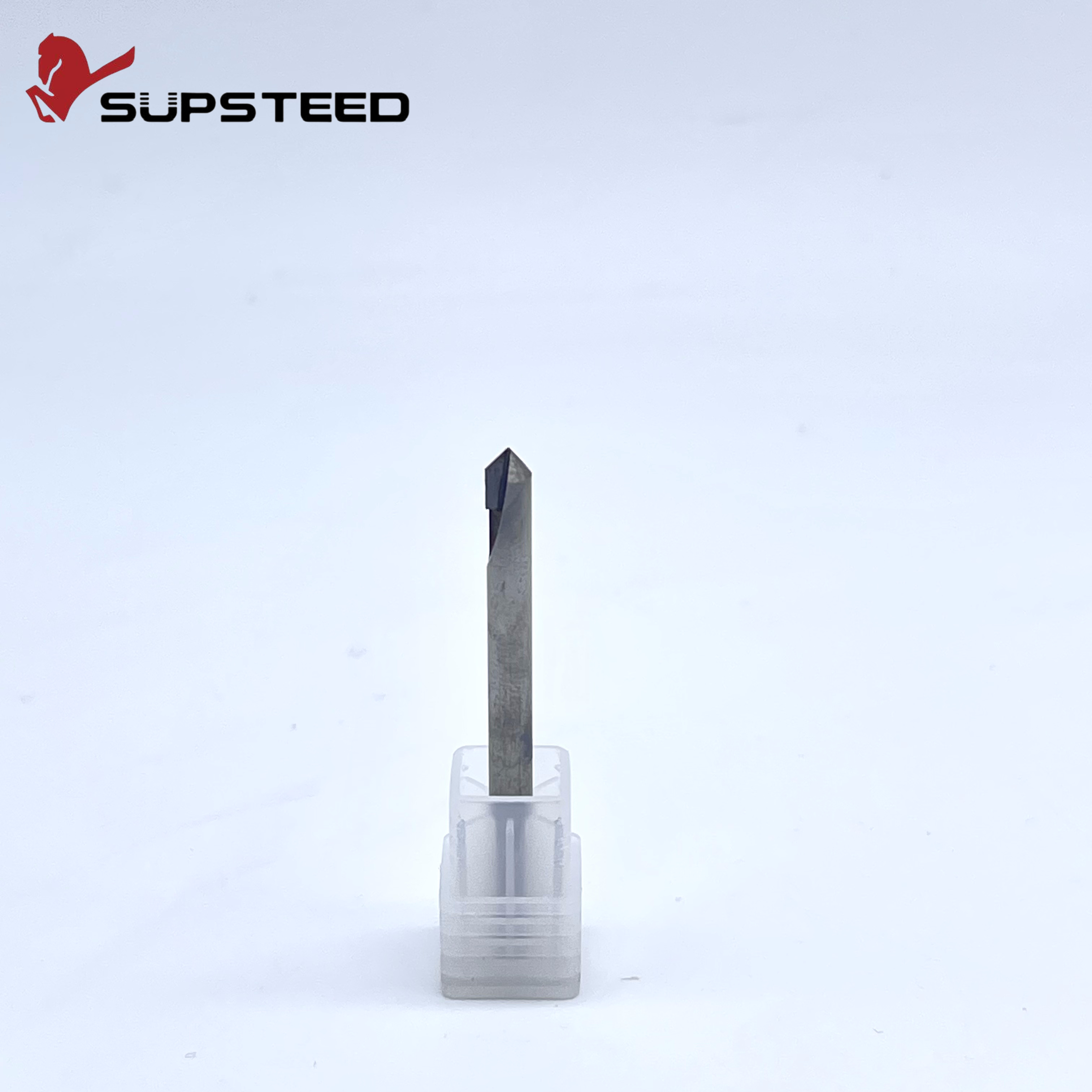
When machining non-ferrous materials, pcd end mills represent the absolute peak of wear resistance. The construction involves a synthetic diamond wafer brazed directly to a solid carbide body. Manufacturers use extreme pressure and temperature to sinter diamond particles with a metal binder, creating a solid blank. Toolmakers then braze this blank into a precisely machined pocket on the carbide shank. The manufacturing process requires highly specialized techniques. Standard diamond grinding wheels cannot shape these tools effectively. Instead, manufacturers use Electrical Discharge Machining (EDM) or laser ablation to profile the cutting edge. Laser ablation actually cuts through the diamond grains rather than just the binder, creating an ultra-sharp, highly precise cutting edge. Polycrystalline Diamond possesses extreme physical hardness and exceptional thermal conductivity. It pulls heat away from the cutting zone rapidly, keeping both the tool and the workpiece cool during aggressive material removal.
Solid carbide tools are the versatile workhorses of modern manufacturing. Their composition consists of tungsten carbide particles bonded with a cobalt binder. Toolmakers use sub-micron grain structures, often down to 0.2 or 0.5 microns, to balance extreme hardness with necessary toughness. Finer grains create a harder, more wear-resistant cutting edge. Higher cobalt content increases the tool's ability to absorb shock during interrupted cuts. Advanced Physical Vapor Deposition (PVD) coatings extend carbide tool life significantly. Coatings like Titanium Aluminum Nitride (TiAlN) or Titanium Carbonitride (TiCN) add a hard, protective layer over the substrate. These coatings provide a thermal barrier that protects the carbide and reduces friction, delaying the onset of abrasive wear.
Chemical Vapor Deposition (CVD) diamond tooling offers a middle-tier solution for abrasive applications. A CVD tool is a standard solid carbide end mill grown with a thin layer of real diamond. The diamond coating deposits directly onto the carbide substrate inside a high-temperature vacuum reactor. This technology serves as a bridge between bare carbide and brazed diamond. It maintains the geometric flexibility of solid carbide, allowing you to coat complex multi-flute profiles or variable helix designs easily. However, CVD coatings have distinct limitations. The coating is typically 8 to 15 microns thick, which slightly rounds the cutting edge and reduces sheer sharpness. More importantly, CVD tools are prone to coating delamination under heavy abrasive wear. If the carbide substrate flexes during a heavy cut, the rigid diamond coating flakes off. Once the diamond layer is gone, the exposed carbide fails rapidly.
The choice between these tools depends entirely on the workpiece material. Diamond dominates the non-ferrous domain. Ideal use cases include high-silicon aluminum, brass, copper, and bronze. It excels when milling abrasive non-metals like graphite, CFRP, fiberglass, plastics, and green ceramics. However, diamond has a strict and absolute limitation. It cannot be used on ferrous metals like steel, cast iron, or high-temperature superalloys. Diamond is pure carbon. At the elevated temperatures generated during ferrous machining, the diamond has a high chemical affinity for the iron in the workpiece. The diamond literally dissolves into the steel chips. This chemical reaction causes rapid, catastrophic tool failure. Carbide offers much broader versatility. It cuts both ferrous and non-ferrous materials effectively. This makes carbide the standard choice for mixed-material job shops that cut 4140 steel one day and 6061 aluminum the next.
Solid carbide allows for highly complex tool geometries. Manufacturers easily grind solid carbide blanks into intricate shapes using multi-axis CNC tool grinders. You can source ball nose, torus, and high-density multi-flute profiles right off the shelf. Variable helix and variable pitch designs suppress chatter effectively in deep pockets. Diamond tools face significant design limitations. The flat, brazed diamond wafers restrict geometric complexity. True center-cutting diamond tools require specialized engineering. Manufacturers must use overlapping brazed tips to allow the tool to plunge directly into solid material. This complex manufacturing process limits availability. Carbide is naturally center-cutting and plunges into material without specialized tip configurations.
Wear resistance is the primary differentiator in abrasive applications. When evaluating PCD vs carbide end mills, diamond offers unparalleled longevity. Industry data and shop floor reality show diamond achieving 10 to 50 times longer tool life than standard coated carbide in abrasive non-ferrous applications. The extreme hardness of diamond resists the micro-chipping caused by silicon particles or carbon fibers. Diamond retains its razor-sharp edge over massive production runs. This edge retention impacts the entire machining process. It often eliminates the need for secondary finishing passes entirely. Carbide degrades steadily from the very first cut. As the carbide edge rounds, cutting pressure increases, and surface finish deteriorates, forcing premature tool changes.
Diamond allows you to push machine parameters to their absolute limits. Spindle speed requirements change drastically with diamond tooling. You can run significantly higher surface footage (SFM) without thermal degradation. In aluminum, it is common to run diamond at 3,000 to 5,000 SFM, whereas carbide might max out at 1,000 SFM before heat becomes an issue. Feed rates can increase proportionally to maximize material removal rates. The ultra-sharp edge of a diamond tool shears material cleanly, which reduces overall cutting forces significantly.
Surface finish quality separates these two technologies clearly. Diamond possesses an ultra-low friction coefficient. Material slides off the diamond face effortlessly. This prevents material adhesion and eliminates built-up edge (BUE). The result is a superior, mirror-like surface finish on aluminum and plastics, often achieving Ra values well below what carbide can produce. This pristine finish remains consistent over extended production runs. Carbide has a higher friction coefficient. Aluminum tends to weld to the carbide flutes over time, especially if coolant concentration is low. As BUE forms, the surface finish becomes rough, torn, and cloudy. Carbide requires constant monitoring to ensure surface finish requirements are met.
Tooling Technology Comparison for Abrasive Materials
| Feature | Polycrystalline Diamond | Solid Carbide (Coated) | CVD Diamond-Coated |
|---|---|---|---|
| Best For | High-volume non-ferrous, CFRP, Graphite | Ferrous metals, mixed materials, low-volume | Medium-volume non-ferrous, complex geometries |
| Wear Resistance | Extreme (10x - 50x longer life) | Moderate | High (until coating delaminates) |
| Edge Sharpness | Ultra-sharp (Laser/EDM profiled) | Sharp | Slightly rounded by coating thickness |
| Shock Tolerance | Low (Highly brittle) | High (Tougher substrate) | Moderate |
| Ferrous Compatibility | None (Chemical degradation) | Excellent | None |
The upfront price tag of diamond tooling is undeniably steep. A single diamond tool requires a larger initial investment than a premium solid carbide equivalent. However, purchasing decisions based solely on initial cost are flawed. You must calculate the cost-per-part to understand true value. Factor in the exponentially extended tool life. Include the value of reduced cycle times achieved through higher speeds and feeds. Account for the labor savings from eliminated tool changeovers. When spread across thousands of parts, the cost-per-part for diamond often drops well below that of carbide, making it the more economical choice for long runs.
Tool diameter influences the economic strategy heavily. For smaller diameters, solid-body brazed diamond is the standard. As diameters increase, solid-body tools become expensive. Indexable milling cutters with diamond inserts offer a more cost-effective alternative for larger facing or profiling operations. You only replace the worn inserts, not the entire tool body. Solid carbide follows a similar trajectory. Large diameter solid carbide tools become cost-prohibitive quickly due to raw material costs. Indexable platforms provide flexibility and lower replacement costs for large-scale material removal on heavy machine tools.
Production volume dictates when it makes financial sense to upgrade. High-volume automotive runs justify diamond tooling easily. Machining thousands of cast aluminum engine blocks requires maximum uptime and process reliability. Aerospace production lines cutting miles of CFRP rely on diamond for process stability and to prevent costly scrap. In these scenarios, the ROI is rapid and clear. Low-volume prototyping favors solid carbide. If you are only machining a few graphite electrodes or aluminum brackets, the initial cost of diamond is unnecessary. Job shops with high-mix, low-volume production should stick with versatile carbide solutions.
Tool reconditioning extends the life of your investment. Solid carbide is relatively simple to re-grind and re-coat. Many local tool grinders can restore a carbide tool to factory specifications quickly. The logistics are straightforward and inexpensive. Diamond requires specialized reconditioning. You must send the tool to a facility equipped with EDM or laser ablation technology. This specialized process takes longer. Reconditioning also reduces the original tool diameter slightly. You must update your CAM software and tool wear offsets in the machine control to account for this diameter change.
Diamond's extreme hardness comes with inherent brittleness. It lacks the toughness of solid carbide. This makes machine rigidity an absolute prerequisite. You must run diamond tools in rigid, well-maintained CNC machines. Spindle runout must be kept to an absolute minimum. Excessive runout causes uneven chip loads per tooth. This uneven loading creates vibration and chatter. Vibration leads to immediate micro-chipping of the fragile diamond cutting edge.
Milling applications are not always smooth and continuous. Heavy interrupted cuts pose a severe risk to diamond tooling. Machining over cross-holes, slots, or uneven cast surfaces causes shock loading. The tool repeatedly slams into the material, creating massive impact forces. Unstable workholding also creates vibration during the cut. The toughness of solid carbide makes it a safer choice in these suboptimal setups. Carbide absorbs the shock of interrupted cuts without shattering. If you must use diamond for interrupted cuts, reduce your feed rate upon entry and exit to minimize impact forces.
Thermal management is critical for tool life. Thermal shock can crack a diamond wafer instantly. Evaluate your coolant application carefully. Flood coolant works well for evacuating abrasive chips in aluminum machining. It prevents chips from re-cutting and damaging the tool. Minimum Quantity Lubrication (MQL) is highly effective for diamond. MQL provides necessary lubricity without flooding the cutting zone, reducing the risk of thermal shock. Dry machining is often required for certain composites like CFRP, as coolant can contaminate the composite matrix. Carbide often requires heavy flood coolant to manage heat, especially when pushing high surface footage.
A: No. Diamond has a high chemical affinity for carbon. At the high temperatures generated during machining, the carbon in the diamond reacts with the iron in steel or the elements in titanium. This chemical reaction causes the diamond to dissolve rapidly, leading to immediate and catastrophic tool failure. Use solid carbide for these metals.
A: In highly abrasive non-ferrous applications, diamond tools typically last 10 to 50 times longer than standard solid carbide. The exact lifespan depends on the abrasiveness of the material, the rigidity of the machine setup, and the optimization of speeds and feeds.
A: Yes, but primarily in high-volume production. The ROI is achieved through a significantly lower cost-per-part. You save money by reducing machine downtime, eliminating frequent tool replacements, and minimizing scrap parts caused by dull tools. Low-volume jobs may not justify the upfront expense.
A: CVD is a thin layer of diamond grown over a solid carbide tool in a reactor. It is cheaper but prone to delamination. PCD features a solid, synthetic diamond wafer brazed directly onto a carbide body. This provides a much thicker, more robust cutting edge that resists flaking.
A: Not all of them. While many are designed to be center-cutting via specialized overlapping diamond tips, it is much more complex to manufacture than center-cutting solid carbide. You must verify the specific tool geometry with the manufacturer if your operation requires plunging directly into the material.
A: Yes, they can be reconditioned. However, it requires specialized laser ablation or Electrical Discharge Machining (EDM) equipment. Standard grinding wheels will not work. Keep in mind that reconditioning will slightly reduce the tool's original cutting diameter, requiring CAM offset adjustments.
A: The extreme hardness of diamond makes it inherently brittle. Excessive spindle runout causes uneven chip loads and induces vibration during the cut. This vibration leads to immediate micro-chipping of the fragile cutting edge, destroying the tool prematurely. Rigid setups are mandatory.