English
- All
- Product Name
- Product Keyword
- Product Model
- Product Summary
- Product Description
- Multi Field Search

Views: 0 Author: Site Editor Publish Time: 2026-08-23 Origin: Site

Treating all wood as a uniform material guarantees burnt edges, severe tear-out, and snapped bits. Wood behaves differently under a spindle depending on its grain structure, density, and resin content. Poor tooling choices carry heavy financial and time costs. Operating with the wrong bit means scrapping expensive hardwoods, ruining delicate melamine finishes, and spending hours on manual edge sanding.
Successful routing requires matching the specific geometry, flute type, and material of the cutting tool to the unique properties of your target workpiece. A bit designed for soft pine will struggle against abrasive engineered boards. Optimizing your production runs means understanding how different woods react to shear forces and heat. By selecting the correct profile, you eliminate surface damage, extend the lifespan of your cutting tools, and achieve flawless dimensional accuracy straight off the machine.
Defining success in professional CNC woodworking goes beyond simply cutting a shape out of a board. A truly successful cut delivers clean top and bottom edges without splintering. It leaves zero burn marks on the internal profiles. It maintains strict dimensional accuracy across the entire production run. A successful operation maximizes tool life, ensuring you get the most linear feet cut before requiring a replacement or sharpening.
Achieving these results requires a deep understanding of wood dynamics. Grain direction dictates how fibers sever under the impact of a spinning flute. Cutting against the grain increases the risk of tear-out, requiring sharper cutting angles and specific toolpath strategies. You must choose between climb milling and conventional milling based on the material. Climb milling pushes the part away from the cutter, often leaving a cleaner finish on solid wood, while conventional milling pulls the cutter into the material, which can cause tear-out on splinter-prone species.
Density alters cutting mechanics entirely. Denser woods resist the cutting edge, increasing friction and heat generation. The Janka hardness scale provides a reliable metric for this resistance. Machining a piece of Hickory requires entirely different feed and speed parameters than machining a sheet of soft Cedar. Furthermore, synthetic binders and glues found in engineered woods introduce highly abrasive elements that degrade cutting edges far faster than natural wood fibers.
Wood Hardness and Machining Resistance
| Wood Species | Janka Hardness (lbf) | Machining Characteristics |
|---|---|---|
| Hickory | 1,820 | High friction, requires sharp carbide and slower spindle speeds to prevent burning. |
| White Oak | 1,360 | Dense grain, prone to splintering on cross-cuts. Needs excellent chip evacuation. |
| Black Walnut | 1,010 | Machines cleanly but requires sharp flutes to avoid crushing the end grain. |
| Eastern White Pine | 380 | Soft and stringy. High risk of fuzzing. Requires high shear angles. |
The most critical mathematical concept in this process is chip load. Chip load represents the physical size of the wood chip removed by each cutting flute during a single revolution. It is the direct relationship between your feed rate, spindle speed, and the number of flutes on the bit. Proper chip load is essential because the wood chip acts as a heat sink. It transfers heat away from the tool and carries it out of the cut.
If your feed rate is too slow or your spindle speed is too high, the bit produces fine dust instead of chips. Dust cannot carry heat. The heat transfers back into the tool, dulling the carbide, and into the workpiece, leaving dark burn marks along the edge. Conversely, if your feed rate is too fast, the chip load becomes too large. The flutes cannot evacuate the material fast enough, leading to tool deflection, poor edge finish, and eventual bit breakage.
Building an effective tooling library requires understanding the specific mechanics and intended applications of different router bit geometries. Selecting high-quality CNC router bits for wood ensures you have the right profile for every routing challenge on the shop floor.
The upcut geometry features flutes that twist upward, similar to a standard drill bit. This mechanism actively pulls wood chips upward and expels them away from the material surface. Upcut bits are best for deep pocketing operations, fast material removal, and cutting thick hardwoods where rapid heat evacuation is absolutely critical. By clearing chips efficiently, they prevent heat buildup inside deep kerfs.
This upward pulling action comes with a trade-off. It lifts the top fibers of the wood. On veneered panels or splinter-prone softwoods, an upcut bit can cause severe tear-out on the top surface. The upward force also pulls the workpiece away from the machine bed. If you are cutting small parts on a vacuum table, an aggressive upcut bit can easily lift the part, ruining the cut and potentially damaging the spindle.
Downcut bits reverse the flute direction. The mechanism pushes chips downward into the cut. This downward shearing action slices the top fibers cleanly, leaving a pristine top edge. Downcut bits are best for shallow pockets, cutting thin veneers, and operations where workholding is a challenge. The downward force helps hold small or flexible parts firmly against the spoilboard.
The primary trade-off is poor chip evacuation. Because chips are packed down into the cut, deep routing passes lead to severe friction. This causes rapid heat buildup and creates potential fire hazards when machining dense hardwoods. You must limit your depth of cut when using downcut bits or utilize multiple shallow passes to allow chips to escape.
Compression bits engineer a solution to the tear-out problem by combining both upcut and downcut geometries on a single tool. The bottom section of the bit features an upcut profile, while the upper section features a downcut profile. This mechanism pulls the top edge down and the bottom edge up simultaneously. They are best for single-pass profile cuts on double-sided laminates, plywood, and melamine.
To function correctly, the first cutting pass must plunge deeper than the upcut portion of the bit. If the cut is too shallow, only the upcut portion engages, defeating the purpose of the tool and causing top-surface tear-out. Operators must use ramping toolpaths to enter the material safely, allowing the bit to reach the required depth before beginning the lateral profile cut.
Beyond standard spiral bits, specialty profiles handle unique machining tasks. V-bits are essential for intricate engraving, chamfering, and detailed signage. Surfacing bits, featuring wide cutting diameters, are used for spoilboard flattening and slab leveling, ensuring a perfectly planar working surface.
Spiral O-flute bits deserve special attention. While frequently associated with cutting plastics and acrylics, Spiral O-flutes are highly effective for specific wood applications. Their single-flute design provides massive chip clearance and aggressive shearing action. This makes them ideal for softwoods that require clean slicing to prevent fuzzing. They also excel at intricate 3D reliefs, fine engravings, and small detail pocket milling where clearing chips from tight spaces is paramount.
Router Bit Geometry Applications
| Bit Geometry | Primary Action | Ideal Use Case | Operational Warning |
|---|---|---|---|
| Upcut Spiral | Lifts chips out of kerf | Deep mortises, thick hardwood profiling | Will splinter top veneers; lifts small parts. |
| Downcut Spiral | Packs chips downward | Shallow dados, thin delicate veneers | High risk of friction fires in deep cuts. |
| Compression | Shears toward the center | Double-sided plywood, melamine panels | Must plunge past the upcut transition line. |
| Spiral O-Flute | Aggressive single-flute shear | Softwoods, plastics, fine detail work | Requires adjusted feed rates due to single flute. |
Applying the right geometry to the right material is the foundation of efficient manufacturing. Different wood species and engineered boards present unique physical challenges that demand specific cnc wood cutting tools to achieve optimal results.
Hardwoods present significant machining challenges due to their dense cellular structure. High density dramatically increases friction against the cutting edge. Species like Cherry and Maple are highly prone to burning if feed rates are too slow or spindle speeds are too high. The sugar content in some hardwoods caramelizes rapidly under friction, leaving stubborn dark marks that require aggressive sanding to remove.
For roughing operations in hardwood, use 2-flute or 3-flute solid carbide upcut bits. These provide the necessary chip evacuation to keep the tool cool. For shallow finishing passes, switch to downcut bits to ensure a flawless top surface. The key features to look for are sharp, low-rake angles. These specific geometries slice cleanly through dense end-grain without generating excessive heat.
Hardwoods hold fine detail exceptionally well, making them ideal for smaller cuts and intricate designs. Operators must proactively manage their machine settings during detail work. When the CNC machine slows down to navigate tight corners, the feed rate drops while the spindle speed remains constant. This instantly alters the chip load, generating localized heat. You must lower the spindle speed and adjust feed rates accordingly during these delicate operations to prevent burning in tight radii.
Softwoods present the opposite challenge. Their soft, stringy grain structures offer little resistance to the cutting edge. Instead of cutting cleanly, dull tools tend to crush and tear the fibers. This susceptibility leads to severe tear-out, splintering, and a fuzzy finish inside pockets.
To combat this, utilize Spiral O-flute bits or highly polished 2-flute upcut bits. The critical requirement here is extreme sharpness and a high shearing action. The tool must cleanly sever the soft fibers rather than pushing them out of the way. Polished flutes also prevent the sticky resins found in pine and cedar from adhering to the bit, ensuring chips evacuate smoothly without packing into the kerf.
Plywood introduces structural complexity. It consists of alternating grain directions in its internal plys, sandwiched between brittle top and bottom veneers. These veneers are highly prone to splintering. The adhesive layers binding the plys together are abrasive and dull standard tools rapidly.
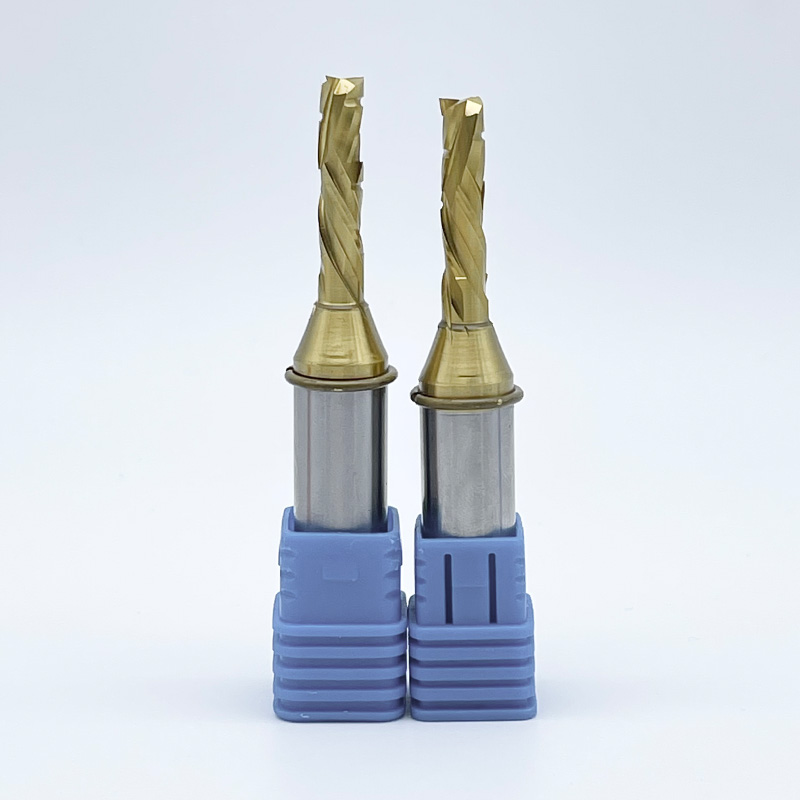
Solid carbide compression bits are the absolute standard for cutting plywood. The dual-direction shear of the compression geometry guarantees chip-free edges on both faces of the panel. This eliminates the need for manual edge sanding, drastically speeding up production. If you are performing shallower cuts, such as cutting dados or rabbets, utilize mortise compression bits. These feature a much shorter upcut section, allowing the downcut shear to engage even on shallow passes.
Engineered sheet goods like MDF, melamine, and particle board are brutal on cutting tools. They contain extremely high resin and glue contents, making them highly abrasive. Melamine coatings are brittle and chip very easily if the cutting edge is not razor-sharp.
For these materials, standard solid carbide degrades too quickly. The recommended tools are insert carbide tooling, diamond-tipped (PCD) bits, or specialized melamine compression bits. PCD (Polycrystalline Diamond) or high-grade insert carbide withstands the intense abrasive wear. They maintain the pristine edge required to cleanly shear brittle melamine coatings over long production runs, ensuring clean cuts without microscopic chipping along the laminated edge.
Selecting the right cutting tools involves analyzing material composition and manufacturing quality. Understanding these factors helps you maximize the lifespan of your tooling inventory and maintain consistent cut quality across varying production runs.
High-Speed Steel (HSS) tools lose their cutting edge rapidly when machining wood. This degradation happens exceptionally fast when cutting engineered woods due to the abrasive glues. Solid carbide offers superior long-term value for production environments. The extended tool life of solid carbide means fewer tool changes, less machine downtime, and consistently cleaner cuts over thousands of linear feet. Carbide is more brittle than HSS, meaning it requires rigid machine setups to prevent snapping under heavy lateral loads.
For high-volume shops processing sheet goods daily, insert tooling provides significant scalability. Insert tools utilize replaceable carbide knives bolted onto a permanent steel tool body. This design ensures consistent cutting diameters even after replacing the edge, meaning you do not have to reprogram tool offsets in your CAM software. Replacing just the carbide knives significantly reduces replacement frequency compared to buying entirely new solid carbide bits.
Tool coatings like Titanium Nitride (TiN), Zirconium Nitride (ZrN), or Diamond-Like Carbon (DLC) are common in metalworking. You must assess whether these specialized coatings justify the premium for wood applications. Extreme heat resistance is less critical in wood than in metal. Specific coatings like ZrN provide a highly lubricious surface. This reduces friction and prevents sticky resins and pitch from building up on the flutes, which helps maintain proper chip evacuation in resinous softwoods.
Investing in high-quality solid carbide tooling offers excellent cross-material versatility. These bits can often be repurposed across different projects. Any material that can be cut by a carbide router bit can be milled on a CNC machine. This includes plastics, acrylics, polycarbonates, and even soft non-ferrous metals like aluminum. By utilizing the same high-end tooling across various substrates, mixed-material shops can significantly increase the overall return on investment of their tooling library.
Even with the perfect tool selected, operational errors can ruin workpieces and destroy expensive bits. Implementing strict mitigation strategies protects your equipment and ensures consistent output.
Tool breakage usually occurs due to excessive side loads or improper heat management. Plunging straight down into dense material with a non-center-cutting bit places massive stress on the tool. To mitigate this, calculate and strictly adhere to manufacturer chip load charts. Avoid excessive vertical plunge rates. Utilize ramping toolpaths in your CAM software. Ramping moves the bit diagonally into the material, reducing stress on the bottom geometry and allowing flutes to clear chips efficiently during entry.
If a workpiece shifts during a cut, it will immediately snap the bit or ruin the part. You must match the bit geometry to your workholding system. Solutions scale from hobbyist T-track setups to industrial vacuum tables. Avoid using aggressive upcut bits on small parts if you are using a weak hold-down system, as the upward lifting force will tear the part off the table. Use downcut bits for small components to assist with downward pressure. Implement onion skinning techniques, leaving a paper-thin layer of material at the bottom of the cut to keep vacuum pressure intact until the final pass.
As bits cut resinous woods, pitch builds up behind the cutting edge. This buildup acts as an insulator, trapping heat inside the tool rather than letting it escape with the chips. To mitigate this, implement proper dust collection systems to remove insulating chips from the kerf immediately. Establish a maintenance schedule to regularly clean your bits with dedicated resin removers. Keeping the flutes clean maintains the original cutting geometry, prevents friction fires, and extends the sharp life of the carbide.
A: The best tool for cutting plywood is a solid carbide compression bit. It features both upcut and downcut geometries. This dual-direction shear pulls the top veneer down and the bottom veneer up simultaneously, preventing tear-out on both faces and leaving a perfectly clean edge.
A: Burning occurs when heat transfers into the wood instead of the chip. This happens if your spindle speed is too high, your feed rate is too slow, or your tooling is dull. It frequently happens during intricate detail work when the machine slows down for tight corners, altering the chip load.
A: While physically possible, it is not recommended. MDF contains highly abrasive glues and resins that dull cutting edges rapidly. Using a bit on MDF will degrade its sharpness, resulting in poor performance, tear-out, and burning when you transition back to cutting solid natural wood.
A: The difference lies in chip evacuation direction. An upcut bit pulls chips upward, clearing deep pockets efficiently but risking top-surface splintering. A downcut bit pushes chips downward, leaving a pristine top edge but risking heat buildup in deep cuts due to poor chip clearance.
A: Tool life depends on material abrasiveness, adherence to proper chip loads, and maintenance. In natural hardwoods, a high-quality solid carbide bit can last for thousands of linear feet. In abrasive materials like MDF, lifespan decreases significantly unless you maintain strict feed and speed parameters.
A: No. Standard compression bits require you to cut past the upcut portion to engage the downcut shear. For shallow pocketing or 3D reliefs, use a downcut bit to ensure a clean top edge, or use a specialized mortise compression bit designed with a very short upcut section.