- All
- Product Name
- Product Keyword
- Product Model
- Product Summary
- Product Description
- Multi Field Search

Views: 0 Author: Site Editor Publish Time: 2026-10-19 Origin: Site
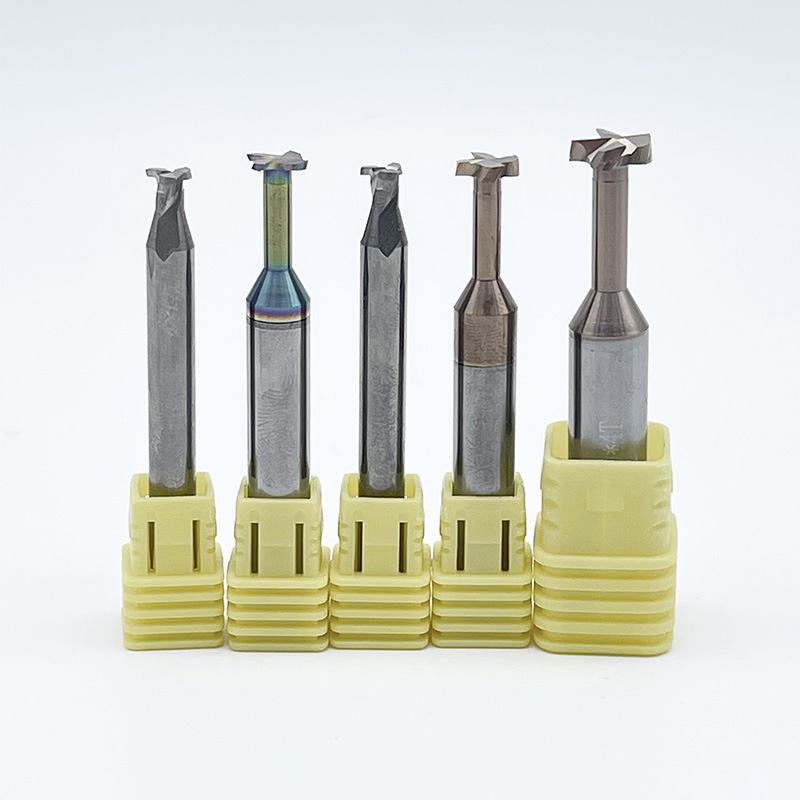
Can standard cutting tools handle complex profiles and demanding tolerances? Customized manufacturing often requires more than conventional tooling can offer. Special Machining Tools solve challenges involving unusual geometries, restricted spaces, and difficult materials. This article explores when specialized tooling becomes essential and how it improves accuracy, efficiency, and production consistency.
Standard cutting tools handle many common CNC machining operations. However, customized components may require features beyond their design capabilities.
Special Machining Tools become valuable when standard solutions cannot reliably meet technical or production requirements.
Complex components often contain unusual angles, stepped surfaces, or connected curved profiles.
Standard cutters may require several machining passes to create these features. Each additional operation introduces opportunities for dimensional variation.
Custom form tools use cutting edges shaped around specific component requirements. They can produce defined profiles through fewer operations when machining conditions allow.
Customized parts sometimes require unusual cutter diameters, lengths, or corner radii.
Standard catalog tools may not provide suitable dimensions or clearance.
Special Machining Tools for Custom Parts address these limitations through application-specific designs. Manufacturers can modify cutting lengths, shank dimensions, and tool profiles.
These modifications improve access while supporting required component dimensions.
Precision components require repeatable dimensions across production batches.
Multiple cutting operations can introduce positioning errors and machining variation.
Application-specific tools may combine selected features into fewer operations. This helps reduce repeated positioning when cutting conditions remain stable.
However, tool manufacturing accuracy and machine rigidity remain essential.
Complex components may require separate drilling, chamfering, profiling, and finishing operations.
Frequent tool changes increase cycle time and machining complexity.
Combination cutting tools can integrate compatible operations into one tool design.
For example, a customized step drill may produce connected hole diameters during one operation.
This approach can improve efficiency during repeat manufacturing.
Hardened steel, stainless steel, and titanium alloys present demanding cutting conditions.
They may generate high cutting forces, heat, or accelerated tool wear.
Custom Carbide Tools for CNC Machining can address these challenges through suitable substrates and geometry.
Specialized coatings and edge preparations may further improve cutting performance.
However, material compatibility must guide every tooling decision.
Deep cavities, narrow grooves, and internal features often restrict cutter movement.
Conventional tools may lack sufficient reach or clearance.
Customized cutting lengths and relieved tool necks improve access to difficult features.
However, excessive tool length can increase bending and vibration.
Manufacturers must balance accessibility against cutting stability.
Customized manufacturing does not always involve small production quantities.
Some specialized components require consistent machining across thousands of parts.
Dedicated cutting tools can support repeatable operations and stable production workflows.
Their value increases when component specifications remain consistent across recurring orders.
Tip: Consider specialized tooling when standard cutters repeatedly cause dimensional errors, excessive tool changes, or unnecessary machining operations.
Specialized cutting tools address manufacturing problems through customized geometry and application-specific design.
Their main advantage is matching the cutter directly to the required operation.
Custom Form Tools for Complex Profiles reproduce defined shapes through specially designed cutting edges.
They may machine radii, angles, steps, and connected contour features.
For example, Corner Rounding End Mills support controlled edge-radius machining.
Their geometry helps manufacturers create consistent rounded edges when correctly applied.
Complex profiles may require additional custom modifications.
Components sometimes require connected holes of different diameters.
Conventional machining may involve several drills and additional finishing operations.
Custom Step Drills for Precision Machining can combine compatible holemaking features.
Some designs integrate drilling, counterboring, and chamfering operations.
However, these tools require suitable machine power and stable cutting conditions.
Narrow grooves and internal profiles often require specialized cutter shapes.
For example, T-slot End Mills are designed to machine T-shaped undercut features.
Their cutting geometry accesses areas unavailable to conventional straight end mills.
Appropriate pre-machining, chip clearance, and tool dimensions remain essential.
Special groove cutters may also support unusual component profiles.
Combination Cutting Tools for CNC Production integrate multiple compatible cutting functions.
They can reduce tool changes and repeated positioning operations.
For example, one specialized cutter may perform profiling and chamfering together.
However, combined operations can increase cutting forces and tool design complexity.
Manufacturers should verify performance before adopting these tools for production.
Note: Specialized geometry does not automatically guarantee greater accuracy. Toolholding quality and cutting conditions still determine machining performance.
Different industries face unique material, tolerance, and component design requirements.
Specialized tooling becomes valuable when conventional cutters cannot address these requirements efficiently.
Aerospace manufacturing involves complex components made from aluminum, titanium, and other engineering materials.
These parts may include deep pockets, unusual contours, and restricted machining areas.
Special Cutting Tools for Aerospace Components address specific geometry and material challenges.
Their design can help control cutting forces and improve feature accessibility.
Machining trials remain necessary to validate dimensional accuracy.
Automotive production demands repeatable dimensions and efficient manufacturing cycles.
Transmission components, mechanical housings, and precision assemblies may require specialized features.
Combination cutters can reduce operations during suitable high-volume machining.
Custom profiles also help manufacturers produce repeated mechanical features consistently.
The greatest benefits usually appear when production volumes justify tooling investment.
Medical components often require miniature features and difficult-to-machine materials.
Stainless steel and titanium components demand controlled cutting forces and dimensional accuracy.
Special Cutting Tools for Precision Manufacturing support intricate component geometries.
Customized tool dimensions can improve access to small holes and internal profiles.
Manufacturers must also maintain suitable inspection and quality control procedures.
Mold manufacturing frequently involves hardened materials and complex cavities.
Standard cutters may struggle with unusual profiles or limited machining clearance.
Custom carbide cutters can provide suitable cutting geometry and wear resistance.
Specialized roughing tools may also improve material removal during preparation operations.
Manufacturers can evaluate Roughing End Mills for demanding stock-removal applications.
Tip: Identify the specific material, feature geometry, and production challenge before requesting industry-specific cutting tools.
Specialized tooling can improve production performance when its design matches actual machining requirements.
Manufacturers should evaluate measurable benefits rather than assuming every custom cutter performs better.
Custom cutting geometry can produce specific component features more directly.
This may reduce errors associated with repeated tool positioning.
Consistent cutting edge profiles also support repeatable component dimensions.
However, achievable accuracy still depends on tool manufacturing quality and machine stability.
Each tool change adds time to the machining cycle.
It can also introduce additional positioning requirements.
Combination tooling reduces these interruptions when multiple operations can be integrated.
This becomes especially valuable during repeated production.
However, complex combination cutters may require longer initial setup and validation.
Application-specific designs can improve cutting engagement and chip evacuation.
Suitable carbide substrates provide rigidity and abrasive wear resistance.
Protective coatings may help cutting edges withstand demanding machining conditions.
Improved stability can reduce vibration and premature tool damage.
Actual performance depends on correct cutting parameters and workpiece materials.
Custom tools usually require additional design and manufacturing investment.
However, shorter machining cycles may offset these initial expenses.
For example, consider a hypothetical production process saving 20 seconds per component.
Across 3,000 parts, this represents approximately 16.7 machine hours saved.
Example calculation only. Actual savings require verification through machining trials.
Evaluation Factor | Standard Cutting Tools | Special Machining Tools |
|---|---|---|
Initial tooling cost | Generally lower | May require additional development |
Tool availability | Common catalog options | May require custom manufacturing |
Complex feature machining | Multiple operations may be needed | Dedicated geometry may reduce operations |
Setup requirements | Familiar standard procedures | Application-specific validation |
Production efficiency | Suitable for general applications | Potential advantages in repeat production |
Replacement flexibility | Usually easier | Depends on supplier availability |
Tip: Compare total cost per finished component, including tooling investment, machine time, and inspection requirements.
Special Machining Tools depend on suitable materials, geometry, and dimensional design.
Each feature should support the intended machining operation.
Tungsten carbide offers high hardness, rigidity, and resistance to abrasive wear.
These properties make it suitable for demanding CNC machining applications.
However, different carbide grades provide different balances of hardness and toughness.
Fine-grain carbide grades may support sharp cutting edges and precision features.
Manufacturers should select grades based on material hardness and cutting conditions.
Cutting geometry controls how the tool contacts the workpiece.
Flute count influences chip clearance and feed capability.
Helix angle affects cutting engagement and chip movement.
Corner radius and edge preparation influence cutting forces and tool durability.
Specialized tools combine these design factors around specific machining needs.
Coatings can improve wear resistance under suitable operating conditions.
TiAlN and AlTiN are common options for certain steel machining applications.
Other materials may benefit from different coatings or polished cutting edges.
Coating selection must consider workpiece material and coolant strategy.
An unsuitable coating may increase friction or material adhesion.
Tool diameter and cutting length influence machining stability.
Longer cutters reach deeper features but experience greater deflection.
Relieved neck designs can improve clearance around complex profiles.
Shank dimensions must also match the available toolholding system.
Manufacturers should confirm these dimensions before approving custom designs.
Note: High carbide hardness cannot compensate for excessive tool overhang, poor toolholding, or unstable machining setups.
Not every customized component requires a fully customized cutter.
Manufacturers should compare standard solutions against technical and production requirements.
Begin by reviewing component drawings and critical dimensions.
Identify unusual profiles, restricted features, and required surface finishes.
Determine whether standard tools can achieve these specifications consistently.
If conventional tooling requires excessive operations, specialized solutions may be justified.
However, modified standard tools may solve some problems economically.
Record the current machining sequence and individual operation times.
Identify tool changes, repeated positioning, and unnecessary cutting passes.
Then evaluate whether custom tooling can eliminate selected operations.
A shorter cycle may improve productivity across recurring production batches.
However, savings should be confirmed through controlled machining trials.
Production quantity strongly influences custom tooling economics.
Small prototype batches may favor readily available standard cutters.
Large recurring orders may justify specialized tool development.
Manufacturers should compare development expenses against expected machining savings.
A custom solution becomes attractive when its measurable benefits exceed additional costs.
Customized tools may require longer replacement lead times.
Unexpected damage can interrupt production when spare cutters are unavailable.
Manufacturers should discuss replacement availability and repeat-order specifications.
Reliable suppliers should provide consistent tool geometry and technical communication.
These considerations help reduce production risks.
Tip: Choose custom tooling when technical necessity or verified production savings justify the additional investment.
Successful custom tooling projects require clear communication between manufacturers and cutting tool suppliers.
Complete technical information helps prevent unsuitable designs and repeated revisions.
Manufacturers should provide detailed component drawings before tool development.
These documents should identify dimensions, tolerances, and critical surface requirements.
Workpiece materials and hardness levels are equally important.
Suppliers also need machining operation details and available machine capabilities.
Complete information supports more accurate tool design proposals.
Review proposed cutting edge geometry and tool dimensions carefully.
Confirm flute count, cutting length, shank size, and clearance requirements.
Evaluate carbide grade and coating recommendations against workpiece materials.
The tool must also fit the available spindle and toolholder.
This verification reduces the risk of interference or unstable machining.
Prototype tools should undergo representative machining trials.
Manufacturers should inspect finished dimensions and surface quality.
They should also monitor vibration, chip formation, and cutting edge wear.
Trial results help identify necessary geometry or parameter adjustments.
Production approval should follow successful performance verification.
Short machining trials cannot fully establish long-term tooling performance.
Manufacturers should monitor cutter life across representative production runs.
They should document approved cutting parameters and tool specifications.
Replacement tools must maintain consistent dimensions and cutting characteristics.
Clear supplier communication supports reliable repeat manufacturing.
Tip: Keep approved drawings, inspection records, and machining parameters for every recurring custom tooling project.
Special Machining Tools become essential for complex profiles, tight tolerances, and challenging materials. They improve machining accuracy, reduce setup complexity, and support consistent production.
Custom carbide cutters and specialized tool geometries help manufacturers achieve greater efficiency and flexibility.
SUPSTEED PRECISION TOOLS provides precision cutting tools and customized tooling solutions. Its products help manufacturers optimize CNC operations, improve productivity, and meet specialized manufacturing requirements.
A: Special Machining Tools are customized cutters designed for unique manufacturing requirements.
A: They handle complex profiles, tight tolerances, and restricted machining spaces.
A: Custom cutting tools improve precision and reduce machining steps.
A: Costs depend on tool geometry, materials, and customization complexity.
A: They enhance rigidity, wear resistance, and cutting stability.
A: Excessive cutting forces, poor toolholding, and unsuitable cutting parameters.


