English
- All
- Product Name
- Product Keyword
- Product Model
- Product Summary
- Product Description
- Multi Field Search


Corner Rounding End Mills
Move beyond basic edge breaking. SUPSTTED Corner Rounding End Mills are engineered for machinists who demand flawless, consistent radii and exceptional surface finishes in a single, efficient pass. Forget generic tools; experience the SUPSTTED difference defined by proprietary geometry and unwavering durability.
Engineered for Radii Perfection:
True-Radius Integrity™: Our unique grinding process ensures a perfectly continuous, deviation-free radius profile along the entire cutting edge. Eliminate flat spots, inconsistent blends, or "chatter marks" for uniform, aesthetically superior rounded edges, critical for high-visibility components.
RadiiMax Technology®: Experience significantly extended tool life, especially in challenging alloys and abrasive composites. Our specialized substrate and optimized coating adhesion dramatically reduce wear on the critical radius edge, maintaining dimensional accuracy far longer than standard tools.
Triple-Zone Geometry™: Precision isn't just about the radius. SUPSTTED tools feature distinct, optimized geometries across three critical zones: the dedicated radius profile for perfect form, high-shear primary cutting edges for efficient material removal, and a reinforced neck design for maximum rigidity and vibration dampening during profiling.
Performance You Can Rely On:
Vibration-Free Finishing: Achieve remarkably smooth surface finishes (Ra < 0.4 µm achievable) directly from the mill. Our balanced design and rigid construction actively suppress harmonic chatter, even at extended reaches or during high-feed finishing passes.
Predictable, Repeatable Results: Tight tolerances on radius size (±0.025mm) and meticulous quality control guarantee exceptional part-to-part consistency. Trust SUPSTTED for critical applications requiring precise edge geometry.
Optimized for Modern Machining: Engineered for stability in high-speed machining (HSM) strategies and compatible with demanding coolant-through (TSC) applications for efficient chip evacuation and heat management in deep cavities.
Application Versatility:
Ideal for creating strong, aesthetically pleasing rounded edges, deburring, and adding functional radii to:
Aerospace components (titanium, Inconel, composites)
Injection & Blow Molds
Precision Automotive Parts
Medical Implants & Instruments
High-End Consumer Goods
Show Details

Specitications
| SIZES(D*sD*L) | |||
| R(0.2/0.3/0.4)*D(3.8/3.4/3.2/3.0/2.8/2.6/2.5/2.4/2)*D4*50L*4T | |||
| R(1.0/1.5/2.0)*D(4/3/2)*D6*50L*4T | |||
| R(2.0/2.5/3.0)*D(4/3/2)*D8*60L*4T | |||
| R(3.0/3.5/4.0)*D(4/3/2)*D10*60L*4T | |||
| R(4.5/5.0)*D(3/2)*D12*60L*4T | |||
| R5.5*D3*D14*70L*4T | |||
| R6.0*D4*D16*70L*4T | |||
| R8.0*D4*D20*70L*4T |
Clients Good Feedback

Factory
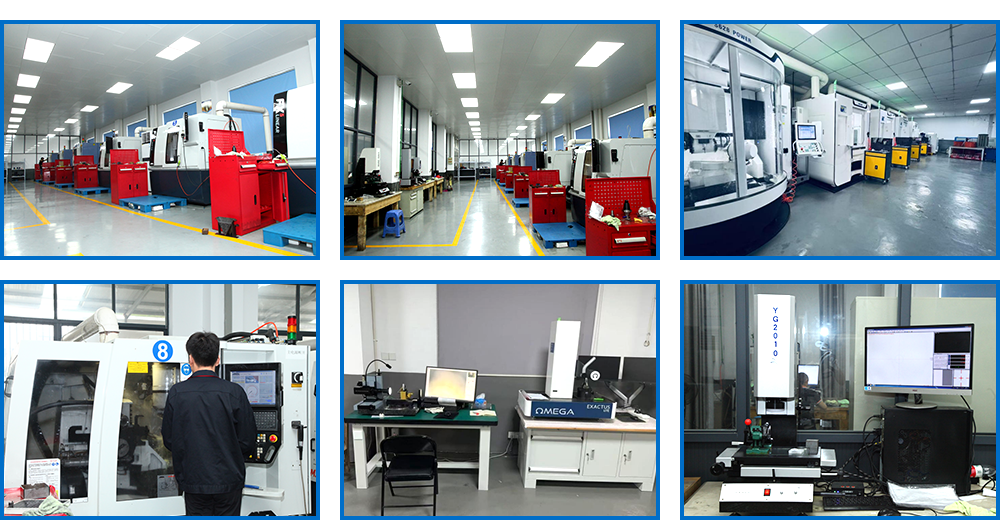
Service Introduction

Logistics Package

FAQ
Q: What is a Corner Rounding End Mill, and what does it do?
A: A Corner Rounding End Mill is a specialized cutting tool used in milling machines (CNC or manual). Its primary function is to machine a smooth, rounded edge (a fillet) onto the corner of a workpiece. It features a concave cutting profile along its circumference specifically designed to create this rounded shape.
Q: How is a Corner Rounding End Mill different from a regular Ball Nose or End Mill?
A: Unlike a standard end mill (which cuts flat surfaces or sharp edges) or a ball nose end mill (which cuts complex 3D contours and radii into a surface), a Corner Rounding End Mill is designed specifically to cut a radius onto the external corner edge of a part. Its cutting profile is concave to match the desired convex radius on the workpiece corner.
Q: How do I specify the size of the radius a Corner Rounding End Mill will cut?
A: The radius size is defined by the tool's design and is typically denoted as "R" followed by the radius dimension (e.g., R1/16", R1.5mm, R3mm). This "R" value indicates the radius of the rounded edge the tool will produce when run along the corner of the workpiece. The tool's shank diameter is usually larger than the radius it cuts.
Q: What materials can I machine with Corner Rounding End Mills?
A: Corner Rounding End Mills are available for a wide range of materials. Common variants include:
High-Speed Steel (HSS): Suitable for softer materials like aluminum, wood, and plastics.
Solid Carbide: Ideal for harder materials like steel, stainless steel, cast iron, and titanium, offering superior wear resistance and higher cutting speeds.
Carbide Tipped: Provide a good balance of durability and cost for various materials. Always choose the tool material and coating optimized for your specific workpiece material.
Q: What are the typical applications for Corner Rounding End Mills?
A: These tools are essential for:
Deburring and Edge Breaking: Removing sharp, dangerous edges left by previous machining operations.
Aesthetics: Creating visually appealing, smooth rounded edges on parts.
Functionality: Improving part strength by reducing stress concentration points at sharp corners.
Safety: Eliminating sharp edges for handling or user safety.
Preparing for Finishing: Creating transitions for subsequent operations like painting or coating.
Common in industries like automotive, aerospace, mold & die, and general fabrication.


