English
- All
- Product Name
- Product Keyword
- Product Model
- Product Summary
- Product Description
- Multi Field Search

Views: 0 Author: Site Editor Publish Time: 2026-10-21 Origin: Site

Why do standard cutting tools struggle with complex machining requirements? Unusual geometries, difficult materials, and tight tolerances create manufacturing challenges. Customized Tools provide specialized solutions through tailored cutting geometry, carbide materials, and tool designs. This article explores how they improve machining accuracy, reduce tool changes, and increase production efficiency.
Standard cutting tools work well for many manufacturing operations. However, specialized components often require geometries and cutting characteristics unavailable in conventional tooling.
Customized tools address these limitations through application-specific designs. Manufacturers can optimize tool dimensions, cutting edges, and material compatibility to solve measurable production problems.
Deep cavities, narrow grooves, and unusual contours create accessibility problems during CNC machining. Standard cutting tools may lack sufficient clearance or suitable cutting profiles.
Custom cutting tools for complex geometries can feature special diameters, extended necks, and modified cutting edges. These adjustments help manufacturers reach difficult features without unnecessary interference.
However, extended cutting tools require sufficient rigidity. Engineers must balance accessibility against deflection and vibration risks.
Precision components require accurate dimensions throughout repeated production runs. Tool deflection, positioning errors, and excessive tool changes can affect consistency.
Customized cutting geometry helps control material removal around critical features. It may also reduce setups when several related operations can be combined.
Manufacturers should verify finished dimensions through appropriate inspection methods. Custom tooling cannot compensate for unstable workholding or poor machine calibration.
Hardened steel, stainless steel, titanium alloys, and engineering plastics create different machining challenges. Their properties influence cutting forces, tool wear, and heat generation.
Custom cutting tools for difficult materials can use specialized carbide grades, coatings, and flute configurations. Appropriate cutting edge preparation also helps manage demanding machining conditions.
Material compatibility should guide every design decision. A cutter suitable for hardened steel may not perform effectively on soft aluminum.
Complex parts may require separate drills, chamfering tools, and finishing cutters. Each additional operation increases machining time and positioning requirements.
Custom combination tools can integrate compatible cutting features into one tool body. Examples include stepped drills and specialized form cutters.
These designs may reduce tool changes and repeated positioning. However, combined operations require sufficient machine power and appropriate cutting conditions.
Surface defects often result from unsuitable cutting geometry or unstable engagement. Tool marks, burrs, and dimensional variations may increase secondary finishing requirements.
Customized ball nose, corner radius, and profile cutters can match specific component shapes. Suitable edge geometry helps maintain controlled cutting forces.
Manufacturers should establish measurable surface requirements before requesting custom finishing tools. This ensures tooling development addresses actual quality targets.
Premature tool wear increases replacement costs and manufacturing interruptions. Excessive heat, material abrasion, and unsuitable cutting edges contribute to deterioration.
Customized carbide grades and coatings may improve wear resistance under specific conditions. Reinforced cutting corners can also reduce chipping during demanding operations.
However, longer tool life must be verified through production trials. Design changes alone cannot guarantee better wear performance.
Manufacturing cost includes more than the cutting tool purchase price. Tool changes, machining time, inspection, and rejected components all affect expenses.
Customized tools may reduce unnecessary operations and improve accepted production output. Their economic value depends on production volume and measurable process improvements.
Manufacturers should compare total cost per acceptable component rather than focusing on tool price alone.
Machining Challenge | Customized Tool Solution | Potential Benefit |
|---|---|---|
Complex geometry | Special profiles and dimensions | Improved accessibility |
Tight tolerances | Application-specific cutting edges | Better dimensional consistency |
Difficult materials | Suitable carbide grades and coatings | Stable machining |
Multiple operations | Combination tools | Fewer tool changes |
Surface defects | Optimized cutting geometry | Improved finish |
Premature wear | Material-specific tool design | Predictable tool life |
High processing costs | Process-specific tooling | Lower total machining cost |
Tip: Identify the measurable machining problem before requesting customized tooling specifications.
Tool geometry determines cutting accessibility, material removal, and machining stability. Customization helps manufacturers address component features outside conventional tooling dimensions.
Nonstandard component features may require special cutting diameters and neck dimensions. Customized neck clearance helps tools access recessed machining areas.
However, excessive tool length increases bending and chatter risks. Engineers should maintain the shortest practical tool assembly.
Proper toolholder selection further improves machining stability. Cutter dimensions must remain compatible with the intended machine.
Different profiles require different cutting edge geometries. Flat cutters machine slots and shoulders, while ball nose tools support curved surfaces.
Corner radius cutters reinforce cutting corners during suitable operations. Custom profile cutters reproduce specialized shapes more directly.
These options are useful when standard cutters require multiple machining passes. However, toolpaths and cutting parameters must match the selected geometry.
Flute count influences chip evacuation and cutting edge engagement. Single-flute designs provide chip space for selected plastics and non-ferrous materials.
Multi-flute cutters may support productive metal machining under suitable conditions. Helix angle also affects cutting forces and chip movement.
Customized geometry helps balance material removal against cutting stability. Manufacturers should verify results through controlled machining trials.
Custom form tools reproduce defined features through specialized cutting profiles. They can create grooves, chamfers, stepped holes, and selected radii.
Some designs combine compatible operations to reduce tool changes. However, combined cutting may increase tool loading.
Manufacturers should verify feature tolerances and machine capabilities before approving combination tool designs.
Tip: Provide detailed component drawings showing critical radii, clearances, and machining depths during tool development.
Customized tooling performance depends on cutting edge durability and material compatibility. Suitable substrates and coatings help manufacturers address demanding cutting conditions.
Carbide grades differ in hardness, toughness, and wear resistance. Fine-grain carbide can support sharp cutting edges and demanding precision applications.
However, maximum hardness does not always provide the best performance. Interrupted cutting may require greater resistance to chipping.
Manufacturers should select carbide grades according to material properties and cutting loads. Tool geometry must also provide appropriate cutting edge strength.
Coatings can protect cutting edges against abrasion and thermal loading. Common options include TiAlN and AlTiN-based systems.
However, different materials require different coating characteristics. Polished or uncoated cutting edges may suit selected non-ferrous applications better.
Coating selection should consider operating temperature and chip formation. Manufacturers should evaluate performance under actual production conditions.
Roughing tools must withstand significant cutting forces and material engagement. Reinforced cutting edges help resist chipping during suitable operations.
Finishing tools prioritize dimensional accuracy and controlled surface quality. Their cutting edges may require different sharpness and corner geometry.
Customized preparation helps balance edge strength against cutting resistance. This supports tool life and surface consistency when correctly designed.
Hardened steel machining creates substantial wear and cutting force challenges. Suitable carbide substrates and coatings support cutting edge durability.
Four-flute carbide end mills represent one configuration for selected steel machining operations. However, flute count alone does not determine hardened material capability.
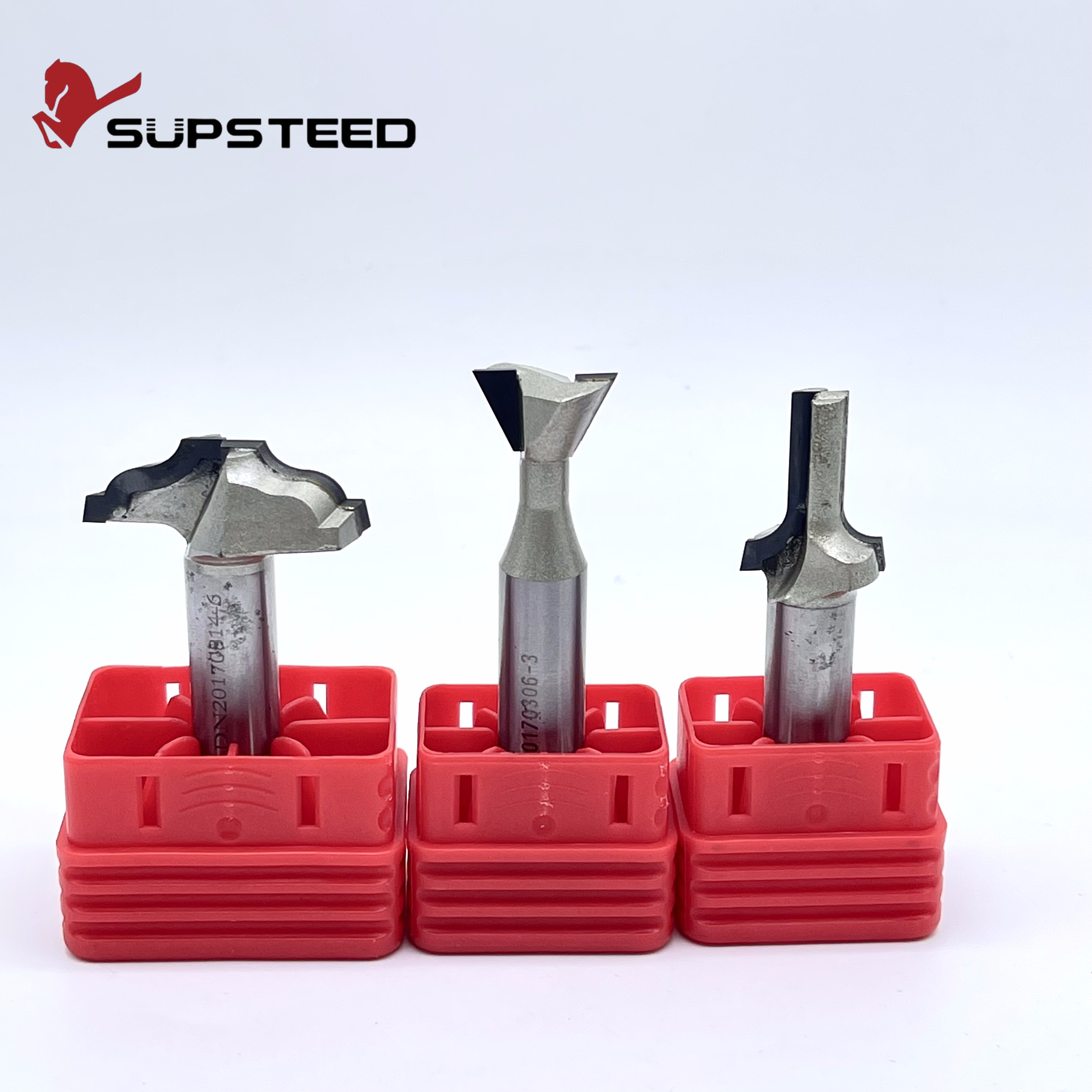
SUPSTEED PRECISION TOOLS offers Customized Welded Machining Tools for specialized industrial cutting requirements. Their design can incorporate application-specific cutting geometries and tool interfaces.
Welded or joined tool constructions require appropriate design verification. They should not be assumed interchangeable with solid carbide end mills.
Customized Tool Feature | Main Purpose | Typical Application |
|---|---|---|
Special diameter | Access nonstandard features | Precision slots |
Extended neck | Reach recessed surfaces | Deep pockets |
Corner radius | Reinforce cutting corners | Shoulder milling |
Ball nose profile | Machine curved surfaces | Mold finishing |
Special flute geometry | Control chip formation | Material-specific machining |
Wear-resistant coating | Improve edge durability | Difficult materials |
Combination geometry | Reduce separate operations | Stepped features |
Customized tooling becomes valuable when component requirements exceed standard tool capabilities. Several industries benefit from application-specific cutting geometries and material combinations.
Aerospace components often feature complex profiles and demanding material properties. Titanium alloys and selected high-strength materials require controlled machining conditions.
Customized cutters can provide specialized profiles and improved feature accessibility. Suitable cutting geometry may help control tool loading.
However, aerospace production requires validated machining processes and documented inspections. Customized tooling must meet the manufacturer's actual acceptance requirements.
Medical components may contain miniature holes, narrow grooves, and intricate profiles. These features require accurate machining and controlled burr formation.
Customized micro cutters and form tools can support specialized component geometries. Material compatibility and surface integrity remain important selection factors.
Manufacturers should validate tool performance according to applicable production procedures. Final component quality cannot depend on tool specifications alone.
Automotive manufacturing frequently involves repeated machining of similar components. Stable cycle times and predictable tool life influence production efficiency.
Custom combination tools may perform related operations during fewer setups. These designs can reduce machine movements and positioning requirements.
Manufacturers should compare actual production output before approving specialized tooling. High-volume applications often provide stronger opportunities for recovering development costs.
Mold manufacturing often involves complex contours, deep cavities, and precision finishing requirements. Standard tools may require additional passes around restricted features.
Customized ball nose and profile cutters provide specialized machining options. Long-reach geometries may also access difficult areas.
However, excessive reach increases deflection risks. Engineers should balance access requirements against tool rigidity.
Industry | Main Challenge | Potential Customized Tool |
|---|---|---|
Aerospace | Difficult alloys and complex profiles | Special carbide cutters |
Medical devices | Small features and tight tolerances | Micro tools and form cutters |
Automotive | Repeated machining operations | Combination drills |
Mold making | Complex contours and cavities | Custom ball nose cutters |
Precision engineering | Nonstandard component features | Profile and corner radius tools |
Tip: Prioritize custom tooling for repetitive machining problems where measurable improvements justify development costs.
Successful custom tooling begins with clear manufacturing requirements. Engineers should connect each design decision to component specifications and production conditions.
Tool development begins by identifying the finished component requirements. Drawings should define critical dimensions, surface quality, and material properties.
Manufacturers should document current machining limitations. These may include excessive cycle time, poor accessibility, or premature wear.
Clear improvement targets help engineers select suitable tool designs. They also support meaningful performance comparisons during trials.
Engineers translate manufacturing requirements into specific cutting tool dimensions. They select geometry, carbide grade, coating, and toolholder interfaces.
Machine spindle capability and rigidity also influence design. Excessively aggressive specifications may create impractical operating conditions.
SUPSTEED PRECISION TOOLS provides customized tooling through its Customized Tools category. The range includes carbide cutters, holemaking tools, and specialized PCD/PCBN solutions.
Prototype tools allow manufacturers to evaluate proposed geometries before full production. Trials should use representative workpieces and machining conditions.
Engineers should measure dimensional accuracy, surface finish, and usable tool life. Machining cycle time provides another important performance indicator.
Trial results may reveal necessary design adjustments. Manufacturers should document changes before approving final specifications.
Approved prototypes require consistent manufacturing specifications. Tool drawings should define critical dimensions and cutting edge features.
Inspection procedures help verify repeatability between tool batches. Manufacturers should also retain approved machining parameters.
Consistent replacement tooling supports predictable long-term production. It reduces variation caused by undocumented geometry changes.
Development Stage | Required Information | Expected Output |
|---|---|---|
Requirement analysis | Drawings, material, tolerances | Defined machining challenge |
Tool design | Geometry, substrate, coating | Tool specification |
Prototype production | Approved design | Sample cutter |
Machining trial | Representative workpiece | Performance results |
Refinement | Inspection findings | Improved configuration |
Production approval | Final drawing and criteria | Repeatable custom tooling |
Customized tools should demonstrate measurable improvements during production. Manufacturers need consistent evaluation methods to determine their practical value.
Machining cycle time includes cutting, positioning, and tool-changing operations. Custom combination cutters may reduce unnecessary machine movements.
Manufacturers should compare total processing time before and after customization. Tests must use equivalent workpieces and machine conditions.
Lower cycle time becomes valuable when finished quality remains acceptable. Productivity measurements should include actual accepted components.
Improved machining efficiency should not reduce dimensional accuracy. Manufacturers must evaluate component quality alongside cutting performance.
Dimensional deviation and surface roughness provide measurable comparison points. Repeated inspections reveal consistency across production batches.
Customized tools may reduce setup-related positioning variations. However, these benefits require verification under actual manufacturing conditions.
Tool wear affects cutting forces and machining consistency. Manufacturers should record usable cutting duration and replacement frequency.
Longer predictable tool life can reduce interruptions. However, tool maintenance and regrinding requirements also influence operating costs.
Custom PCD and PCBN cutting tools may be relevant for selected demanding applications. PCD generally suits abrasive non-ferrous materials, while PCBN serves selected hardened materials.
SUPSTEED PRECISION TOOLS offers Custom PCD/PCBN Non-Ferrous Machining Tools. Its product range addresses specialized material and precision machining requirements.
Customized tools may require higher initial investment than standard cutters. Their economic benefits depend on actual machining improvements.
Manufacturers should include tool changes, cycle time, scrap, and maintenance expenses. Production volume also affects cost recovery.
The strongest comparison uses tooling cost per acceptable finished component. This method connects cutting performance directly to manufacturing economics.
Performance Indicator | What to Measure | Manufacturing Benefit |
|---|---|---|
Cycle time | Processing time per component | Higher productivity |
Tool changes | Changes per production cycle | Fewer interruptions |
Dimensional accuracy | Variation from required dimensions | Better component quality |
Surface roughness | Finished surface condition | Reduced finishing |
Tool life | Usable cutting duration | Predictable replacement |
Scrap rate | Rejected components | Lower material waste |
Tool cost per part | Tool expense per accepted component | Better cost control |
Accepted output | Qualified parts per production period | Reliable productivity |
Tip: Compare custom and standard tools using identical materials, machine conditions, and inspection procedures.
Manufacturers should evaluate whether custom tooling solves a documented production limitation. Clear technical requirements help avoid unnecessary development expenses.
Standard cutters remain suitable for many machining applications. Manufacturers should evaluate available tool sizes and configurations first.
Parameter adjustments or improved workholding may resolve existing problems. Custom tooling becomes more relevant when these alternatives remain insufficient.
Documenting the limitation helps establish the business case. This prevents customization from becoming an unnecessary purchasing expense.
Custom tool specifications should reflect finished component requirements. Manufacturers should provide drawings, material grades, and critical tolerances.
Cutting geometry, coating, and toolholder compatibility also require definition. Surface finish targets help guide cutting edge preparation.
Suppliers should receive clear acceptance criteria. This improves communication and reduces design misunderstandings.
Reliable custom tooling requires suitable design and precision manufacturing capabilities. Suppliers should understand carbide grinding and application-specific tool geometry.
Prototype development and inspection support are also important. Technical communication helps resolve potential machining problems early.
For specialized woodworking and engineered panel applications, SUPSTEED PRECISION TOOLS offers PCD Wood Machining Tools. These tools are intended for wood and panel processing rather than general hardened steel machining.
Their diamond cutting edges can provide wear resistance during suitable abrasive panel-processing applications.
Customized tooling may require additional design and prototype development time. Manufacturers should account for these requirements during production planning.
Reorder consistency also matters for recurring machining operations. Approved drawings help ensure replacement tools match validated specifications.
Long-term value depends on machining performance and procurement reliability. Buyers should compare total operating benefits against development and replacement costs.
Selection Factor | What to Check | Expected Benefit |
|---|---|---|
Machining challenge | Geometry, wear, quality, cycle time | Clear customization objective |
Component drawing | Dimensions and tolerances | Accurate tool design |
Workpiece material | Hardness and machinability | Suitable cutting geometry |
Tool design | Diameter, profile, flute configuration | Better application compatibility |
Carbide and coating | Hardness, toughness, wear resistance | Stable cutting performance |
Machine capability | Spindle, rigidity, toolholder | Practical implementation |
Prototype testing | Quality, cycle time, tool life | Verified results |
Supplier capability | Design, grinding, inspection | Consistent manufacturing |
Delivery requirements | Prototypes and production quantities | Reliable procurement |
Total cost | Tool price, scrap, downtime | Better purchasing decisions |
Tip: Confirm prototype approval criteria and replacement tool specifications before committing to large-volume custom tooling orders.
Customized Tools help manufacturers overcome complex geometries, difficult materials, and tight machining tolerances. Their specialized designs improve cutting accuracy and production efficiency.
Optimized carbide grades, coatings, and cutting geometries support stable machining and predictable tool life.
SUPSTEED PRECISION TOOLS provides customized carbide cutters, welded cutting tools, and PCD/PCBN solutions.
Its precision tooling and customization services help manufacturers reduce machining costs, improve component quality, and maintain reliable production performance.
A: Customized Tools address specific CNC machining challenges through tailored designs.
A: Customized Tools improve accuracy, accessibility, and efficiency for complex components.
A: Customized Tools use suitable carbide grades, coatings, and cutting geometries.
A: They suit specialized applications requiring unique geometries or tighter tolerances.
A: Prices depend on geometry, material, coating, and order quantity.
A: Incorrect specifications, excessive cutting forces, or unsuitable machining parameters cause problems.