- All
- Product Name
- Product Keyword
- Product Model
- Product Summary
- Product Description
- Multi Field Search

Views: 0 Author: Site Editor Publish Time: 2026-04-02 Origin: Site

Are carbide tools worth the cost? Many shops still hesitate today.Holemaking Tools affect quality and cost. Wrong choices lead to rework and waste.In this article, you will learn value. We explain cost, performance, and ROI.
Carbide holemaking tools are manufactured using tungsten carbide, a composite material known for its exceptional hardness, wear resistance, and thermal stability, which allows the cutting edge to remain sharp even under high-speed and high-temperature conditions. Compared to traditional materials, carbide maintains its structural integrity much longer, making it ideal for precision machining and demanding industrial environments.
Unlike softer materials, carbide tools exhibit minimal deformation during cutting, which directly contributes to better dimensional accuracy and more stable performance, especially when machining hard metals such as stainless steel or titanium alloys.
High-speed steel tools are widely used due to their lower initial cost and flexibility, but they tend to lose hardness at elevated temperatures, which limits their effectiveness in high-speed or heavy-duty machining. Carbide Holemaking Tools, on the other hand, maintain their cutting performance even under extreme heat, enabling faster cutting speeds and longer tool life.
Additionally, carbide tools offer superior rigidity, which reduces tool deflection and improves hole accuracy, while HSS tools are more prone to bending or vibration during operation. This difference becomes critical in applications requiring tight tolerances and repeatability.
Carbide holemaking tools include several specialized categories designed for different stages of the machining process, such as solid carbide drills for primary hole creation, carbide-tipped tools for cost-effective performance, and boring tools for internal diameter refinement.
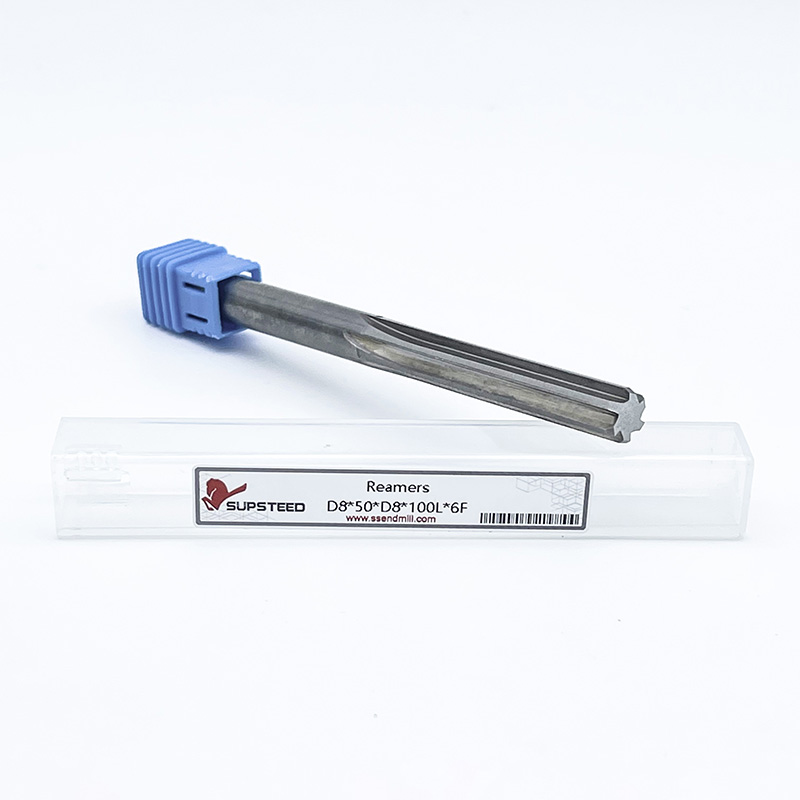
Among these, Reamers play a crucial role in finishing operations, as they are specifically designed to enlarge and refine pre-drilled holes to achieve precise dimensions, excellent roundness, and superior surface finishes. High-quality reamers, especially those made from solid carbide and enhanced with advanced coatings, ensure that final hole tolerances meet strict industrial standards.
Reamers are essential for achieving IT6–IT8 tolerance levels in precision machining.
One of the most significant advantages of carbide Holemaking Tools is their ability to operate at much higher cutting speeds compared to traditional tools, which directly reduces machining cycle time and increases overall productivity. This capability allows manufacturers to produce more parts within the same timeframe, improving operational efficiency.
Carbide tools are known for their long service life, as their hardness and resistance to abrasion significantly reduce wear during operation. This extended lifespan minimizes the frequency of tool replacements, which not only lowers tooling costs but also reduces machine downtime and labor involvement.
Due to their rigidity and stability, carbide tools produce holes with greater dimensional accuracy and smoother surface finishes, which reduces the need for secondary operations. When combined with precision-engineered reamers, the final hole quality can achieve exceptional roundness, straightness, and surface integrity.
Carbide tools maintain their cutting performance even at temperatures exceeding those tolerated by HSS tools, making them ideal for high-speed machining and difficult materials. Their resistance to thermal deformation ensures consistent results throughout long production runs.
Use coated carbide tools such as TiAlN variants to further improve heat resistance and extend tool life.
Although carbide Holemaking Tools require a higher initial investment, their longer lifespan and superior performance significantly reduce the total cost of ownership over time, making them a cost-effective solution for many industrial applications.
Because carbide tools last longer and perform more consistently, they reduce the need for frequent tool changes, allowing machines to operate continuously and improving production stability.
Higher cutting speeds and improved durability enable faster cycle times and increased output, which directly enhances production efficiency and profitability.
Industries such as aerospace and medical manufacturing require extremely tight tolerances and high-quality finishes, making carbide tools indispensable, while automotive and mass production sectors benefit from their speed and consistency.
Factor | Carbide Tools | HSS Tools |
Initial Cost | High | Low |
Tool Life | Very Long | Short |
Cutting Speed | High | Moderate |
Precision | Excellent | Average |
Downtime | Low | High |
Long-Term ROI | High | Lower |
Carbide tools provide the greatest return in high-volume production environments and when machining hard or abrasive materials, where their durability and efficiency significantly outweigh the initial cost.
For low-volume production or soft material applications, the cost advantage of carbide tools may not be as significant, and traditional tools may still be sufficient.
Always evaluate cost per part rather than tool price to understand real value.
Precision is critical in modern manufacturing because even minor deviations in hole dimensions can lead to assembly issues, reduced product performance, or complete part failure, especially in high-precision industries.
Carbide tools provide exceptional rigidity, which minimizes vibration and ensures stable cutting conditions, resulting in more accurate and consistent hole dimensions.
In large-scale production, maintaining consistency is essential, and carbide tools excel in delivering repeatable results, ensuring that every hole meets the required specifications.
High-quality carbide tools, combined with advanced reamers, produce smooth hole surfaces that reduce friction and eliminate the need for additional finishing processes.
Improved surface finish reduces secondary machining and lowers total production cost.
Carbide tools are ideal for machining tough materials such as stainless steel, titanium, and cast iron, where traditional tools struggle to maintain performance and durability.
These industries demand extremely high precision and reliability, and carbide Holemaking Tools provide the necessary accuracy and consistency to meet strict quality standards.
In CNC environments, carbide tools enable high-speed, automated operations with minimal variation, ensuring consistent results and improved productivity.
Carbide tools perform exceptionally well in deep hole drilling and complex machining operations, where stability and efficient chip evacuation are critical.
Use coolant-fed carbide tools to improve chip removal and maintain temperature control.
Reamers are an essential component of advanced Holemaking Tools, as they are specifically designed to refine pre-drilled or bored holes, ensuring precise diameter control and superior surface finish in demanding industrial applications.
Modern reamers are typically manufactured from premium tungsten steel or solid carbide, offering high hardness, rigidity, and resistance to wear and thermal deformation, which allows them to maintain accuracy even under continuous production conditions.
Advanced coatings such as TiN, TiAlN, and AlTiN further enhance their performance by reducing friction, improving heat resistance, and extending tool life, making them suitable for machining a wide range of materials including carbon steel, stainless steel, cast iron, and aluminum alloys.
The optimized flute geometry and precision-ground cutting edges of these reamers ensure smooth cutting action, minimal vibration, and efficient chip evacuation, resulting in burr-free holes with excellent roundness and straightness.
Feature | Benefit |
Solid Carbide Body | High rigidity and long service life |
Advanced Coatings | Reduced friction and improved heat resistance |
Optimized Flutes | Smooth chip evacuation and stable cutting |
Precision Grinding | Accurate hole size and superior finish |
Multiple Designs | Suitable for CNC and manual operations |
The hardness and characteristics of the material being machined play a crucial role in determining whether carbide tools are necessary, as harder materials typically require more durable tooling solutions.
High-speed CNC machines are better suited for carbide tools, as they can fully utilize their performance advantages, while less advanced setups may not achieve the same benefits.
Proper selection of cutting speed, feed rate, and coolant usage is essential for maximizing tool life and maintaining consistent performance.
Advanced coatings and customized tool designs can further enhance performance, allowing manufacturers to optimize their machining processes for specific applications.
Following recommended cutting parameters ensures optimal performance and prevents premature tool wear, allowing carbide tools to achieve their full potential.
Effective coolant application reduces heat buildup and improves chip evacuation, which helps maintain cutting efficiency and prolong tool life.
Regular inspection and timely replacement of worn tools are essential for maintaining precision and avoiding unexpected failures during production.
Working with experienced and reliable suppliers ensures access to high-quality tools, technical support, and customized solutions that improve overall machining performance.
Carbide Holemaking Tools provide significant advantages in terms of precision, efficiency, and durability, making them a valuable investment for modern manufacturing environments. While their initial cost may be higher, their long-term benefits, including reduced downtime, improved productivity, and superior hole quality, result in a strong return on investment. With the support of SUPSTEED Precision Tools Co., Ltd., manufacturers can access high-performance solutions designed for demanding applications.
A: Yes, Holemaking Tools in carbide last longer, cut faster, and improve accuracy.
A: Reamers refine Holemaking Tools results by improving finish and tight tolerances.
A: Carbide Holemaking Tools resist heat and wear, ensuring stable performance.
A: Use Reamers after drilling to achieve precise size and smooth surface.
A: Yes, Holemaking Tools in carbide need fewer changes, improving efficiency.


