Please Choose Your Language
- All
- Product Name
- Product Keyword
- Product Model
- Product Summary
- Product Description
- Multi Field Search

Views: 0 Author: Site Editor Publish Time: 2026-09-18 Origin: Site

Titanium is often considered the ultimate frenemy of the modern manufacturing world. Prized for its incredible strength-to-weight ratio and outstanding corrosion resistance, it forms the backbone of aerospace, defense, and medical innovations. However, any seasoned CNC machinist knows the painful reality. It is notoriously difficult to machine. When standard cutting tools meet a titanium billet, the result is usually catastrophic tool failure. You get poor surface finishes and scrapped parts due to immense heat buildup and violent chatter.
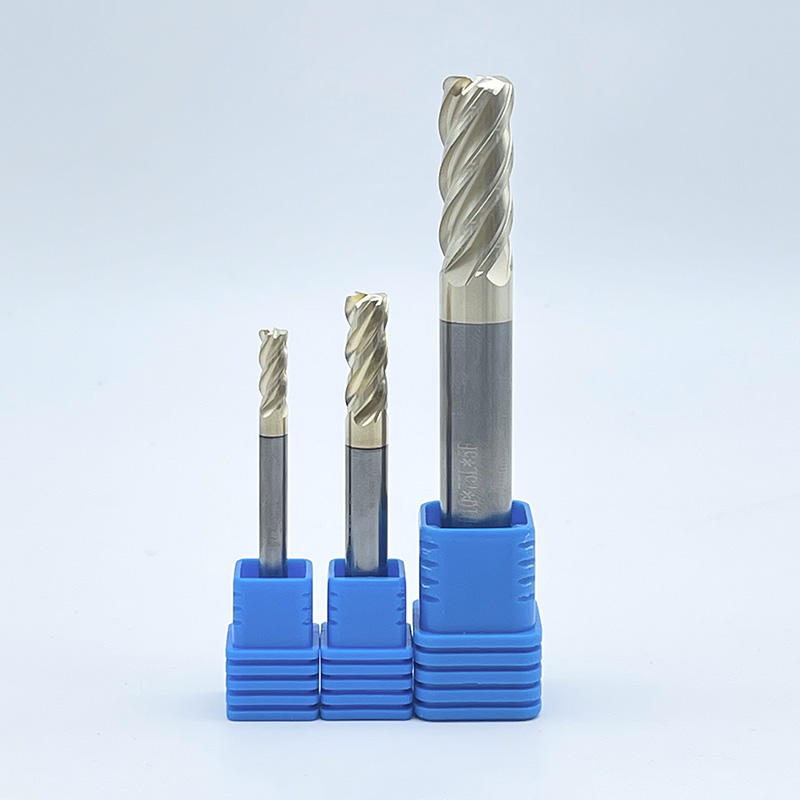
Mastering this exotic alloy requires moving beyond general-purpose tooling. Specialized titanium end mills are the ultimate solution for these shop-floor nightmares. Specifically, success hinges on two critical engineering features. These are variable helix geometry and advanced thermal coatings. In this guide, we will explore why these specific cutters are essential for your next high-stakes project and how to select the perfect tool to optimize your production efficiency.
Heat is the Enemy: Titanium exhibits exceptionally low thermal conductivity. Advanced coatings act as a critical thermal barrier to protect the cutting tool from severe thermal degradation.
Chatter Kills Tools: A variable helix design disrupts harmonic vibrations. This allows for smoother surface finishes, deeper axial cuts, and extended tool life without sudden breakage.
Material Matters: Only ultra-fine micro-grain solid carbide provides the transverse rupture strength needed to withstand the abrasive nature of alloys like Ti-6Al-4V.
Application-Specific Selection: Choosing the correct geometry and coating is critical for high-tolerance manufacturing. These specific cutters are non-negotiable for critical structural components.
Processing titanium alloys presents a unique set of metallurgical and mechanical hurdles. Manufacturing engineers frequently discover that standard cutting instruments degrade rapidly when introduced to these materials. Why does this happen? Understanding the root causes of rapid failure is the foundational step in optimizing your machining parameters.
One primary reason standard tools melt down in titanium is the material's stubbornly poor thermal conductivity. In traditional steel machining, roughly 75 percent of the heat generated by the shearing action is evacuated through the metal chip. Titanium simply does not absorb or transfer heat effectively. Instead of riding out with a clean chip, the intense heat concentrates directly at the cutting edge. This localized thermal shock quickly exceeds the operational temperature limits of standard carbide. The result is rapid plastic deformation, edge degradation, and premature failure.
Furthermore, titanium is highly susceptible to strain hardening. As the cutting edge shears through the material, the immediate surface becomes significantly harder than the underlying base metal. If a tool rubs against the workpiece rather than taking a decisive bite, it hardens the surface further. Subsequent passes become a nightmare.
Additionally, titanium becomes chemically reactive at high temperatures. It possesses a gummy characteristic that causes it to adhere aggressively to the cutting tool. This phenomenon is known as Built-Up Edge. It results in titanium chips micro-welding directly to the flutes. When these welded chips eventually break off during rotation, they tear microscopic pieces of the carbide edge with them. This accelerates wear exponentially.
Despite its excellent strength-to-weight ratio, titanium has a relatively low modulus of elasticity compared to steel. Practically speaking, the material tends to spring back or deflect away from the cutting tool during the operation. To counteract this effect, the cutter must exert immense pressure. These high cutting forces place severe mechanical stress on the core of the tool. If standard end mills lack the necessary core strength or geometric stability, this pressure leads to extreme deflection. Dimensional inaccuracies and a suddenly snapped shank are common outcomes.
To combat the intense mechanical stresses of machining exotic alloys, tool manufacturers engineered a brilliant geometric solution. This design fundamentally changes how the cutting edge interacts with the workpiece. It directly addresses the destructive issue of vibration.
During the milling process, the impact of each flute hitting the material creates a vibration. Standard end mills feature equal flute spacing and a constant helix angle. Because the cutting edges strike the metal at exact rhythmic intervals, the vibrations compound. You can literally hear this on the shop floor. The deafening squeal of harmonic resonance is commonly referred to as chatter. In tough materials, regenerative chatter is highly destructive. It destroys surface finishes, creates micro-fractures in the carbide substrate, and ultimately shatters the tool.
A specialized variable helix cutter intentionally disrupts this destructive harmonic cycle. Tool designers achieve this by altering the helix angle of each flute along the length of the tool body. For example, a high-performance four-flute instrument might feature helix angles of 35 degrees on two flutes and 38 degrees on the others.
In addition, these tools often incorporate variable pitch. This means the angular spacing between the cutting edges at the tip is asymmetrical. By randomizing the timing of the cutting edges entering and exiting the material, the vibrations actively cancel each other out rather than compounding.
Implementing variable helix geometry provides several tangible benefits for bottom-of-funnel production metrics. The dampening of harmonic vibrations ensures a smooth cutting process even under heavy radial loads. Reduced vibration directly translates to cleaner wall finishes, frequently eliminating the need for secondary finishing passes. The stability provided by a variable helix allows machinists to utilize modern High-Efficiency Milling strategies. You can take deep axial cuts and utilize the entire flute length while maintaining low radial engagement. Less violent vibration also means significantly less wear and tear on the CNC machine's expensive spindle bearings.
While optimal geometry stabilizes the mechanical cutting process, managing the extreme heat requires aggressive chemical and thermal intervention. Advanced tool coatings are absolutely non-negotiable when processing titanium.
Tungsten carbide is exceptionally hard and wear-resistant. However, bare carbide has strict thermal limitations. When exposed to the localized heat generated in the shear zone, the cobalt binder in standard carbide begins to break down. Temperatures here easily exceed 800 degrees Celsius. Without a protective barrier, the chemical affinity between the titanium workpiece and the bare carbide causes rapid galling. The substrate simply cannot survive the thermal shock without a specialized shield.
Titanium Aluminum Nitride and Aluminum Titanium Nitride are the undisputed industry standards for high-heat applications. A premium TiAlN end mill is specifically engineered to thrive in these hostile environments. The brilliance of this coating lies in a process called oxidation. When exposed to the extreme temperatures of the cutting zone, the aluminum within the coating migrates to the surface and oxidizes. It forms a microscopic layer of aluminum oxide. This ceramic-like layer acts as a highly effective thermal barrier. It reflects heat back into the chip and safely away from the vulnerable carbide core. Top-tier tools utilize advanced PVD TiAlN coatings to ensure maximum thermal resistance during prolonged aerospace cuts.
Beyond thermal protection, these advanced physical vapor deposition coatings significantly improve the lubricity of the tool. A lower coefficient of friction ensures that the stringy titanium chips slide smoothly up the flute valleys and evacuate the cutting zone. By drastically reducing friction, the coating actively prevents the chip-welding phenomena that typically destroy uncoated tools.
The geometry and coating of an instrument are only as effective as the foundation they are built upon. For titanium applications, high-performance solid carbide is the absolute baseline requirement. High-Speed Steel simply cannot deliver the necessary mechanical properties.
The manufacturing of a premium carbide end mill involves sintering tungsten carbide powder with a cobalt binder. For aerospace alloys, the grain size of the tungsten carbide is a make-or-break specification. Standard carbide typically uses grain sizes above 1.0 micron. In contrast, tools designed for titanium utilize ultra-fine micro-grain carbide, typically around 0.4 to 0.6 microns. This ultra-fine structure provides a significantly higher Transverse Rupture Strength. A higher strength means the cutting edge can absorb heavier shock loads without micro-chipping. This is vital when shearing through high-tensile materials.
Solid carbide boasts a stiffness nearly three times that of steel. This extreme rigidity is crucial. Because titanium exerts high radial cutting forces that attempt to push the tool away from the part, tool deflection is a constant threat. A highly rigid solid carbide substrate minimizes this deflection, ensuring that the machinist can hold tight dimensional tolerances.
Feature | Standard Macro-Grain Carbide | Ultra-Fine Micro-Grain Carbide |
|---|---|---|
Grain Size | > 1.0 µm | 0.4 - 0.6 µm |
Transverse Rupture Strength | Moderate | Exceptionally High |
Edge Retention | Prone to micro-chipping in Ti | Maintains sharp edge under load |
Suitability for Titanium | Poor to Fair | Excellent |
Selecting the correct flute count is a delicate balancing act between core strength and chip evacuation space. Titanium chips are notoriously stringy and require adequate room to escape the cutting zone. If they pack into the flutes, the tool will snap instantly. However, the tool must remain thick enough to resist deflection.
For aluminum, 2-flute or 3-flute tools are standard due to the massive chip volume. For steels, 6-flute to 8-flute tools might be used for finishing. For titanium, the optimal balance is typically found in 4-flute or 5-flute designs.
4-Flute Designs: Offer generous flute valleys for efficient chip evacuation. This is critical during heavy traditional roughing operations or slotting where chip packing is a severe risk.
5-Flute Designs: Provide a slightly thicker core diameter, increasing the overall rigidity of the tool. The addition of a fifth cutting edge allows for slightly higher feed rates while maintaining an excellent surface finish. This makes it the go-to choice for modern High-Efficiency Milling toolpaths.
Specialized titanium cutters feature a thicker core diameter compared to general-purpose tools. This thickened web provides the structural integrity required to withstand high radial loads. Furthermore, the relief angles behind the cutting edge are meticulously engineered. An eccentric relief is often applied, leaving more material directly behind the cutting edge. This provides maximum edge support, preventing the sharp tip from breaking off when it encounters the hard, abrasive surface of the workpiece.
Recent market shifts highlight a surging global demand for titanium components. This growth is heavily driven by next-generation commercial aircraft, lightweight defense systems, and complex medical implants. As raw material costs remain high and production schedules tighten, the manufacturing sector is experiencing a massive transition. Shops are rapidly moving away from traditional roughing toward advanced dynamic milling strategies. Tool manufacturers are responding by pushing the boundaries of PVD coating technologies and complex substrate geometries. This proves that tooling innovation is pacing right alongside aerospace engineering.
Aerospace manufacturing operates under stringent quality control standards. Components like landing gear forgings, engine pylons, and structural bulkheads are machined from solid blocks of titanium. In this environment, precision is non-negotiable. Using specialized aerospace machining tools ensures that dimensional accuracy is maintained across long production runs. Predictability allows CNC programmers to establish reliable tool life management systems. This prevents unexpected failures that could compromise a flight-critical part.
From a procurement perspective, tooling costs must be evaluated against the total cost of manufacturing. When you are staring down a titanium aerospace billet that costs tens of thousands of dollars, attempting to save a few bucks by purchasing standard cutting tools introduces an unacceptable level of risk. If a standard tool chatters, breaks, and embeds itself into a high-value component, the cost of scrapping that part far outweighs the investment in premium tooling. High-performance cutters act as an insurance policy. They safeguard the workpiece and maximize overall spindle uptime.
Selecting the appropriate cutting instruments is not a process of trial and error. It requires a calculated approach based on metallurgical science and your specific shop-floor environment. Manufacturing engineers must evaluate their operational strategies, coolant delivery systems, and tooling partners to ensure process reliability.
Your programming approach dictates your tool selection. Traditional roughing typically involves a heavy radial depth of cut and a relatively shallow axial depth of cut. This method places immense stress on the bottom cutting edges. When utilizing this strategy, a 4-flute tool with a robust core and reinforced corner radiuses is necessary to prevent catastrophic edge chipping.
Conversely, High-Efficiency Milling utilizes a light radial depth and a very deep axial depth, often utilizing the entire flute length. This strategy distributes the cutting forces evenly across the tool, significantly extending tool life. For HEM applications in titanium, a 5-flute variable helix cutter is absolutely mandatory to suppress the harmonic chatter caused by deep axial engagement.
Machining Strategy | Radial Depth of Cut | Axial Depth of Cut | Tooling Requirement |
|---|---|---|---|
Traditional Roughing | High (50% - 100% of dia) | Low (10% - 25% of dia) | Thick core, corner radiuses, 4-flute |
High-Efficiency Milling | Low (5% - 15% of dia) | High (Up to 2x - 3x dia) | Variable helix, high flute count (5+) |
Titanium’s exceptionally low thermal conductivity dictates that heat must be managed externally. If your CNC machine utilizes high-pressure flood coolant, the primary goal is to prevent chip welding and physically blast the stringy chips out of the cutting zone. In this environment, a TiAlN coating performs exceptionally well. It resists thermal shock while the coolant provides necessary lubrication.
However, if you are utilizing Minimum Quantity Lubrication or air blasts, the tool will experience significantly higher temperatures. In these semi-dry scenarios, AlTiN coatings are often preferred. AlTiN contains a higher aluminum content. This forms a denser aluminum oxide layer at elevated temperatures, providing superior oxidation resistance when liquid coolant is limited.
The manufacturing tolerances of the cutting tool itself dictate the success of the machining operation. Critical factors include the consistency of the micro-grain carbide substrate, the precision of the edge preparation, and the uniformity of the PVD coating process. It is highly recommended to partner with specialized manufacturers who engineer dedicated geometries for exotic alloys. This establishes stable, repeatable processes and lowers the overall cost per part.
Machining titanium doesn't have to be a nightmare if you invest in the right technology. Standard tools will inevitably cost you more in the long run through frequent breakage, ruined surface finishes, and excessive machine downtime. By upgrading your tooling setup to include specialized geometries, you can conquer this difficult material with confidence.
Pairing a variable helix cutter with a premium thermal coating on an ultra-fine solid carbide substrate is the ultimate formula for success. This combination actively fights chatter, manages extreme heat, and provides the rigidity necessary to hold tight tolerances. Take the time to assess your specific machining strategies today. To optimize your shop's efficiency and profitability, explore the comprehensive range of high-performance tools engineered specifically for tough alloys at SS End Mill (https://www.ssendmill.com). Equip your CNC machines with the right cutters and turn your toughest titanium jobs into a competitive advantage.
The optimal cutting tool for machining titanium alloys, such as Ti-6Al-4V, is a 4-flute or 5-flute solid carbide end mill featuring a variable helix and variable pitch geometry. The substrate must be manufactured from ultra-fine micro-grain carbide to provide the necessary transverse rupture strength. Furthermore, the tool must be treated with an advanced thermal coating, such as Titanium Aluminum Nitride or Aluminum Titanium Nitride. This specific combination addresses chatter, resists deflection, and acts as a thermal barrier against extreme heat generation.
Standard cutting tools fail catastrophically in titanium due to a combination of thermal, mechanical, and chemical factors. Titanium retains heat at the cutting edge, quickly exceeding the thermal limits of standard tools and causing plastic deformation. Additionally, titanium's gummy nature causes it to chemically weld to the flutes. Once a chip welds to the flute, the tool stops cutting and starts rubbing, causing immediate spikes in spindle load and resulting in a snapped tool. Finally, standard tools generate harmonic resonance under high cutting forces, which micro-fractures the carbide.
While both features combat harmonic vibration, they alter the tool's geometry differently. Variable pitch refers to the unequal angular spacing of the cutting edges around the circumference of the tool's tip. A variable helix cutter alters the angle at which the flutes spiral up the length of the tool's body. While variable pitch is effective for shallow cuts, a variable helix is vastly superior for deep axial cuts. It continuously disrupts harmonic frequencies along the entire engaged length of the tool.
Yes, the use of coolant is highly recommended, and in most cases, strictly necessary when machining titanium. While a TiAlN coating is engineered to withstand extreme temperatures by forming a protective oxide layer, titanium is highly reactive and prone to galling. Without a high-pressure coolant system to provide lubricity and physically flush the sticky chips out of the cutting zone, the chips will recut and weld to the tool. Furthermore, titanium dust and fine chips are highly flammable. Flood coolant mitigates this severe fire hazard.
The ideal flute count is generally between 4 and 5 flutes, depending heavily on the toolpath strategy. Titanium produces tough, stringy chips that require adequate space to evacuate. A 4-flute design is the industry standard for traditional slotting and heavy radial roughing, providing a perfect balance between core rigidity and deep chip valleys. A 5-flute design is increasingly preferred for High-Efficiency Milling and finishing operations. The thicker core reduces deflection and allows for higher feed rates during light radial step-overs.
Using High-Speed Steel tools for titanium is highly discouraged in modern manufacturing. HSS lacks red hardness, which is the ability to maintain a sharp cutting edge at elevated temperatures. Because titanium doesn't dissipate heat efficiently, shear zone temperatures easily melt HSS. Furthermore, HSS lacks the rigidity to withstand the high cutting forces, leading to deflection, severe chatter, and rapid work hardening of the workpiece. Only solid carbide provides the necessary wear resistance and structural stiffness.
Determining the correct parameters requires a cautious approach. Titanium demands relatively low cutting speeds combined with a moderate to high chip load. Running the spindle too fast generates excessive heat, melting the carbide. Under-feeding causes the tool to rub rather than cut, rapidly work-hardening the titanium. While exact parameters depend on the specific alloy and CAM strategy, general baselines for coated solid carbide tools include 150 to 200 SFM for traditional roughing, and 250 to 350 SFM for HEM strategies with very light radial engagement. Always consult the specific technical data sheet provided by your tooling manufacturer.
Milling titanium dry is generally not recommended for production environments. Without coolant, the extreme heat generated at the shear zone cannot dissipate, leading to rapid degradation of the cutting edge and severe galling. However, if dry machining is absolutely required due to machine limitations, you must use a tool with an AlTiN coating and employ an air blast to clear chips. You will also need to significantly reduce your surface footage to prevent catastrophic tool failure.
The most effective strategy for titanium is High-Efficiency Milling, also known as dynamic milling or trochoidal milling. This approach utilizes a light radial depth of cut paired with a deep axial depth of cut. By utilizing the entire length of the flute, HEM distributes heat and wear evenly across the tool rather than concentrating it at the tip. This strategy drastically extends tool life, reduces the risk of chatter, and allows for higher overall material removal rates compared to traditional heavy roughing.